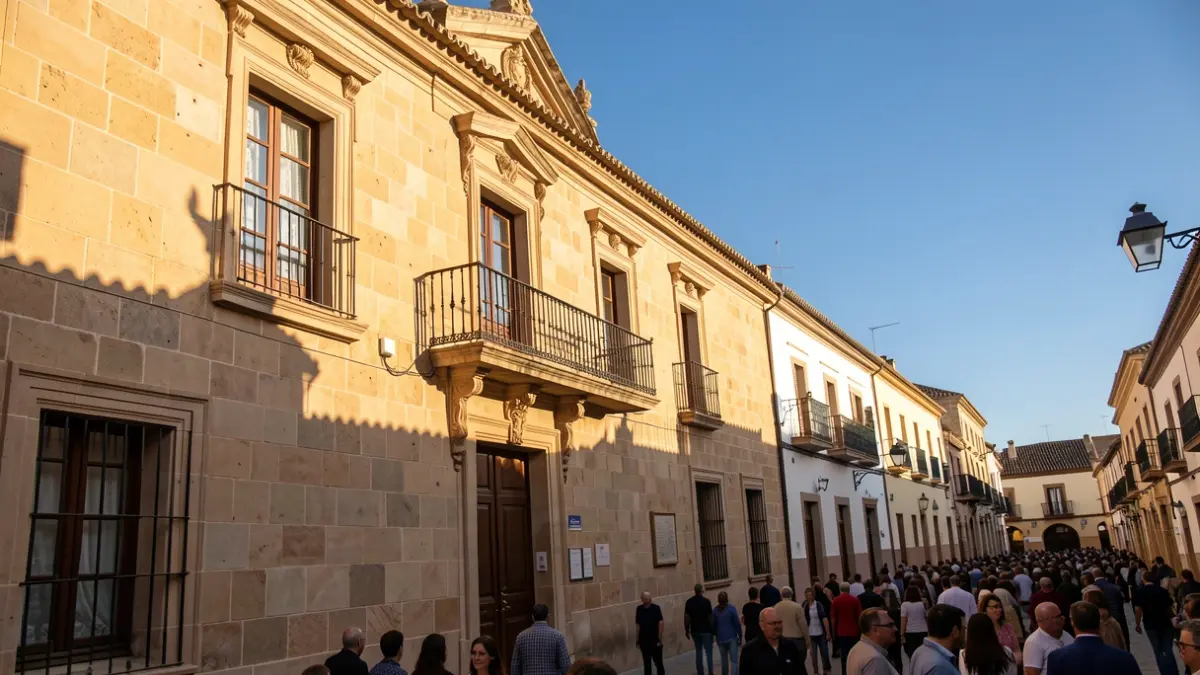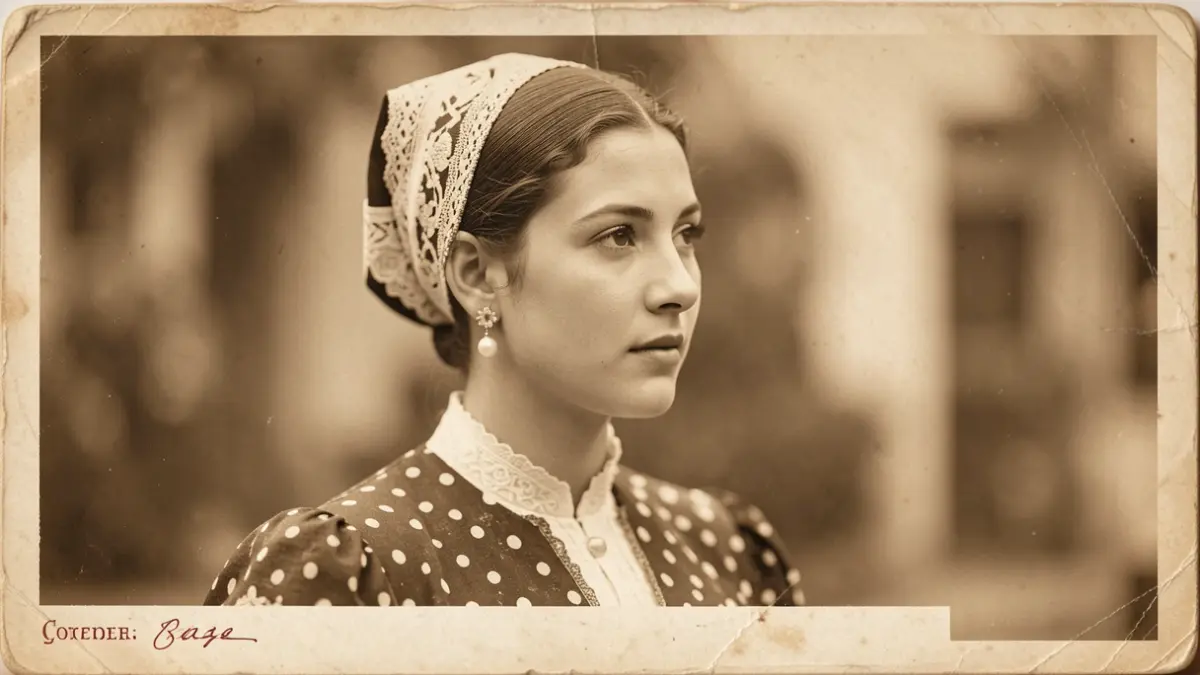
The Andalusian Center for Flamenco Documentation (CADF), located in Jerez's Plaza de San Juan, houses treasures that go beyond music, including a notable postcard evoking the golden age of Andalusian customs. This collector's item hides technical, historical, and documentary secrets.
The card features a bust portrait of an anonymous young woman, dressed in a mantoncillo, pearl earrings, and a polka dot dress. Her intense gaze suggests a strong personality, but her exact identity is lost to anonymity, a common practice at the time for models in commercial series. The work was cataloged under a generic heading, representing a visual archetype of Andalusian popular grace, idealized for travelers of the era.
The physical support of the piece offers crucial data on the history of photography in Spain. The inscriptions on its margins indicate the origin and authorship of the shot. The explicit mention of Rafael Señán in Córdoba places the production in the workshop of this renowned commercial photographer. The format and typography suggest it was conceived for mass sale as a high-quality tourist souvenir, a flourishing business between 1890 and 1910.
The detailed analysis of this graphic document provides valuable lessons on the region's social history. The model's attire precisely illustrates the materials, embroidery, and placement of traditional garments from the late 19th century. The work also demonstrates Señán's technical mastery in illuminating hair and textiles, as well as the use of the oval frame, an academic trend of the 19th century to dignify popular captures.
The study of this work takes on special significance on two key dates. March 14th commemorates the birth of Rafael Señán González, a date to vindicate his contribution to regional iconography. August 19th, World Photography Day, is the perfect moment to highlight the value of graphic archives housed in public institutions and the conservation work of specialized centers.