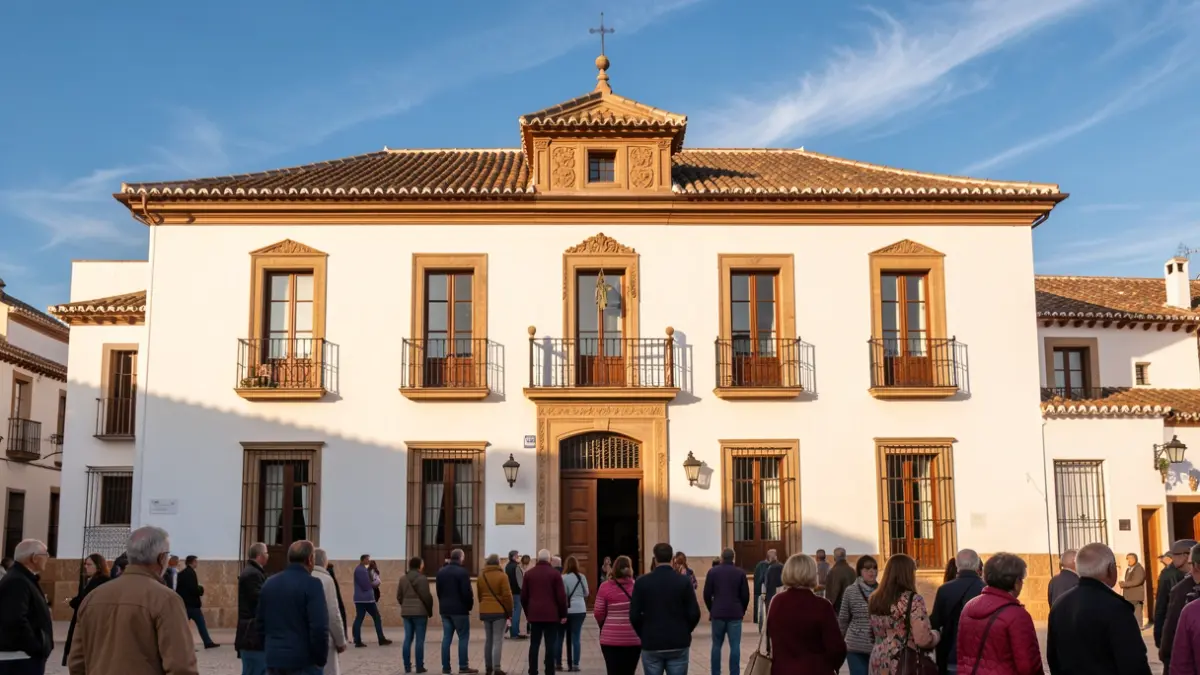
The gathering, set to take place at the assembly hall of the Diputación de Córdoba starting at 10:00, will bring together chaplains, association presidents, and senior members of the Cordoban corporations. The event will be inaugurated by the Bishop of Córdoba, Jesús Fernández, and the President of the Diputación, Salvador Fuentes.
During the session, the findings of an external study conducted with brotherhood leaders, led by Ricardo Castilla, will be presented. Following this, the diocesan delegate, José Juan Jiménez Güeto, will detail the new regulations and the strategic directives that will guide the delegation's work.
“"We must limit these extraordinary processions. One cannot go out simply because it is the 25th anniversary of the making of a mantle or a skirt. It must be for an important act of the brotherhood or the making of the image. This extraordinary procession must have a meaning that encourages society."
Jiménez Güeto emphasized that extraordinary processions must serve a significant purpose, such as popular piety or a charitable act, rather than merely commemorating minor anniversaries. He also suggested that it is not always necessary to go to the Cathedral, with brotherhoods potentially remaining in their local areas, reserving the main temple for highly significant events like canonizations or coronation anniversaries.
The diocesan delegate explained that the new regulations aim to transform the delegation into a more “choral and participatory” body, with an organizational structure that will include sections dedicated to youth, liturgy, and economic-legal matters. This change responds to societal evolution and the increasing demands faced by brotherhoods, some with 3,000 members and others in villages with only 50 or 60.
Although only the regulations will be presented this Saturday, without immediate decrees, Jiménez Güeto indicated that a general regulatory framework will be established, allowing each brotherhood to maintain its uniqueness and history. The day will conclude at 13:00 with a Eucharist at the Iglesia de la Merced.