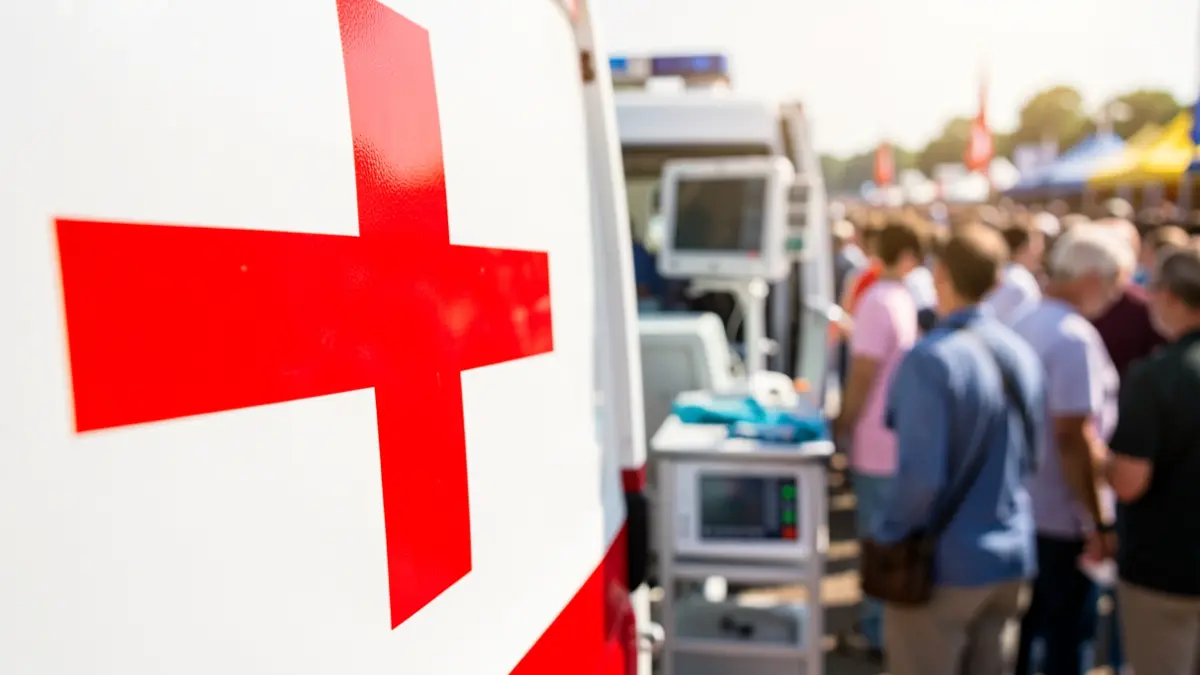
The humanitarian institution has deployed a special operation at the El Arenal fairgrounds, which has recorded 77 ambulance evacuations and attended to 339 people since last Friday, May 22.
The busiest day for assistance was Saturday, May 23, with 202 people attended and 42 evacuations, accounting for nearly 60% of the total. Sunday saw 97 attentions and 22 transfers, while the initial Friday had 40 interventions and 4 evacuations.
The most common incidents include minor injuries (139), intoxications (44), altered consciousness (32), and traumas (30), in addition to headaches and general malaise. Falls and blows account for 31% of cases, followed by alcohol or substance intake (almost 12%).
A significant increase in cases related to high temperatures is observed, with around twenty attendances for heatstroke or prolonged heat exposure, a figure showing an upward trend.
Red Cross warns that prolonged sun exposure, long hours at the fair, lack of hydration, and alcohol consumption can lead to heat exhaustion, dizziness, weakness, or loss of consciousness, situations requiring prompt action.
Furthermore, protocols have been activated for potential cases of chemical submission and sexual assault, prioritizing the protection, comprehensive care, and confidentiality of those affected.
The profile of those attended reveals a higher incidence among young people aged 18 to 35 (50%), followed by minors (23.9%) and adults (22.1%). 59% are women and 81% are local residents.
Compared to previous years, the volume of assistance is similar, although with a slight increase on days with higher attendance, with last Saturday surpassing data from 2025 and 2024.
Given the rising temperatures, Red Cross recommends preventive measures such as frequent hydration, avoiding alcohol, using sun protection, covering the head, and resting in shaded areas.
The importance of paying attention to vulnerable groups is reiterated, and seeking help at the medical post is advised for symptoms like dizziness, weakness, or loss of consciousness.
The operation, active until May 31, can involve up to 30 professionals and volunteers simultaneously, equipped with ambulances, a mobile coordination center, and a medical post.