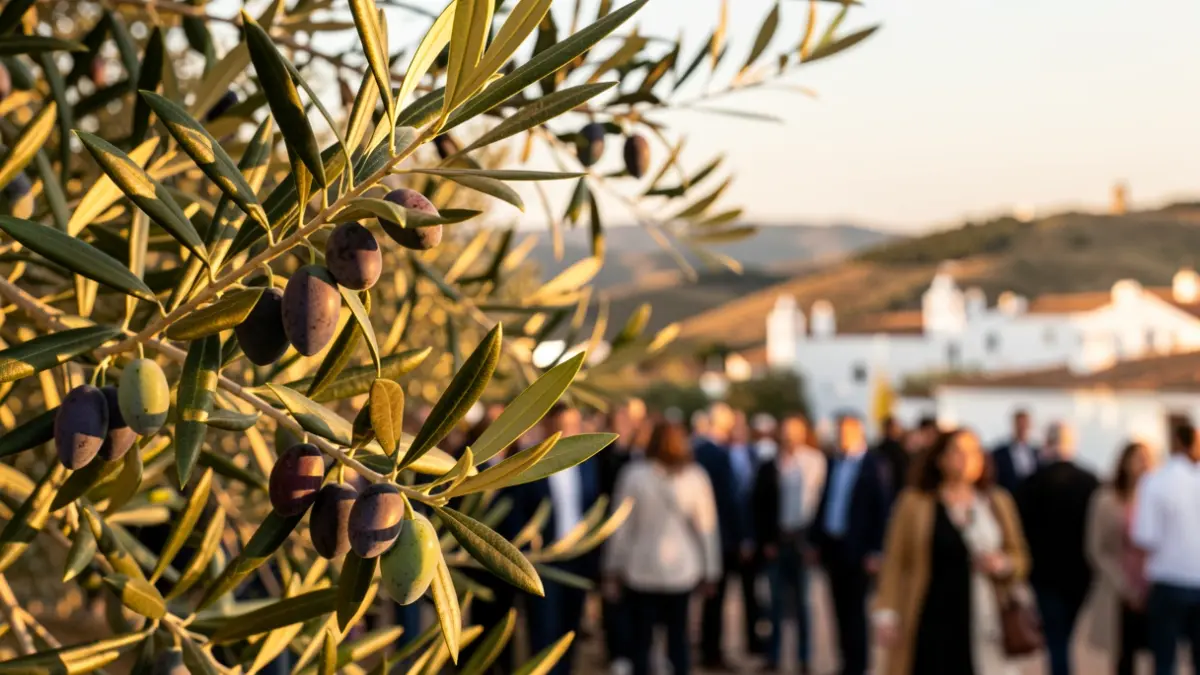
The Palacio de la Merced in Córdoba is the venue for this congress, co-organized by institutions including the Portuguese Association of Horticulture (APH), the Spanish Society of Horticultural Sciences (SECH), the Institute of Sustainable Agriculture (CSIC), the Andalusian Institute for Research and Training in Agricultural, Fisheries, Food, and Ecological Production (IFAPA), and the University of Córdoba (UCO). The event's theme is ‘Olive Growing in a Context of Global Change: Innovation, Sustainability, and Territory’.
Andrés Lorite, delegate for Infrastructures, Sustainability, and Agriculture of the Provincial Council, highlighted the importance of the olive grove in the province, which spans over 376,000 hectares across all its municipalities. He noted that Baena has the largest area dedicated to this crop, with over 28,800 hectares, while Conquista has the least, with only 6 hectares.
Lorite also emphasized the strong presence of organic farming in the province, which in 2025 registered 258,408 hectares out of a total of 1,422,045 in Andalusia, positioning Córdoba as the Andalusian province with the largest organic area. Of these, over 42,470 hectares are dedicated to organic olive groves, representing more than 30% of the Andalusian total.
The quality of Cordoban extra virgin olive oils, produced by over 190 oil mills and protected by four Protected Designations of Origin (PDOs), was highlighted. Lorite stressed the role of PDOs in guaranteeing origin, quality, and associating the product with its region of origin.
The delegate underscored the social and economic impact of olive cultivation and its associated industries, such as oil mills and table olive processing plants, considering it a key tool for job creation and social cohesion in the province.
The congress, concluding on October 23rd, aims to analyze thematic areas including Genetic Resources, Cultivation Techniques, Circular Economy, Remote Sensing, AI, and New Technologies, with the goal of enhancing the resilience, competitiveness, and sustainability of the olive oil sector in the Iberian Peninsula.