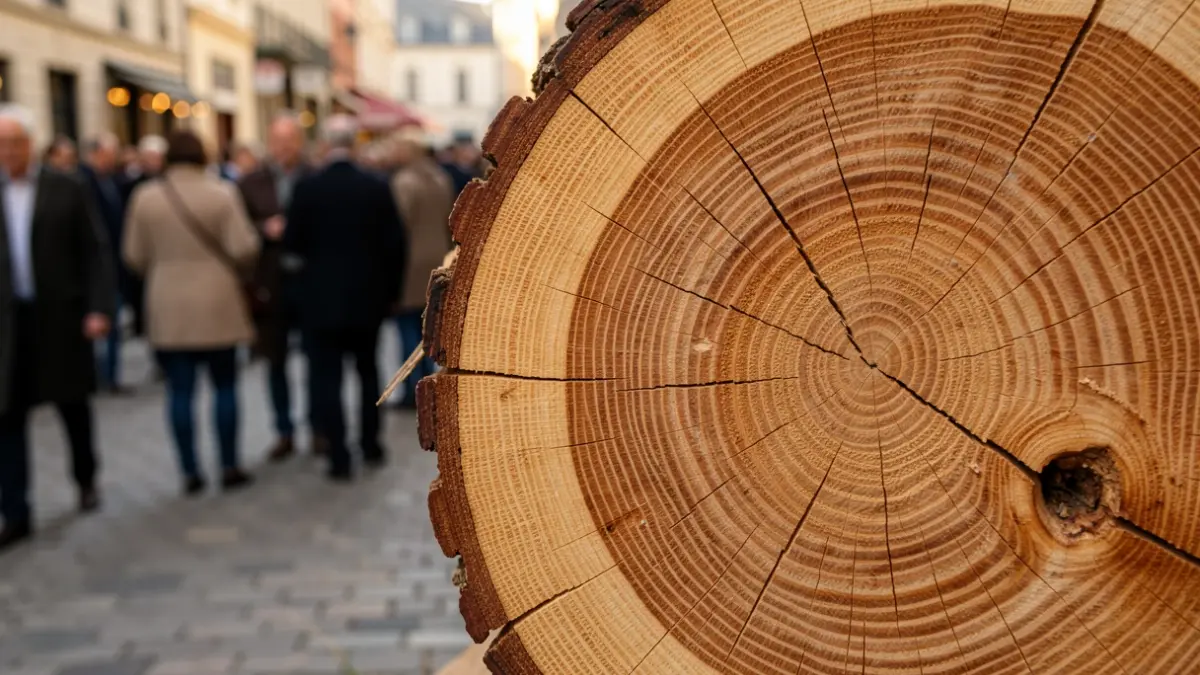
The exhibition invites visitors to observe trees from a new perspective, learning to decipher the traces of their growth, the obstacles they overcame, and the characteristics of the environment in which they lived. The trunk acts as a record of the tree's life, accumulating both external signals, such as wounds or deformities, and internal ones, visible within the wood itself.
The exhibition is based on the Arbóreo collection, which comprises over 970 references of trees and shrubs from 98 species, mostly wild specimens from the Iberian Peninsula, particularly the Aragonese Pyrenees. The complete collection exceeds 1,500 pieces, obtained from specimens found deceased and affected by natural phenomena or logging, and includes everything from trunk slices to nearly complete trees with roots and main branches.
A "touch table" allows visitors to touch, smell, and closely observe different types of wood, feeling the texture of the rings and perceiving the aromas, many of which are volatile compounds the tree uses for defense against pests and diseases.
“"After touring the exhibition, a trunk can seem like something else: a calendar, a wound, a response to the wind, fire, snow, or lack of water. Each piece preserves a part of the tree's life and the landscape where it grew."
The "Arbóreo" exhibition is an initiative by the Casa de la Ciencia of Seville - CSIC, curated by Miguel Ortega, the collection's lender, and Jesús Julio Camarero Martínez from the Pyrenean Institute of Ecology - CSIC.