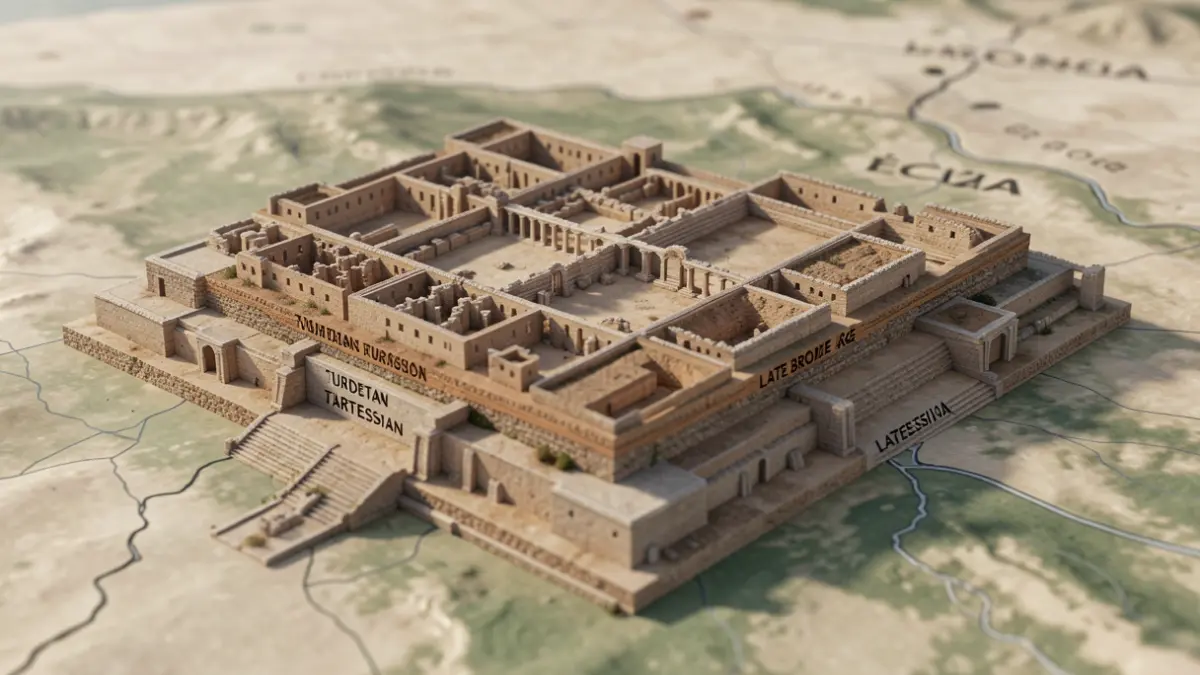
The delegate for Culture and Tourism, Laura Hurtado, and the municipal archaeologist, Sergio Garcia-Dils, presented the project developed at the Plaza de Armas site, titled “Virtual Reality at the Archaeological Site of Plaza de Armas of the Royal Alcázar of Écija”. This project, part of the Destination Tourism Sustainability Plan, had a budget of 50,000 euros.
The initiative involved creating a virtual replica, a "digital twin", of the approximately 6,000 square meters of the site, using 3D scanning of all structures. Laura Hurtado highlighted that the site "is a jewel with much yet to be discovered" and that this project allows for "knowing a great deal of information about everything underground, up to about 7 meters deep", which will facilitate future interventions.
Sergio Garcia-Dils detailed that the virtual replica covers the 6,000 square meters of the site with millimeter precision, including structures from the Roman, Turdetan, Tartessian, and Late Bronze Age levels. Furthermore, non-invasive techniques such as geo-radar and magnetometry have been employed to explore the subsoil without excavation, with the medium-term goal of allowing circulation at "Roman level" within the site.
The project is significant not only for research and excavations but also for promoting the site from a tourism perspective. The information obtained is crucial for guiding future excavations and for the preservation of the discovered remains, which show evidence of occupation since the 9th century BC.