The period between 1854 and 1855 was one of intense activity and change for the Guardia Civil in Spain, with direct implications for localities such as Algeciras. Following the resignation of Ángel Ramírez de Saavedra Rodríguez de Baquedano, Joaquín Baldomero Fernández-Espartero Álvarez de Toro assumed the presidency of the council of ministers on July 30, 1854. On the same day, Lieutenant General Leopoldo O’Donnell Joris was promoted to Captain General of the National Armies and appointed Minister of War, in recognition of his merits.
Leadership changes continued with the departure of the II Duke of Ahumada, Lieutenant General Francisco Javier Girón Ezpeleta, who ceased as Inspector General of the Benemérita on August 1, 1854, after a decade in charge. His successor was Lieutenant General Facundo María Infante Chaves, whose assumption of command was reported on September 1, 1854, in the Guía del Guardia Civil. During the interim, Brigadier Antonio María de Alós López de Haro was responsible for the affairs of the General Inspectorate.
We dare to recommend one thing with the utmost urgency to the Minister of Governance. It concerns public safety. Due to the measures taken to concentrate Guardia Civil forces, forest rangers, and road workers in the capitals, the roads have been abandoned; and petty criminals, taking advantage of the confusion and impunity ensured by the lack of vigilance, are committing robberies and other outrages with impunity.
In this context of reorganization, the Guardia Civil faced criticism regarding public road safety. An article published on August 8, 1854, in the newspaper La Nación, and reproduced in the Guía del Guardia Civil, warned about the abandonment of roads due to the concentration of forces in the capitals, which facilitated robberies and disturbances. The institution was urged to restore its presence in posts and reaffirm its prestige.
In response to this situation, the Ministry of Governance issued a circular on September 6, 1854, addressed to provincial civil governors. This circular strongly defended the work of the Guardia Civil, highlighting its discipline, morality, and services rendered since its foundation. Furthermore, it instructed governors to suppress any attacks against members of the corps and to bring those responsible to justice.
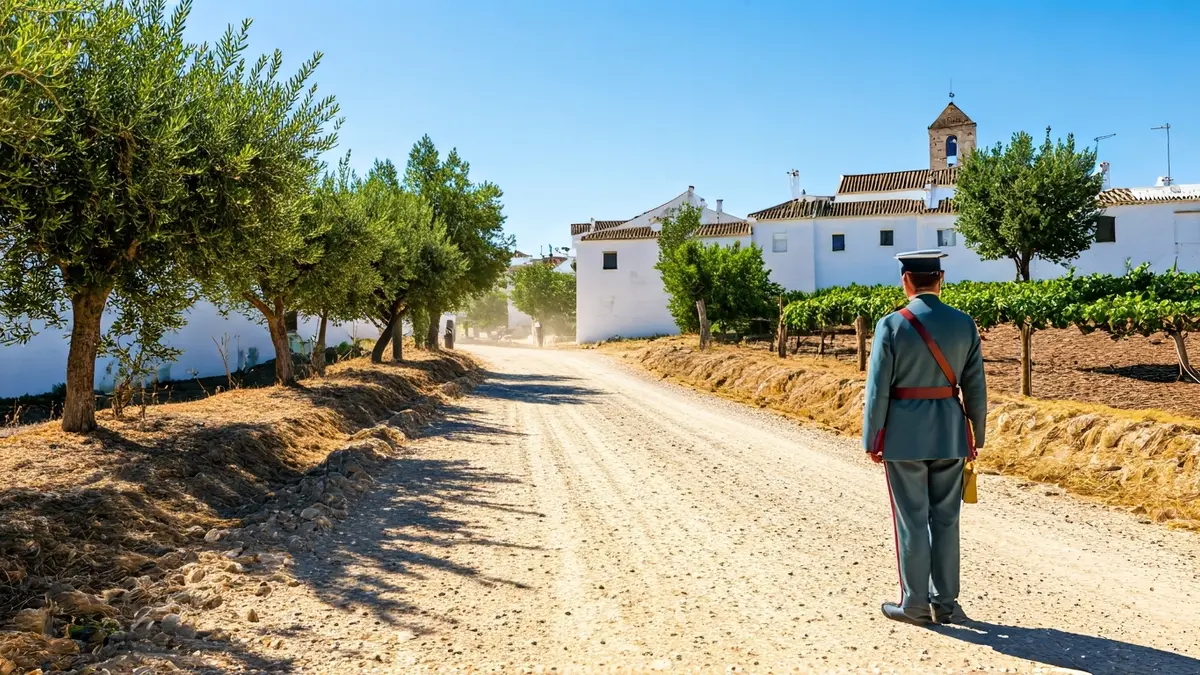
In the province of Cádiz, Commander Benito Artalejo Garrido remained at the head of the Guardia Civil at the beginning of 1855, with Lieutenant Juan Morillas de Casas as an officer in the Campo de Gibraltar. A notable service in Algeciras, commended by the Inspector General, was the arrest of a dangerous criminal on December 28, 1854. Sergeant Pedro Martínez, commanding the post, and civil guard José Marzá, successfully captured the individual, who had deserted from a prison in 1849.