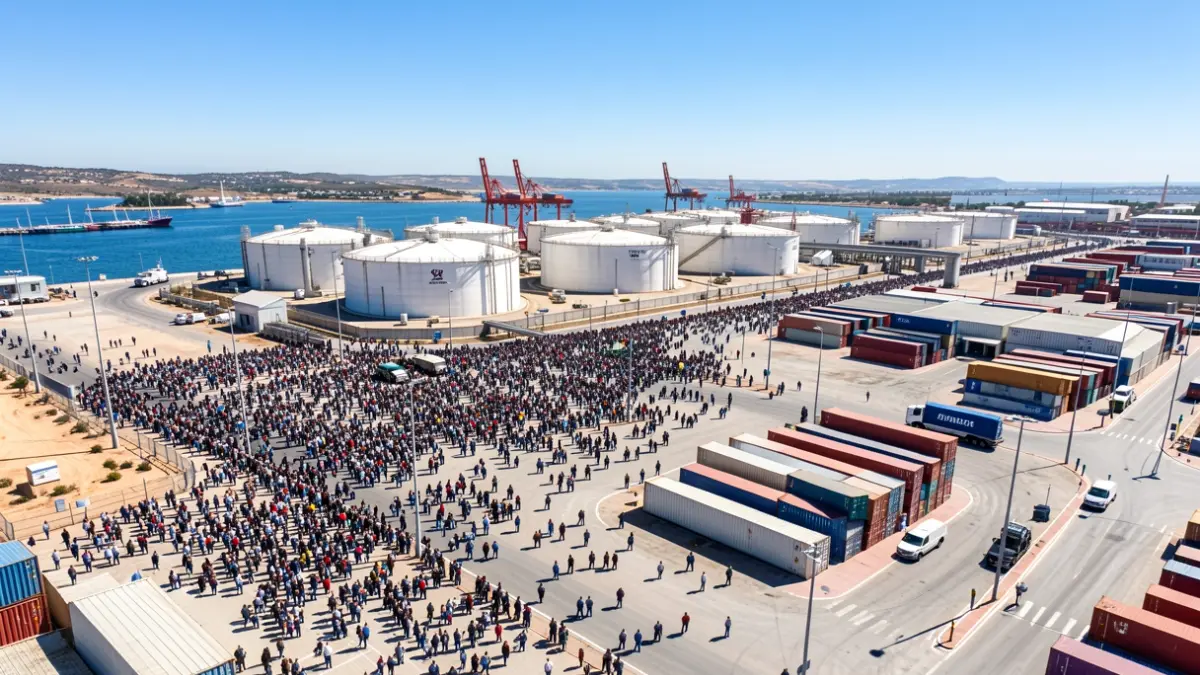
The strategic location of these port infrastructures within Andalusian industrial hubs has allowed both docks to lead fuel movement within the Spanish port system. During 2025, the Algeciras Bay Port Authority recorded a volume of 28.5 million tons of liquid bulk, while the Port of Huelva reached 22.5 million, establishing themselves as key points for national energy supply.
Commitment to sustainability defines the roadmap for both ports. In Algeciras, the focus on liquefied natural gas (LNG) has enabled significant figures in ship bunkering, placing it among the main European benchmarks. Simultaneously, work is underway to expand facilities for the storage of methanol, ammonia, and green hydrogen derivatives, integrating into the Andalusian Green Hydrogen Valley.
Meanwhile, the Port of Huelva focuses its strategy on public and private investment to adapt its infrastructure to new energy demands. With projects including the expansion of the Ingeniero Juan Gonzalo Dock and deepening dredging, the Huelva dock seeks to facilitate the operation of larger vessels. Joint investment by energy companies in the area exceeds 300 million euros, focused on building biofuel and methanol plants.
“"The ranking is fine, but it is not the priority; what is important is that these plants are built, which will make the fuel clean and CO2-free, generating a lot of employment."
The relationship between both ports transcends commercial competition, establishing a logic of logistical complementarity. A clear example is LNG bunkering in the Strait, where fuel managed in Huelva supplies ships operating from Algeciras. This cooperation model aims to maximize economic impact and stable job creation in the Andalusian territory through the development of permanent infrastructure.