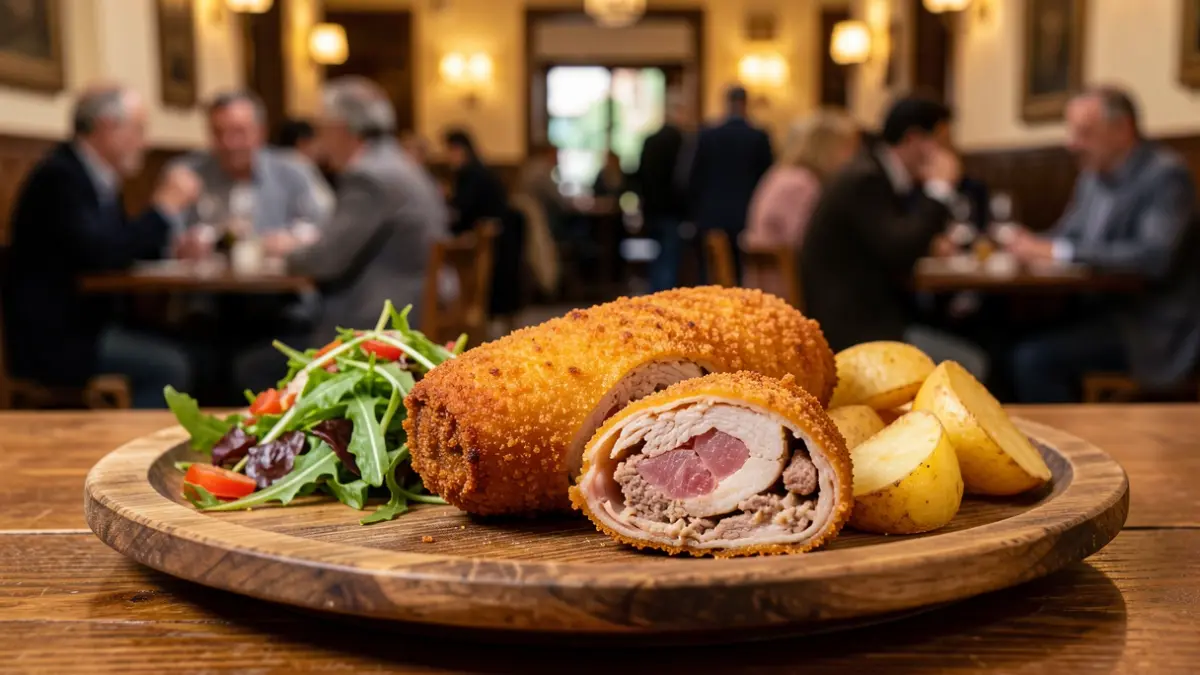
The authorship of the flamenquín, that popular breaded, fried roll of pork, ham, and cheese, is a recurring topic of discussion in Andalusia. Recently, communicator Eli Swann, originally from Andújar, has reaffirmed in a podcast that the dish belongs to her town and not to Córdoba, as is often debated.
According to records and testimonies, the true origin of the flamenquín dates back to May 1939 at the former Bar Restaurante Madrid-Sevilla, located in Andújar. This establishment, managed by Manuel Gavilán Mena, from Jaén, and with a Cordoban cook, was the scene of the creation of this recipe.
The owner's nephew, Manuel Gómez, has corroborated on several occasions that his uncle was the inventor. He explains that the original recipe consisted of a thin pork loin fillet, ham strips, and a breading, with a key secret: marinating for at least 24 hours in a Cordoban wine, specifically from Montilla, despite being in Andújar.
Gómez laments that the current quality is not the same as the original, pointing out that Iberian pork was used before, while nowadays "decoration" is prioritized over substance.
The original recipe from the Madrid-Sevilla Restaurant, which differs from ultracongelated versions or those from other establishments, requires ingredients such as pork loin, thick slices of Serrano ham, Moscatel wine for marinating, flour, eggs, and breadcrumbs. The preparation involves cutting thin fillets, marinating the ham, rolling the ingredients, breading, and letting them rest in the refrigerator for 24 hours before frying in abundant olive oil.