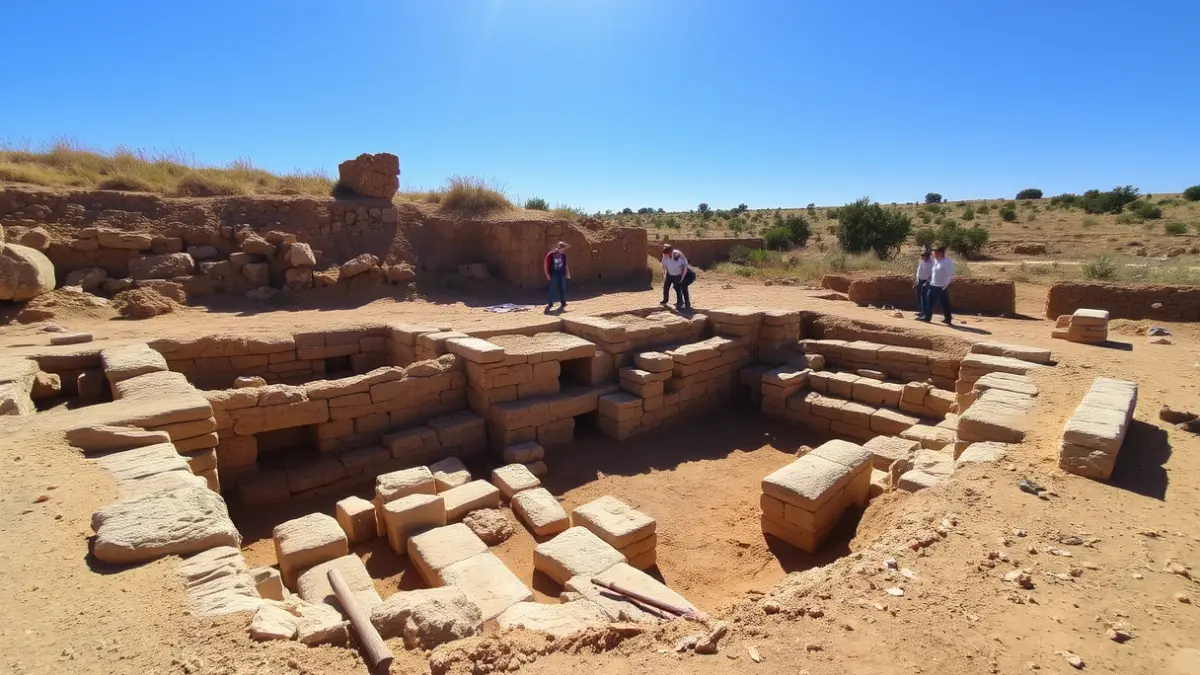
The presumed Roman aqueduct, discovered on the La Parrilla road in Andújar, remains the subject of intensive excavation and study by specialized teams. To date, no conclusive results have been obtained regarding its true nature and extent.
This significant discovery occurred approximately ten months ago, during preliminary work for the installation of a solar plant in the area. It was then that structures emerged, which, due to their typology, suggested a possible Roman origin, immediately attracting patrimonial and scientific interest.
Since then, the archaeological intervention has remained active under the careful supervision of the Territorial Delegation of Culture of the Junta de Andalucía. The regional administration has confirmed that tasks are ongoing and that it is not yet possible to provide a final report or definitive assessments.
“"The works continue and there are no conclusions at the moment. It will be necessary to wait for the completion of the excavation to be able to prepare the definitive technical report."
Specialists have linked these remains to the area of Isturgi, a highly relevant Roman-era enclave in the Guadalquivir countryside. This ancient city was notable for its agricultural, commercial, and pottery activities, and featured an extensive network of infrastructures for water management and communication. The appearance of a possible aqueduct reinforces the hypothesis of a more complex hydraulic network than previously known.
The Junta de Andalucía has maintained a position of utmost caution over these months, emphasizing the need to reconcile heritage protection with the development of the energy project. The priority is to complete the excavation and thoroughly document all remains before issuing a comprehensive assessment.