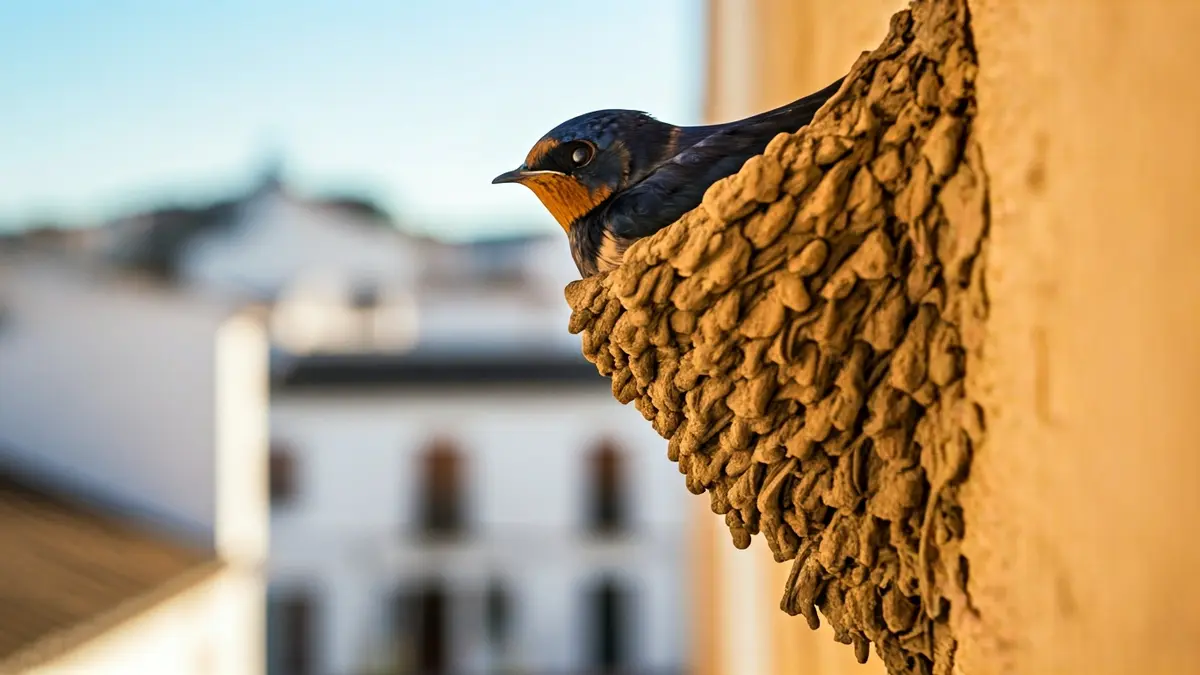
These species, which spend winter in Africa, return to Andalusian towns and cities between March and August for their breeding season. Their diet, based on flying insects like flies and mosquitoes, makes them a key element for natural pest control and ecological balance.
In Baena, colonies of these birds are found in emblematic locations such as Amador de los Ríos, the walls of the Castle, and the grain silo. The organization emphasizes the need to respect these spaces, especially during the reproductive period.
The collective reminds that these birds are protected by European, state, and regional regulations. Law 8/2003 on Wild Flora and Fauna of Andalusia explicitly prohibits actions that harm, disturb, or capture these animals, as well as the destruction or removal of their nests, even when empty.
“"Although building rehabilitation and maintenance work is necessary, there are currently technical solutions that allow these actions to be compatible with bird conservation."
As part of its awareness efforts, Groden-Ecologistas en Acción has relaunched the campaign Las tres mosquiteras. This conservation and environmental education project aims to highlight the benefits of these birds' presence in urban environments. Thanks to volunteer work, numerous vulnerable specimens have been recovered, and nest boxes have been installed in municipal buildings.