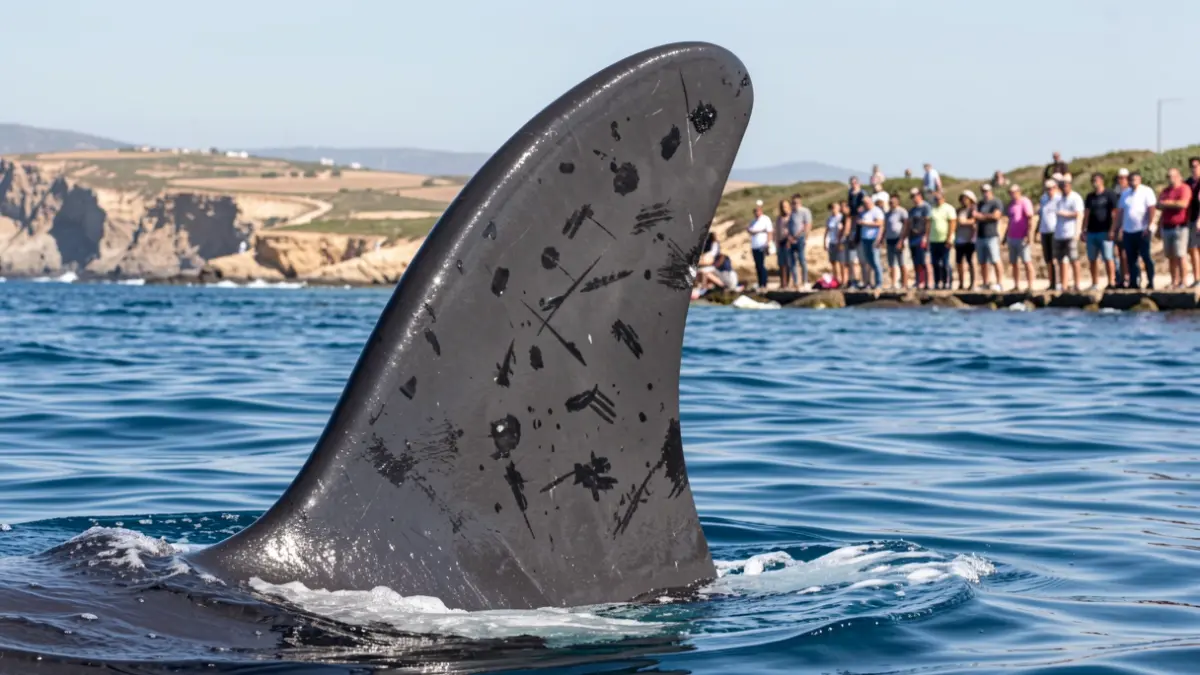
The discovery occurred on Tuesday, August 11, when the conservation organization WeWhale alerted the Ministry after observing the injuries on the specimen, considered the longest-lived of the population inhabiting the waters of the Strait of Gibraltar and the Gulf of Cádiz. Upon receiving the information, Miteco decided to open preliminary investigation proceedings to clarify the circumstances.
The third vice-president and Minister for Ecological Transition, Sara Aagesen, confirmed that the marks observed on 'Toñi's' dorsal fin are compatible with pellet impacts. The investigation will focus on determining the exact origin of these marks and whether they were indeed caused by shots, with no responsible parties identified at this time.
“"The marks observed on Toñi are compatible with pellet shots."
The Iberian killer whale population in this area is classified as vulnerable in the Spanish Catalogue of Threatened Species. Law 42/2007 on Natural Heritage and Biodiversity provides specific protection for these animals, prohibiting any action aimed at killing, capturing, pursuing, or disturbing protected species.
If the aggression is confirmed, those responsible could face fines of up to two million euros, in addition to potential criminal liabilities. The ongoing investigation will analyze all available information to determine the cause of the marks on 'Toñi's' fin.