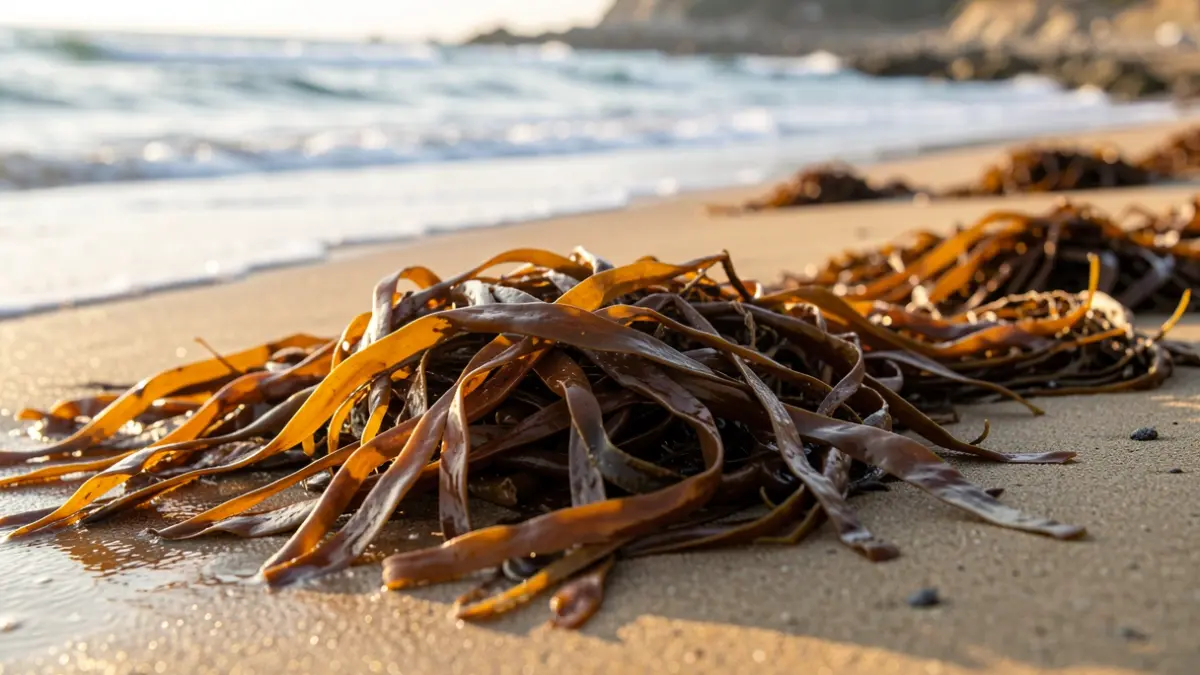
The initiative will benefit towns such as Rota, El Puerto de Santa María, Cádiz, Conil, Barbate, Tarifa, San Roque, Algeciras, and La Línea de la Concepción, which are affected by the accumulation of this exotic species on their shores.
This announcement was made during a meeting of the Standing Working Group on Invasive Algae, where actions for the upcoming beach season were coordinated and information was shared among the involved municipalities. The meeting also analyzed the consequences of the recent declaration of force majeure by the Regional Government of Andalusia due to the massive arrival of seaweed deposits.
In the last five years, aid granted by the Provincial Council to address the effects of this marine invasion has exceeded 1.8 million euros. Municipal representatives presented the current situation in each locality and their forecasts.
The session included participation from Ana Margarida Ferreira, head of the Environment and Sea Department of the Cascais Municipal Chamber (Portugal), who shared management strategies applied in her coastal area, including collaboration between administrations and companies for the removal and utilization of collected material, as well as citizen science programs.
The agreement approved by the Governing Council of the Regional Government of Andalusia on April 29 was also discussed. This agreement recognizes the situation as a force majeure cause. According to Pablo Lovera, head of the Waste and Soil Quality Service of the Directorate General of Environmental Sustainability and Circular Economy, this measure will exempt municipalities from landfill disposal fees for seaweed deposits when no viable alternative for its use exists.
From a scientific perspective, researcher Mar Roca from the Institute of Marine Sciences of Andalusia presented the RugOBSS project, which uses satellite imagery to detect and track seaweed deposits, generating statistical and historical data on the species' arrival along the Cádiz coast.
Javier Vidal, second vice-president of the Provincial Council, reiterated the institution's commitment to the affected municipalities and stressed the need to continue promoting support measures for a problem that has impacted the province's coast since 2019.