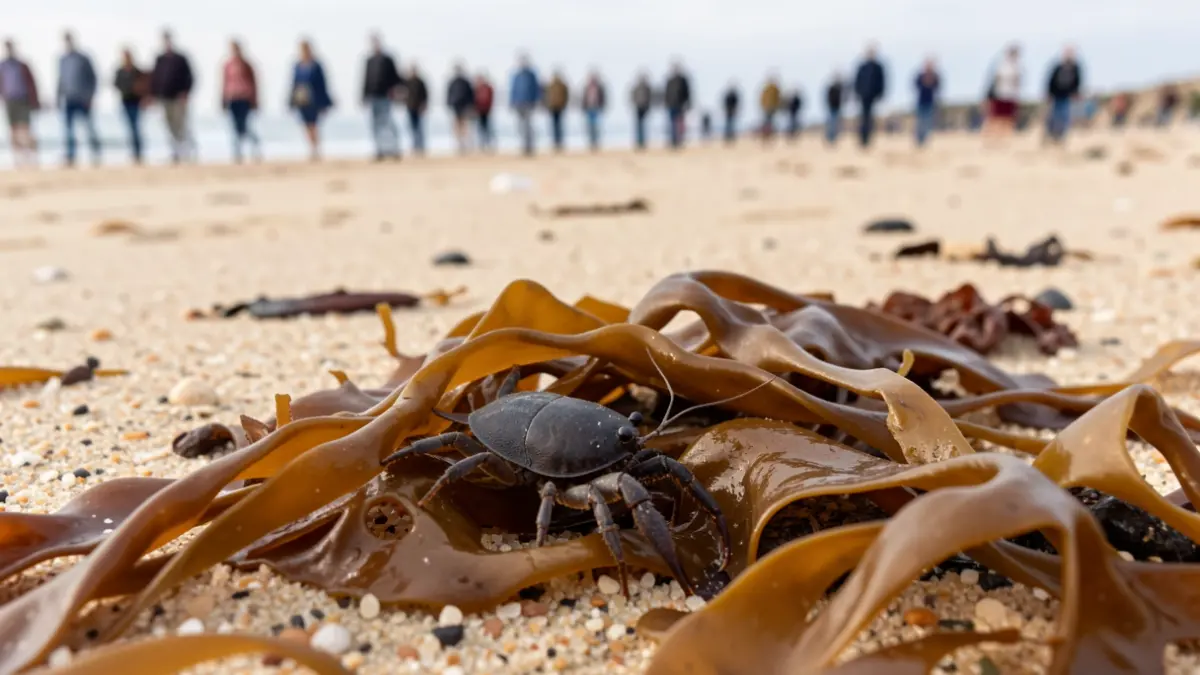
The research, published in Aquatic Conservation: Marine and Freshwater Ecosystems, highlights the role of these small crustaceans, key to the functioning of sandy beach ecosystems, in recycling organic matter and as food for coastal birds.
The findings confirm that accumulations of R. okamurae, despite being an invasive species with negative impacts, can act as a habitat and food source for populations of T. saltator. Laboratory experiments showed that the crustaceans can feed on this macroalga, although their consumption differs from that recorded with other seaweeds.
The authors caution that these findings do not imply the seaweed is beneficial, as its expansion continues to cause significant ecological and socioeconomic impacts. However, the study underscores how the arrival of invasive species can generate new ecological interactions.
Understanding these relationships is crucial for evaluating the consequences of accumulating and removing the biomass of these seaweeds on beaches and for designing effective coastal management strategies. The article was authored by researchers from the Universidade Federal de Sergipe, the Universidad Pablo de Olavide, and INMAR.