AlmeríaCádizCórdobaGranadaHuelvaJaénMálagaSevillaAlpujarra AlmerienseLos VélezComarca Metropolitana de AlmeríaFilabres-TabernasLevante AlmeriensePoniente AlmerienseValle del AlmanzoraBahía de CádizCampiña de JerezCampo de GibraltarCosta NoroesteLa JandaSierra de CádizAlto GuadalquivirCampiña de BaenaCampiña Sur CordobesaLos PedrochesCórdoba (comarca)SubbéticaValle del GuadiatoValle Medio del GuadalquivirAlpujarra GranadinaComarca de AlhamaComarca de BazaComarca de GuadixComarca de HuéscarComarca de LojaCosta GranadinaLos MontesValle de LecrínVega de GranadaEl AndévaloEl Condado de HuelvaCosta OccidentalCuenca MineraComarca Metropolitana de HuelvaSierra de HuelvaÁrea Metropolitana de JaénCampiña de JaénEl Condado (Jaén)La LomaSierra de CazorlaSierra MáginaSierra MorenaSierra de SeguraSierra Sur de JaénLas VillasComarca de AntequeraLa AxarquíaGuadaltebaCosta del Sol OccidentalMálaga Costa del SolNorormaValle del GuadalhorceSerranía de RondaSierra de las NievesAljarafeBajo GuadalquivirCampiña de CarmonaCampiña de Morón y MarchenaComarca de ÉcijaComarca Metropolitana de SevillaSierra Norte de SevillaSierra Sur de SevillaVega del GuadalquivirAlmeríaCádizCórdobaGranadaHuelvaJaénMálagaSevillaAlpujarra AlmerienseLos VélezComarca Metropolitana de AlmeríaFilabres-TabernasLevante AlmeriensePoniente AlmerienseValle del AlmanzoraBahía de CádizCampiña de JerezCampo de GibraltarCosta NoroesteLa JandaSierra de CádizAlto GuadalquivirCampiña de BaenaCampiña Sur CordobesaLos PedrochesCórdoba (comarca)SubbéticaValle del GuadiatoValle Medio del GuadalquivirAlpujarra GranadinaComarca de AlhamaComarca de BazaComarca de GuadixComarca de HuéscarComarca de LojaCosta GranadinaLos MontesValle de LecrínVega de GranadaEl AndévaloEl Condado de HuelvaCosta OccidentalCuenca MineraComarca Metropolitana de HuelvaSierra de HuelvaÁrea Metropolitana de JaénCampiña de JaénEl Condado (Jaén)La LomaSierra de CazorlaSierra MáginaSierra MorenaSierra de SeguraSierra Sur de JaénLas VillasComarca de AntequeraLa AxarquíaGuadaltebaCosta del Sol OccidentalMálaga Costa del SolNorormaValle del GuadalhorceSerranía de RondaSierra de las NievesAljarafeBajo GuadalquivirCampiña de CarmonaCampiña de Morón y MarchenaComarca de ÉcijaComarca Metropolitana de SevillaSierra Norte de SevillaSierra Sur de SevillaVega del Guadalquivir

Discovery in Gallineras Narrows Down Location of Hercules Temple in San Fernando

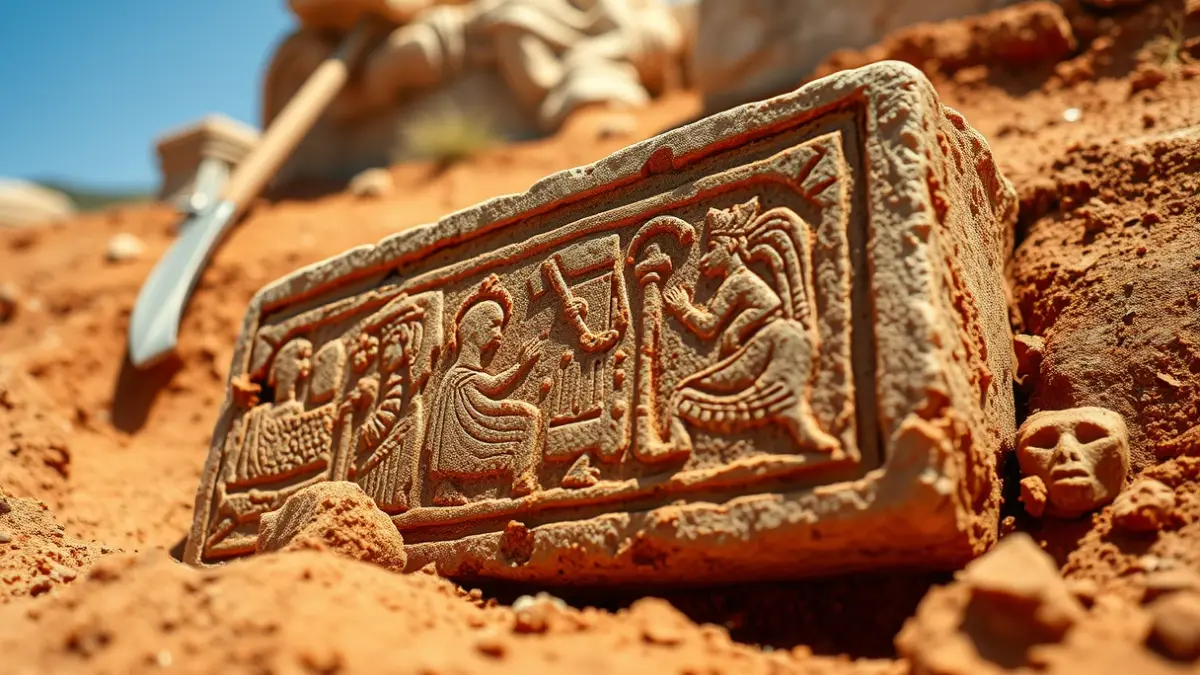
A stone stele, initially thought to be funerary, is reinterpreted as cultic evidence near the mythical sanctuary.

Image of an ancient stone stele with carved iconography, found in an archaeological excavation.
IA

Image of an ancient stone stele with carved iconography, found in an archaeological excavation.

A stone stele found in Gallineras, San Fernando, has been reinterpreted as the first material proof of cultic activity near the mythical Temple of Hercules, as revealed by experts at scientific conferences.

The Heakleion project, a joint initiative by the San Fernando City Council and the Universities of Cádiz (UCA) and Córdoba (UCO), aims to move from traditional hypotheses about the Temple of Hercules to concrete material evidence. This effort is based on fieldwork, archaeological analysis, and the review of historical sources.
During scientific conferences, the mayor of San Fernando, Patricia Cavada, highlighted the beginning of a new phase in the investigation, describing it as a strategy to transform heritage into a local development engine. This approach seeks to position the city at the center of one of the most significant archaeological discoveries in the Mediterranean.
One of the most notable announcements was the new interpretation of an artifact found during excavations in Gallineras. This archaeological element, initially classified as a funerary cippus, is now considered a cultic stele, dated to the 1st century AD, possibly during the reign of Emperor Trajan.

"This initiative not only responds to a historical debt but is also part of a strategy to turn heritage into a driver of development."

Patricia Cavada · Mayor of San Fernando
The stele, carved on all four sides and designed to be visible, features iconography linked to altars and ritual practices. This suggests its use in secondary areas of the sanctuary dedicated to religious and commercial activities. The piece shows similarities with findings in Puteoli, reinforcing the theory of a sanctuary connected to Eastern economic networks and the cult of the triad Melkart, Baal, or Astarte, with a notable influence from Phoenician and Punic merchants from Tyre.
Researchers Antonio Monterroso (University of Córdoba) and Lázaro Lagóstena (University of Cádiz) have also identified an area known as Ad Herculem in the vicinity of San Fernando, where a Roman 'mansio' would have been located. This discovery, along with evidence of intense activity in the Gallineras area, the ancient Via Heraclea, and the Sancti Petri canal, suggests that the temple was part of a significant economic, religious, and logistical complex.
Although the exact location of the temple has not yet been confirmed, these material indications represent the first solid proof of cultic activity in the Heracleion area. Experts point out that the sanctuary would not have been exclusively dedicated to Hercules but would have integrated other Phoenician deities, reflecting the religious complexity of the enclave. It is estimated that the temple maintained exceptional continuity for approximately fifteen centuries, from the 9th century BC until the late Roman period.