The mayor of Jaén, Julio Millán, along with the Government's sub-delegate, Manuel Fernández, presided over the technical meeting of the Bridges Committee. The committee analyzed interventions in riverbeds and the fluvial collector and path, two key projects scheduled to begin in December through emergency procedures. These works, described as preventive, environmental, and for the regularization of areas in the Vega de los Ríos, amount to over 26 million euros. The project, spanning 30 kilometers, is considered the largest in the area for many years and is funded by Spanish Government aid for storm damage.
Attending the meeting were the Second Deputy Mayor and Urban Planning Councilor, África Colomo; the Third Deputy Mayor and Contracting Councilor, Francisco Lechuga; the Fourth Deputy Mayor and Employment and Innovation Councilor, Luis García Millán; and the councilors for Urban Maintenance and Environment, Javier Padorno and José María Cano. Also present were the Water Commissioner of the Confederation, Alejandro Rodríguez; the Fomento delegate, Miguel Contreras; and neighborhood representatives from the Vega de los Ríos.
Millán emphasized the importance of presenting these works to the residents, whose projects are open to contributions. He recalled that riverbed cleaning operations were carried out in the main rivers of the capital during the summer.
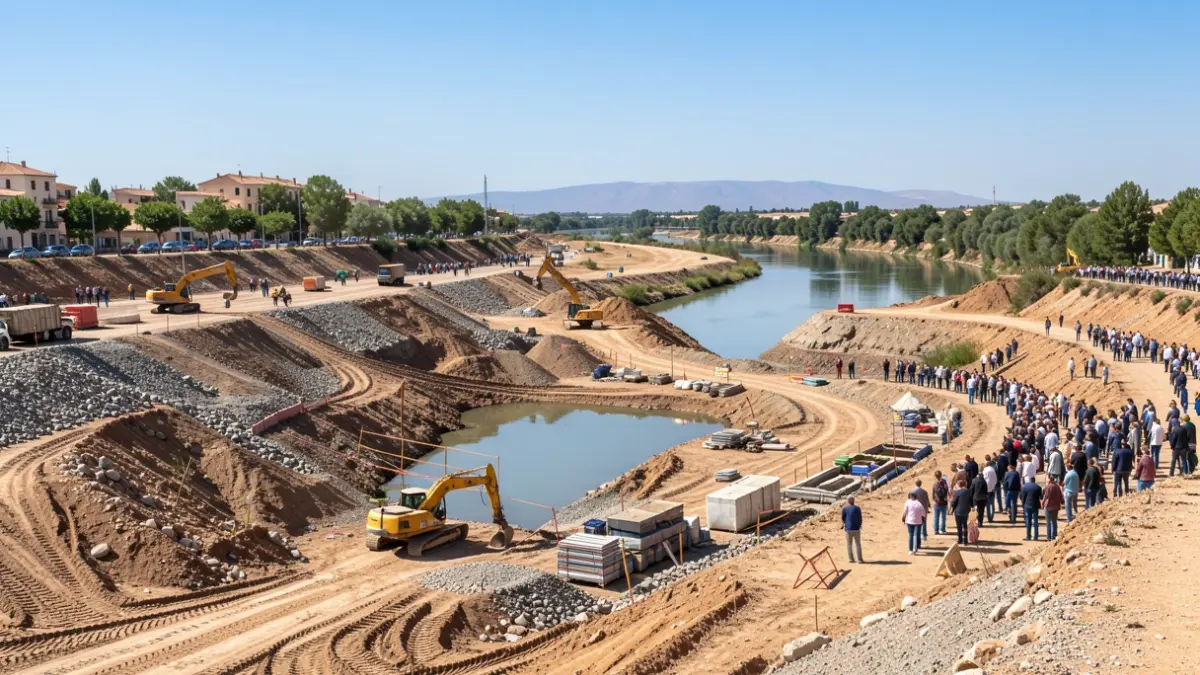
Francisco Lechuga, Councilor for Contracting, detailed that in addition to riverbed cleaning, the first intervention in riverbeds with weirs, recovery of river axes, widening of their banks, and construction of defenses and breakwaters is expected to begin in December, justified by the area's safety. This action, starting before the year ends, will overlap with the collector and fluvial path project starting in January, improving sanitation in residential areas over 30 kilometers. The 24-month works will include building breakwaters, weirs, and restoring the original riverbanks and axes from the Quiebrajano reservoir to the Guadalbullón River, covering sections like the Frío, Eliche, and Jaén rivers. The intervention will involve profiling banks, constructing breakwaters, and pruning riverbanks.
Regarding the collector and fluvial path works, estimated to last 18 months, the mayor highlighted that they will enable the regularization of services for many residents and their homes, in addition to improving the sanitation system's environmental quality and providing service paths with significant landscape value.
Luis García Millán reported on the emergency system project, developed in collaboration with Local Police, Firefighters, and Civil Protection. The municipal emergency operation will be based on five pillars for riverbed monitoring: riverbed surveillance, drone surveillance, a mobile surveillance platform, a DRM network for secure communication interconnection resilient to blackouts, and a fire detection and riverbed control system at La Cruz de la Chimba. The project is ready and has been submitted to the Spanish Government for inclusion in storm-related aid.