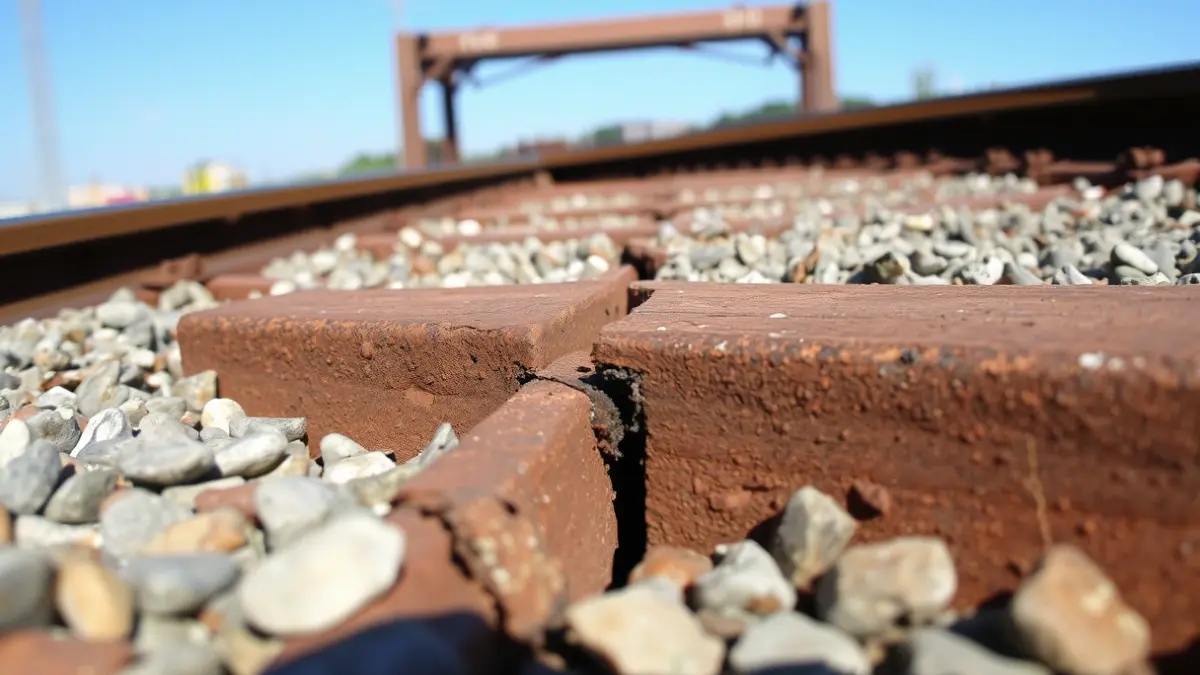
Three months after the tragic derailment in Adamuz, which claimed the lives of 46 people on January 18, the Civil Guard has directed its investigation towards deficiencies in the railway infrastructure. A recent report by the Judicial Police, submitted to the Montoro Court, points to a rail or weld fracture as the main hypothesis for the incident.
The report categorically rules out other possibilities such as sabotage, terrorism, or imprudence on the part of the train drivers. Attention is now focused on the condition of the track, which falls under Adif's responsibility, and on the actions taken by the Ministry of Transport's company after the tragedy became known.
Although it has not been possible to determine whether the rail fracture preceded the weld fracture or vice versa, it has been documented that one of the trains that circulated through the area on the same day reported a "blow on the right side." Furthermore, the Railway Accident Investigation Commission (CIAF) detected "notches compatible with a rail fracture" in several trains that previously passed through the affected section.
The broken weld, located at PK 318+681, was performed by an experienced worker from the company Maquisaba. However, Adif's regulations state that for joining used and new coupons, a specific weld (R260) must be applied, and it is suspected that an incorrect force kit was used. An email from the CIAF president also revealed "different inconsistencies" in the welding documentation, including doubts about the validity of the signatures.
The investigation also explores the possibility of manufacturing defects in the steel of the rails, such as an inadequate chemical composition or original anomalies that could have caused premature wear and fracture. It is being analyzed whether the absence of strict control or an excess of carbon in the steel could have contributed to the material's fragility.
Another critical point is the custody of the rail coupons collected as evidence. It has been noted that they did not receive proper police custody. A manager from the Hornachuelos AVE Maintenance Base testified as a witness to the Civil Guard that he was ordered to change 36-meter coupons near the accident site without technical justification, which adds a layer of complexity to the investigation.