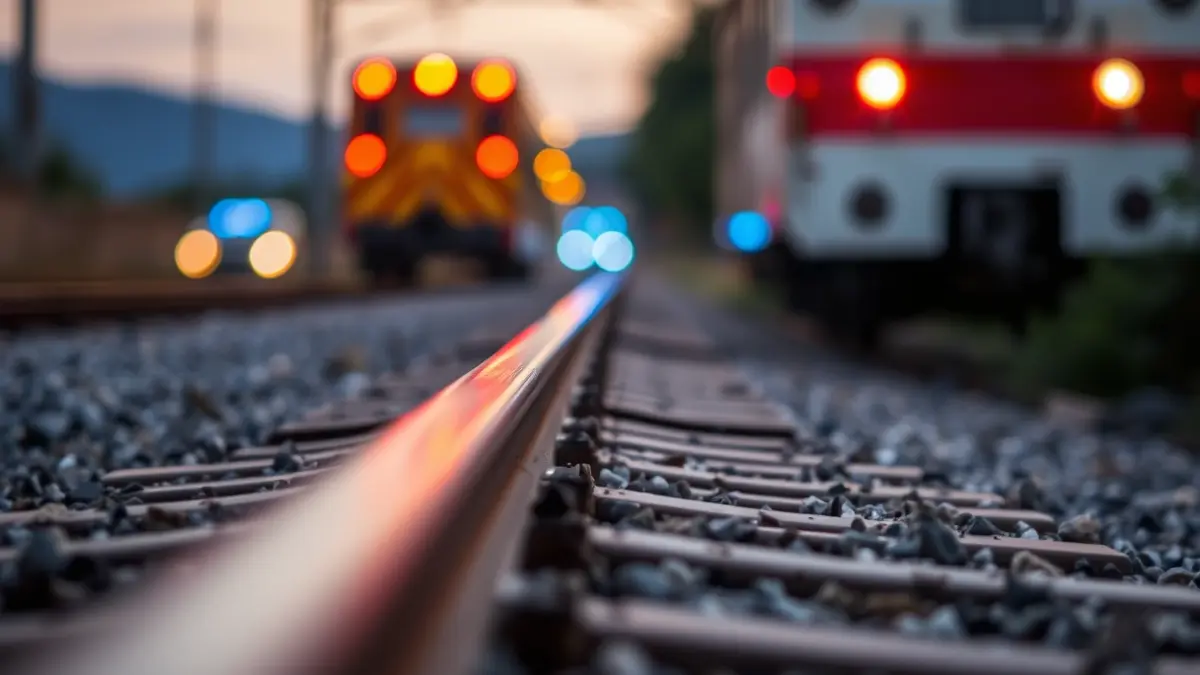
The document, included in the latest judicial report, details that a 112 Andalusian operator received the first alert at 19:44:51 on January 18, following a call from a passenger on the crashed Iryo train. This initial communication occurred before the Ministry of Transport's Séneca system issued its alert at 19:47:06.
The Iryo train passenger informed Emergencias 112 Andalucía that the convoy had overturned, with numerous injured and trapped individuals in an underground area. The operator maintained active communication and proceeded to immediately activate medical resources. Subsequently, calls were received from an Iryo train driver, another passenger, and the Alvia train conductor.
At 19:45:02, the Iryo train driver informed CRC Atocha of a "snag" in Adamuz, indicating a lack of electrical tension and the train's blockage. Meanwhile, calls to 112 continued, including one from an Alvia train passenger at 19:45:06, who reported a railway accident with potentially multiple injuries.
The Alvia conductor also contacted CGO Madrid at 19:46:24 to report a "major accident," mentioning that she had been thrown and suffered a severe head injury. Following these communications, the Government activated its Séneca emergency system, transmitting the first accident information at 19:47:06.
The sequence of events shows that, at 20:07:01, the 112 Madrid Control Room Head contacted the 112 Andalucía Control Room Head to cross-reference information about a possible railway accident, confirming the incident in Adamuz with injuries. It was not until 20:16:29 that the Adif Security center in Seville confirmed to 112 Andalucía the involvement of two trains in the event.