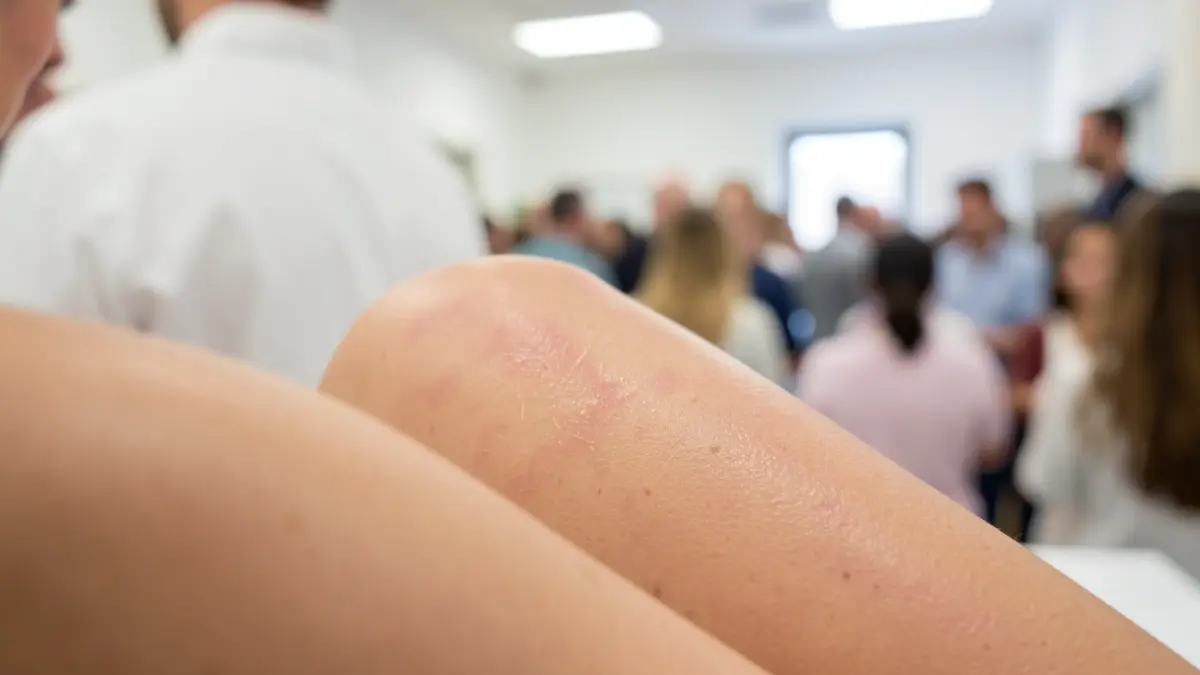
For 33 years, Patricia Lupión has lived with the constant pain and endless wound care associated with Recessive Dystrophic Epidermolysis Bullosa, the most severe form of 'butterfly skin'. This rare genetic disease causes extreme skin fragility, where any friction leads to blisters and open wounds. However, her situation has taken a radical turn with the administration of a novel treatment, pioneered and funded by the Regional Government of Andalusia.
After receiving just four weekly doses, Patricia describes significant relief from the previously unbearable pain. "My skin is stronger and more resistant," she confesses emotionally, noting that new lesions are not appearing in healing areas. This physical change has also brought about a "brutal" improvement in her mood, allowing her to view the future with renewed hope.
“"My daily life was conditioned by long wound care sessions and I was very limited by pain; sometimes it was unbearable and I could barely leave home."
Pharmacist María Ángeles Castro, head of the Hospital Pharmacy Service, recalls the initial tension and nervousness surrounding the drug's viability. The Poniente University Hospital designed a strict protocol for the conservation and handling of the treatment, enabling Patricia to break free from the domestic confinement her physical suffering had imposed.
“"This disease presents difficult moments every day with wounds and care, but starting with the gel has completely changed me emotionally; I feel happy."
Patricia has become a beacon for other families facing this condition. "The messages I receive from parents with young children who have the disease, telling me they love seeing me and that I am their inspiration, motivate me greatly," she states with admirable fortitude, feeling that her struggle can help others.
The treatment, a topical gene therapy developed by Dr. Carlos Hernández, head of Dermatology at the center, uses a modified herpes simplex virus to deliver functional copies of the damaged gene directly to the wounds. Applied as a gel, it allows skin cells to produce the missing protein, resulting in "higher quality skin."
The weekly application of the gel, which does not permanently integrate into the genome, reduces risks and the need for travel to major cities, as it can be administered at Poniente Hospital. The therapy requires periodic and constant application to maintain its effects.