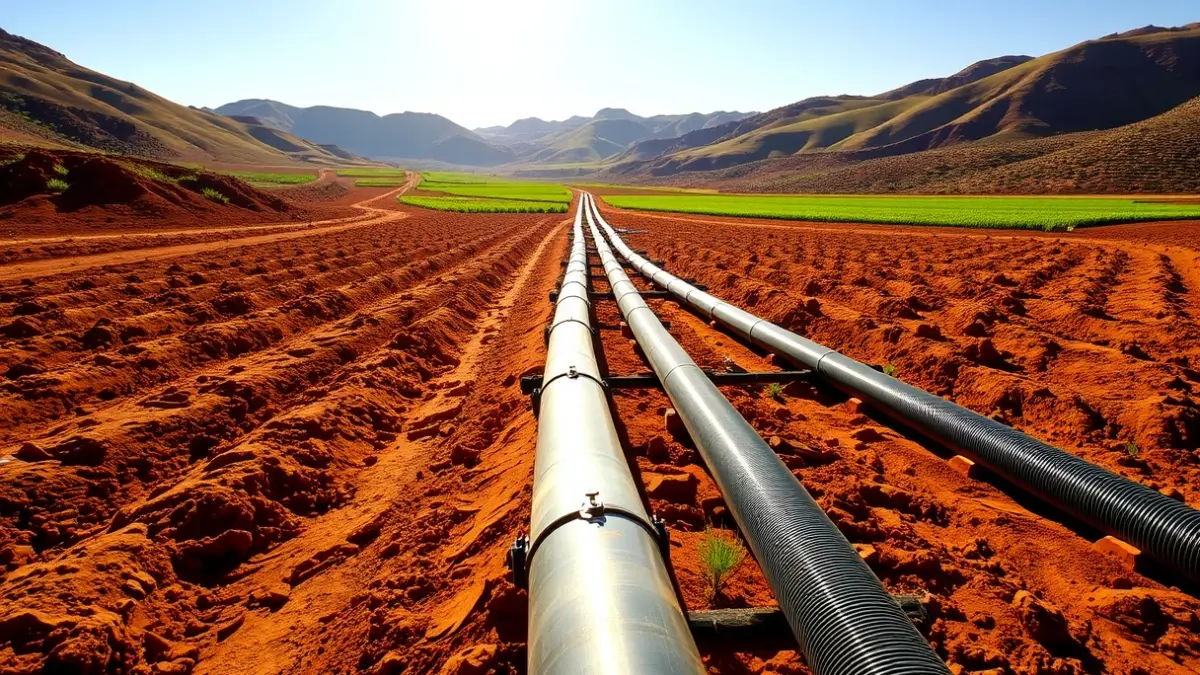
This connection not only resolves a historical supply issue but also establishes a new development model for Otura. For years, the town relied on wells, a system that became insufficient due to significant demographic growth in recent decades, revealing limitations in flow, quality, and pressure.
Integration into the metropolitan system, through the Canal de Loaysa infrastructure, eliminates water uncertainty, making it a solid foundation for the municipality's future. This change goes beyond supply, opening the door to tangible urban transformation, with network renovations, improved sanitation, and spatial reorganization.
“"It's not just about growing, but about doing it better, with planning, appropriately sized services, and the capacity to absorb population growth without losing quality of life."
The associated investment, close to four million euros for the integrated water cycle, is driving visible modernization in the municipality. Furthermore, this action allows Otura to transition from an isolated system to being integrated into a broader metropolitan network, managed by Emasagra, strengthening its position and competitiveness within the Granada metropolitan area.
Funding, with strong support from European funds through the Guadalquivir Hydrographic Confederation, has been key to the project's viability, without direct cost to municipal coffers. The City Council is already openly discussing a “second transformation” of the municipality, focused on infrastructure, sustainability, and quality of life, with water as a fundamental pillar for tension-free growth and the consolidation of Otura as a metropolitan benchmark.