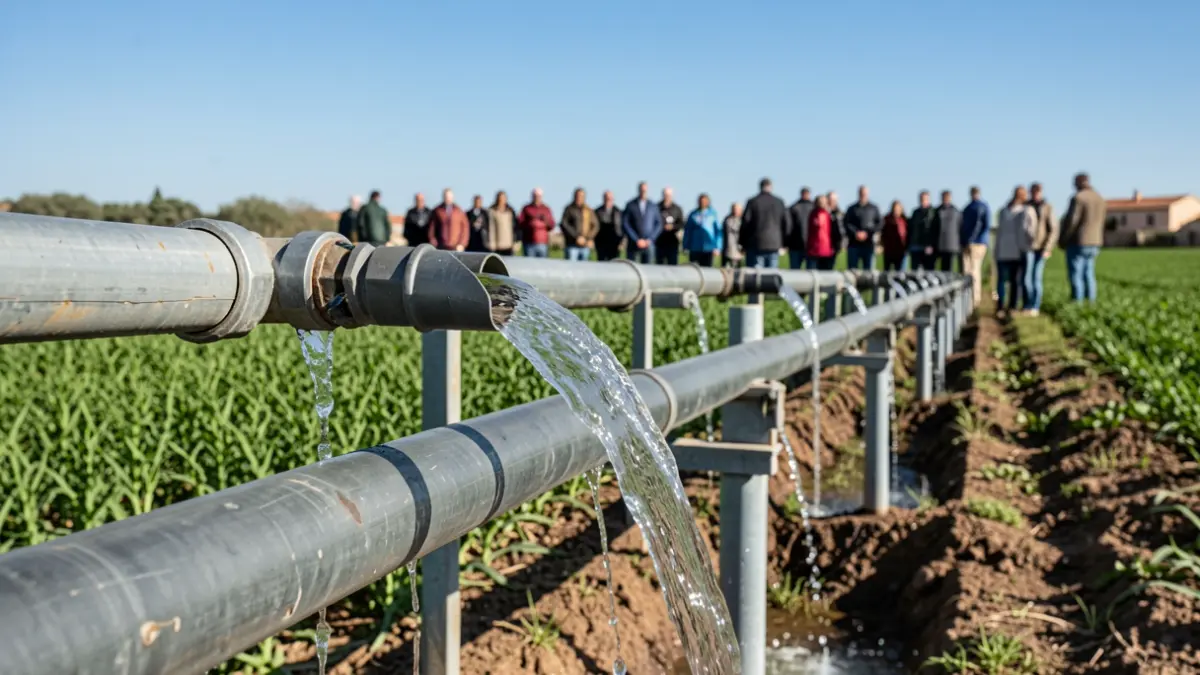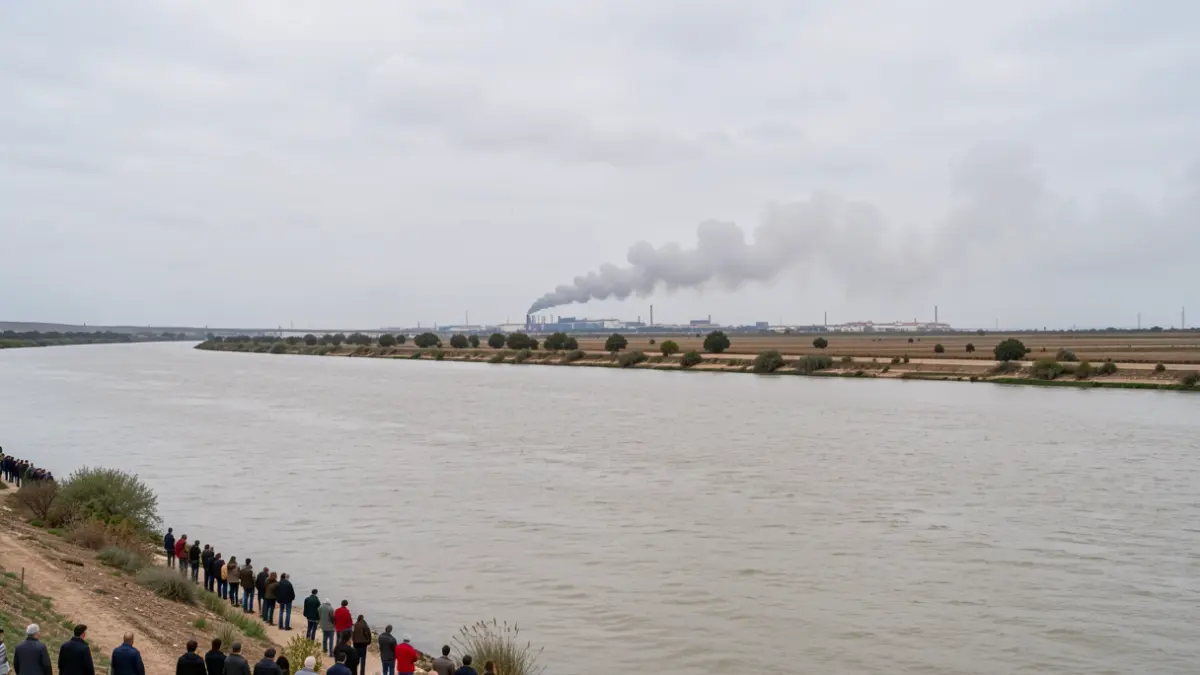
The controversy surrounding the Aznalcóllar mine has once again ignited debate in the Lower Guadalquivir region. On May 11th, more than a thousand people gathered in Sanlúcar de Barrameda to protest against discharges from the Aznalcóllar and Gerena mines into the Guadalquivir River. Protesters, including environmental associations, fishermen, and mayors from riverside municipalities, called for a project "moratorium" amid concerns about environmental, economic, and social repercussions.
The fear of repeating the 1998 ecological disaster, when the rupture of the Swedish company Boliden's tailings dam led to the spill of millions of cubic meters of toxic sludge, looms large in collective memory. That catastrophe contaminated thousands of hectares, affected kilometers of riverbeds, caused the death of tons of fish, and destroyed thousands of jobs, with economic losses estimated at 11 million euros by Greenpeace.
Opposition has intensified with progress in the processing for the reactivation of the exploitation by Minera Los Frailes, S.L. The mayor of Sanlúcar, Carmen Álvarez, expressed her total rejection of the project, recalling the 1998 impact on her town, one of Andalusia's main fishing ports. The city council has filed objections and is preparing a complaint to the Environmental Prosecutor's Office.
Discharge permits have been granted based on a totally unscientific model of metal behavior
A group of researchers from Andalusian universities, led by Jesús Manuel Castillo, a professor at the University of Seville, criticizes the discharge permits, labeling them "unscientific." They argue that the model proposed by the Regional Government of Andalusia and the mining company does not adequately consider the interaction of heavy metals with suspended particles in the estuary, which could lead to their sedimentation and entry into the food chain.
Castillo warns that elevated levels of metals such as zinc and arsenic have already been recorded at the river mouth, with fish and shrimp showing concerning concentrations. The new discharges, according to the researcher, could multiply this situation, endangering the region's environmental, public, and socioeconomic health.
Organizations like Ecologistas en Acción, along with city councils and scientists, are calling for the creation of an "independent expert committee" to re-evaluate discharge controls. Isidoro Albarreal, from Ecologistas en Acción, warns about the lack of cumulative assessment for discharges planned over 17 years.
For its part, the Regional Government of Andalusia and Minera Los Frailes defend the project, which will be underground and will not have tailings dams like the previous operation. They assure that the "best available technologies" will be applied and that "not a single liter of water will be discharged into the Guadalquivir without prior treatment and compliance with regulations." The initial investment in the water treatment plant amounts to 50 million euros.
The regional administration has established an "extremely exhaustive and guaranteeing monitoring and control plan," which includes over 75,000 sample analyses throughout the project's life, covering physicochemical, biological, and hydromorphological parameters. The company is also obligated to implement its own monitoring and control plans, with an additional investment of 49 million euros in piping and monitoring.
Production is scheduled to begin between 2028 and 2029, with an initial investment of 450 million euros. Minera Los Frailes highlights an environmental restoration plan to rehabilitate affected areas, both from past and current activities, aiming to transform them into restored natural spaces.
Fishermen from Sanlúcar, represented by the Fishermen's Guild, joined the protests demanding "information" and "security" to continue their activity. They seek guarantees that fishing grounds will remain healthy and fishery products safe for consumption, without engaging in political evaluations.
The Aznalcóllar mine is once again at the center of a debate pitting administrations, scientists, companies, environmentalists, and economic sectors against each other, on the eve of the 30th anniversary of the 1998 environmental disaster, balancing concerns over environmental impact with the need for employment.