
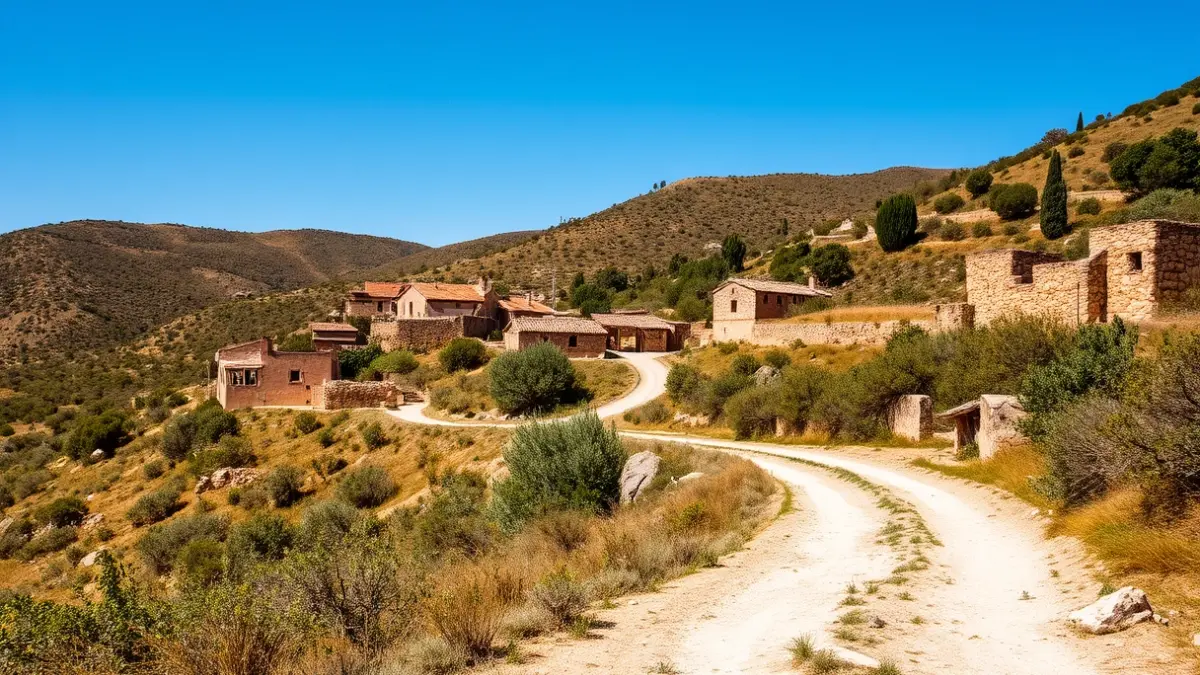
These rural nuclei, such as La Grajea, Los Centenares, or Las Canalejas, located between Coto Ríos and Pontones, once had basic services before their depopulation. The turning point was the creation of the Cazorla National Game Reserve in the 1960s, which led to expropriations and restrictions, coupled with the harshness of rural life and the appeal of industrialization in the Spanish Levante.
Life in these villages was one of subsistence, based on small gardens, basic livestock, and dryland farming. Despite the difficulties, the environment offered resources such as abundant water and fertile land. Most of their inhabitants emigrated to the Valencian Community and Catalonia, leaving behind a landscape of ruins that today holds a rich history.
“"The valley has enormous cultural, historical, and natural potential, but it needs institutional support to develop safely and sustainably."
Currently, initiatives like Aventura Hernán Pelea organize hiking routes that go beyond physical activity, offering a cultural and ethnographic immersion with testimonies and historical audio. These two-day treks, some including overnight stays in Los Centenares, aim to revive the past of these places and highlight their heritage.
The memory of these villages has also reached high cuisine. The Malak restaurant, awarded a Michelin Star in Jaén capital, has created the Aldeas Perdidas menu. This menu reinterprets traditional dishes such as ajo harina, ajo pringue, or Segureño lamb, fusing ancestral recipes with current techniques and seasonal products, paying homage to the gastronomy of Sierra de Segura.
Although the repopulation of these villages is unlikely, their legacy endures through these tourist and gastronomic initiatives, as well as cultural events such as the En Tierra de Nadie music festival and the Trashumante Fest, which are held annually in the municipality of Santiago Pontones.


