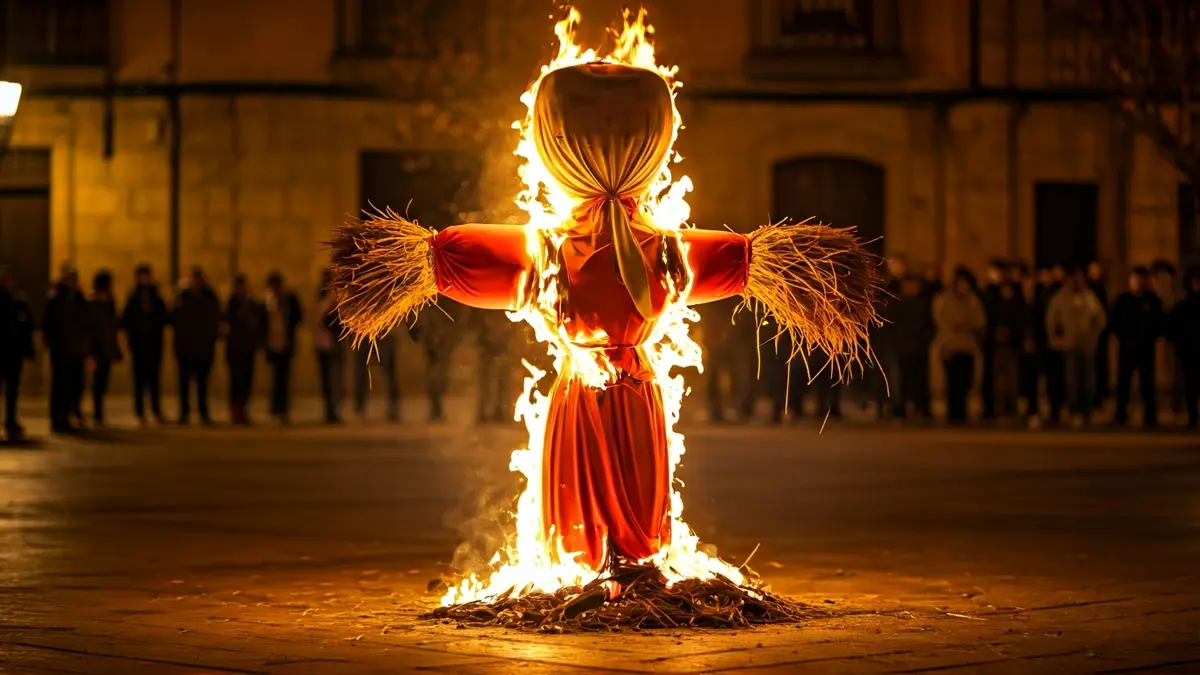
The town of El Burgo in Málaga has become the focus of an international controversy following the burning of a fourteen-meter effigy representing Benjamin Netanyahu, the Prime Minister of Israel, during Easter Sunday celebrations. This act, part of a deeply rooted Spanish tradition of symbolic criticism, has been seen by some as scandalous, while others view it as a legitimate expression of popular discontent.
For those familiar with these customs, the burning of figures is a way to highlight what troubles or angers the community. It is not a democratic anomaly, but a raw manifestation of freedom of expression, where what burns is not a person, but a representation of power and political decisions that generate collective unease.
Under International Human Rights Law, freedom of expression protects political criticism, even in its harshest forms. Even more so when directed at figures embodying state power.
The current context adds a layer of complexity to this incident, especially given accusations of serious violations of International Law, including genocide and war crimes. In this scenario, the legal and moral obligation not to cooperate with such situations falls not only on States but also on societies, which react through demonstrations, boycotts, and, at times, symbolic acts like effigy burning.
The diplomatic reaction was swift. The Government of Israel summoned the Spanish Chargé d'Affaires to express its displeasure. While this measure is legitimate within diplomatic practice, the incident highlights a paradox: the protest in El Burgo was not a state or institutional act, but a citizen's expression, localized and rooted in a cultural tradition. This intentional confusion, according to some analyses, seeks to delegitimize political criticism and the space for protest against what are considered atrocious acts.