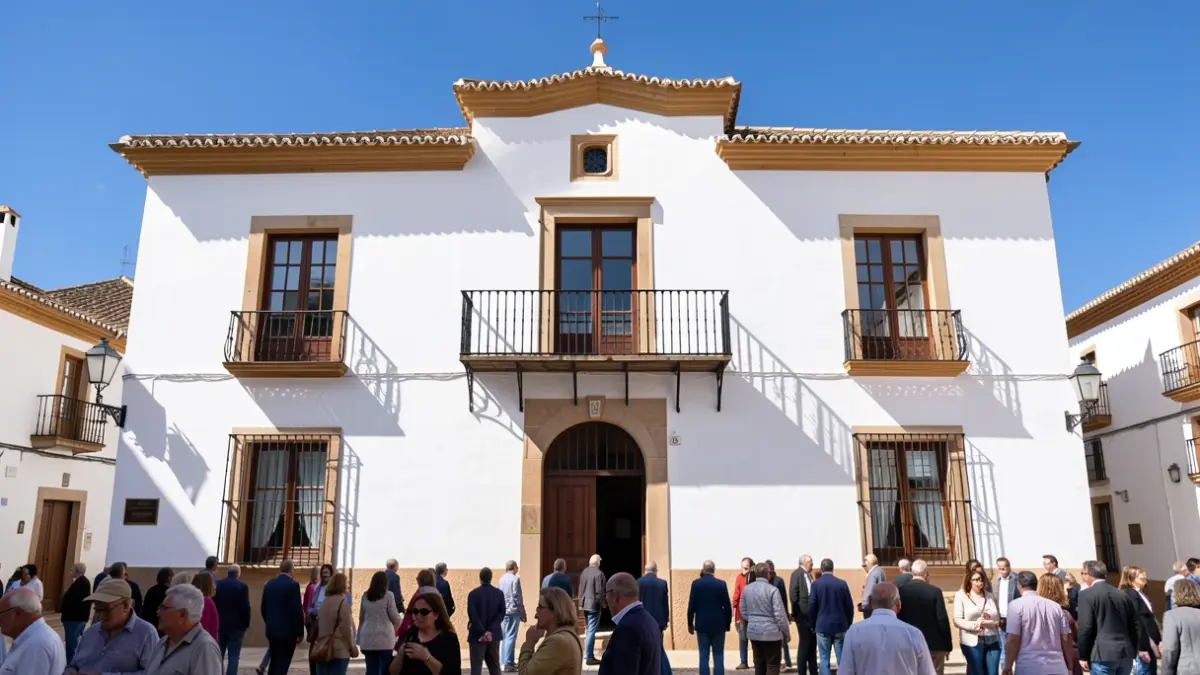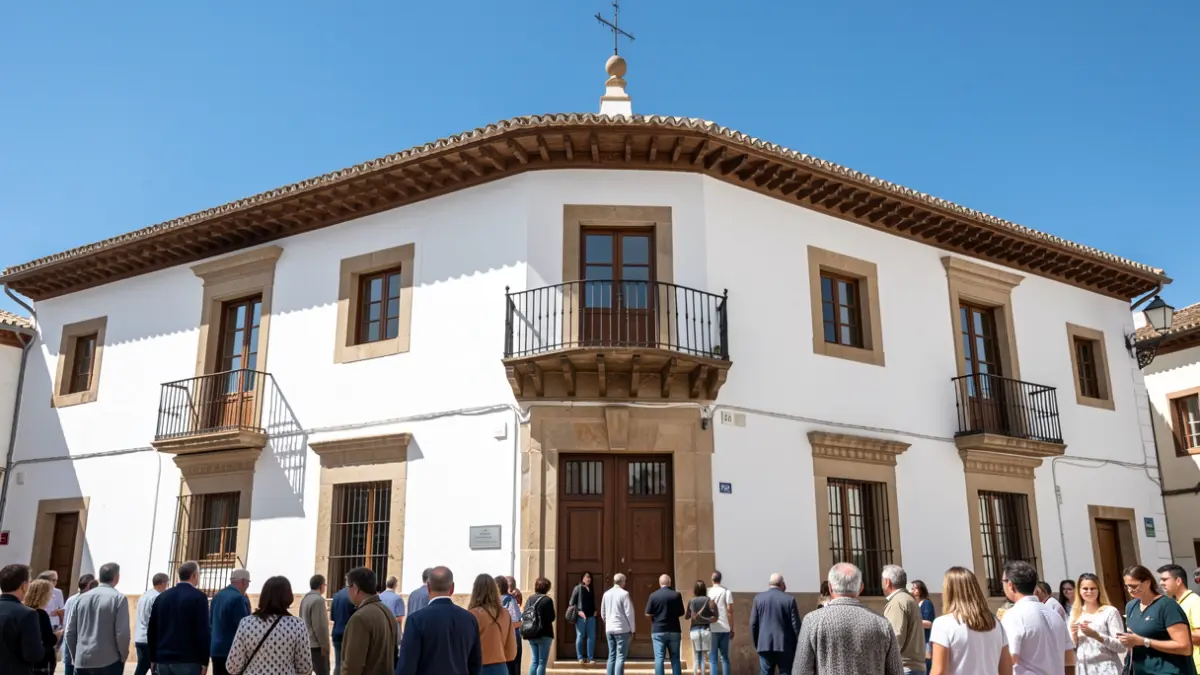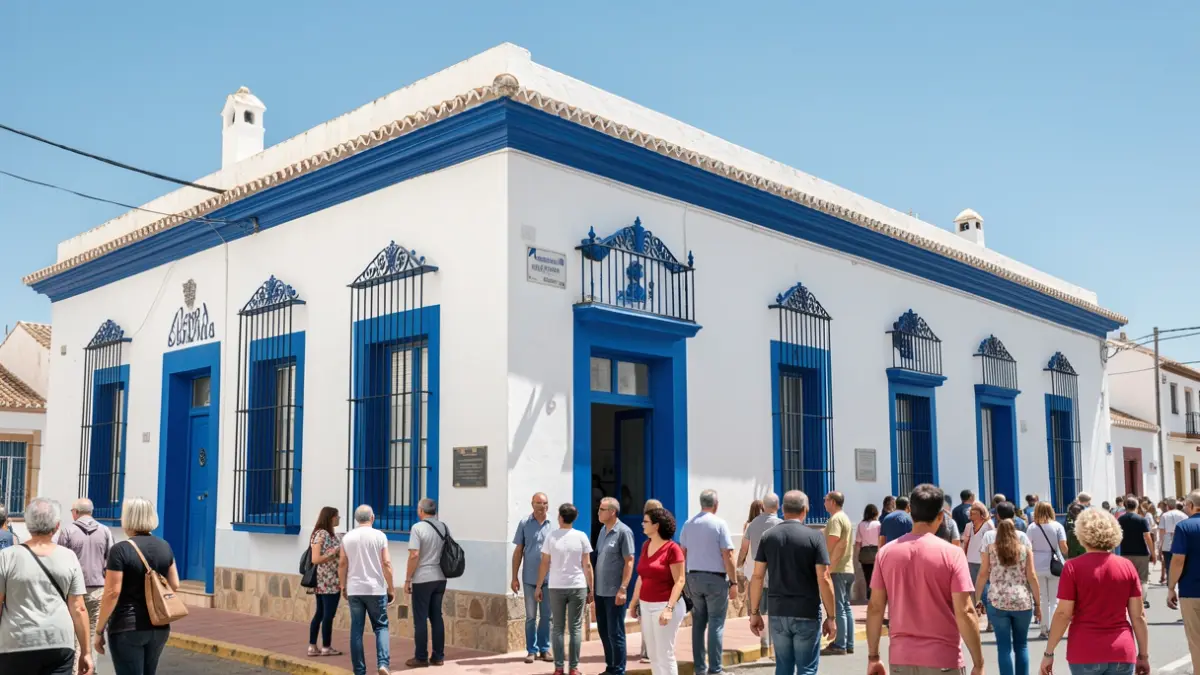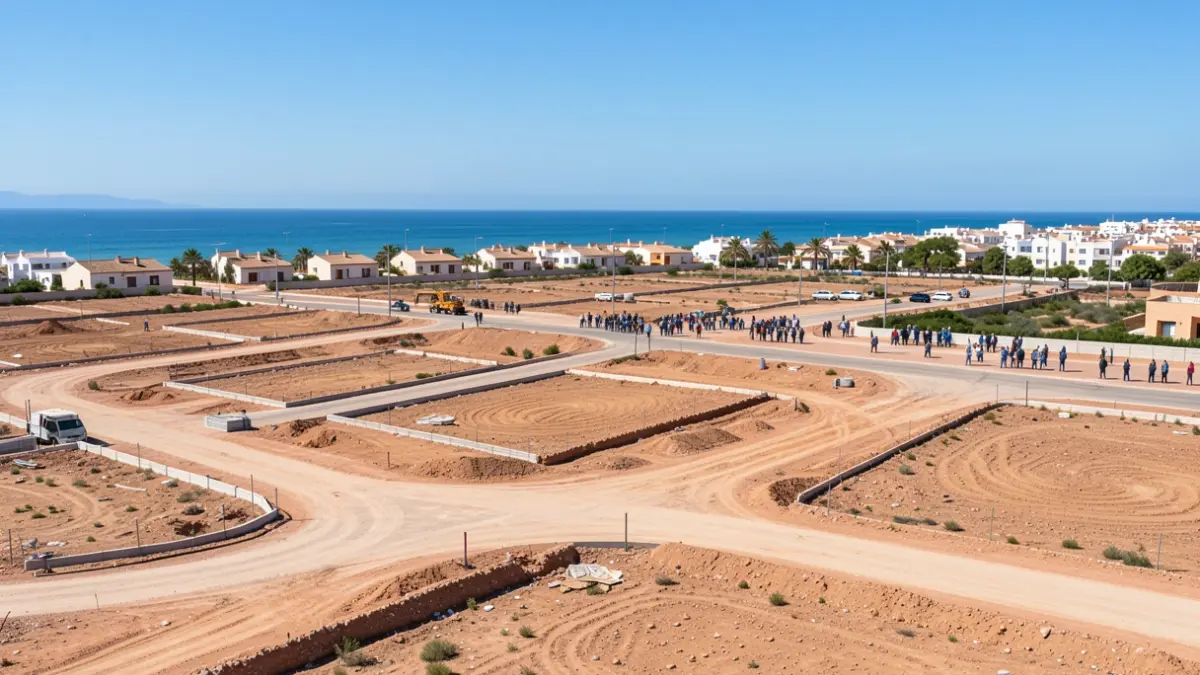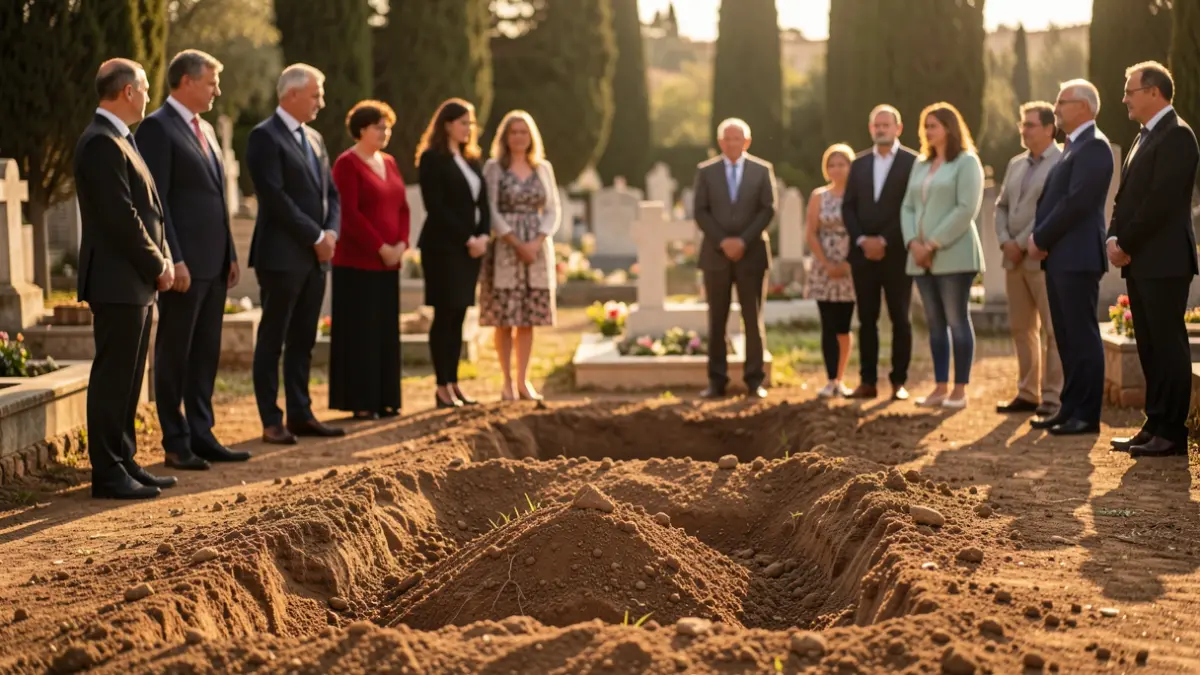
The event, promoted by the Zufre City Council, brought together institutional representatives, family members, and officials from the memorial recovery process carried out at the municipal cemetery. Among those present were Lourdes Moya, delegate prosecutor for Human Rights and Democratic Memory of the Provincial Prosecutor's Office of Huelva, and the mayor of the municipality, Santiago González.
Antonio Carrascal Lema was 32 years old when he was shot on September 29, 1936. Born in Higuera la Real, he worked as a farm laborer and was actively involved in local public life, serving as president of the Workers' Placement Office since 1933 and being part of the provisional town council.
His remains were found in 2024 during archaeological excavations in grave number 4 of the municipal cemetery, along with two other men. The excavation documented direct evidence of violence, such as a copper wire cable still around his wrists tied behind his back and a projectile lodged in his skull.
The genetic identification, conducted by the University of Granada, is the first positive identification obtained from the exhumations in Zufre, an advancement that for the family means "recovering a story violently torn away and closing a wound open for generations."
Archaeological work since 2024 has exhumed 18 victims of the Civil War from eight mass graves in the cemetery of Zufre. Three new graves containing three more individuals are currently being excavated.
The return of Antonio Carrascal Lema's remains also symbolizes the progress of democratic memory policies in the province of Huelva, restoring dignity to a victim whose name was publicly spoken in the very municipality where he was murdered.