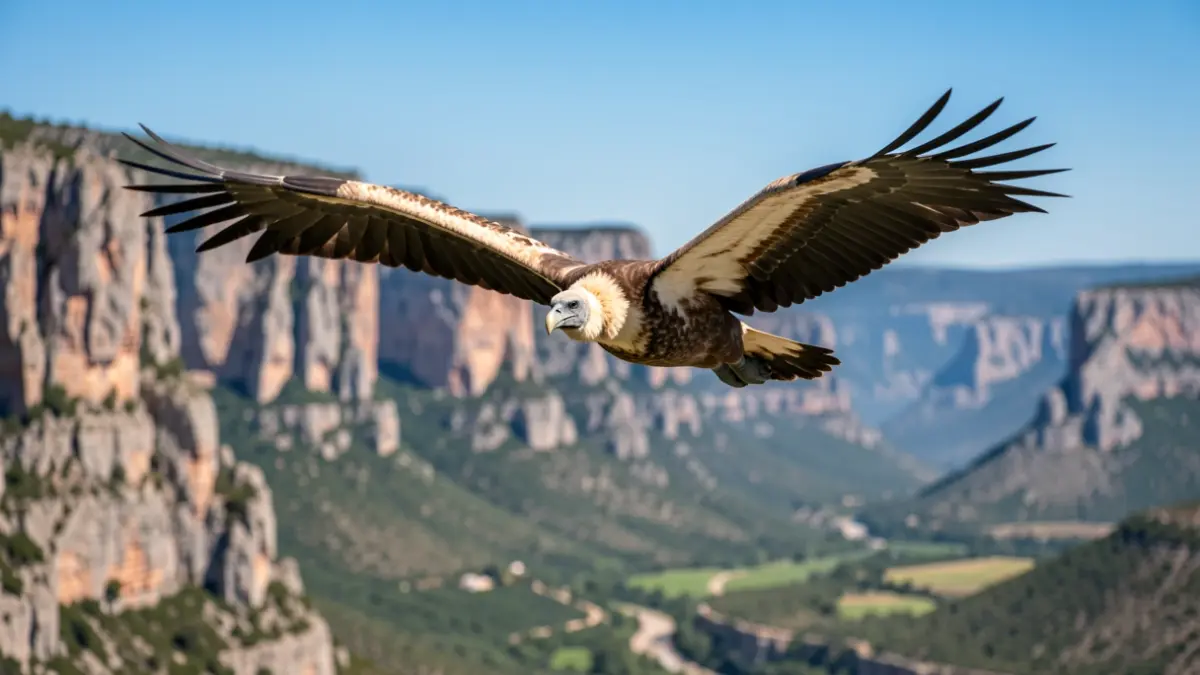
The specimen, named ‘Baza’ in honor of the Granada municipality and aged 87 days, was set free in a designated area of the Jaén park. This action is part of the Andalusian Plan for the Recovery of Scavenger Birds and completes the six releases planned for this season.
The event was presided over by the acting Minister of Sustainability and Environment, Catalina García, who had previously visited the Bearded Vulture Captive Breeding Center of Guadalentín, located in the Sierra de Segura. This facility has become a European benchmark, having hatched nearly a hundred chicks in the last decade, many of which have been released across Europe. Currently, Guadalentín contributes between 25% and 40% of the chicks born annually within the European captive breeding network.
Since the program began in 2006, 108 bearded vultures have been released in Andalusian natural parks such as Cazorla, Segura y Las Villas, Sierra de Castril, and Sierra Nevada. Of these, 67 individuals are still alive, 32 have died from various causes, and 9 are unlocatable due to issues with their GPS devices.
Currently, Andalusia has 15 occupied breeding territories: twelve in the Sierras de Cazorla, Segura y Las Villas, two in Sierra de Castril, and one in Sierra Nevada. Between 2015 and 2025, 23 chicks born in the wild have taken flight, with 15 of them still alive, indicating a progressive consolidation of the breeding population in the region.
The Guadalentín center not only breeds specimens for Andalusia but also undertakes the rearing of chicks from other European centers through a double adoption system, reinforcing Andalusia's role in the national and European conservation efforts for the species.
The project is supported by the Foundation for the Conservation of the Bearded Vulture (FCQ), the Vulture Conservation Foundation (VCF), and the administrations of Aragón and Catalonia. The first releases are planned to begin in 2027 in the Sierra de Grazalema Natural Park (Cádiz), aiming to create an ecological link between European populations and those in North Africa.