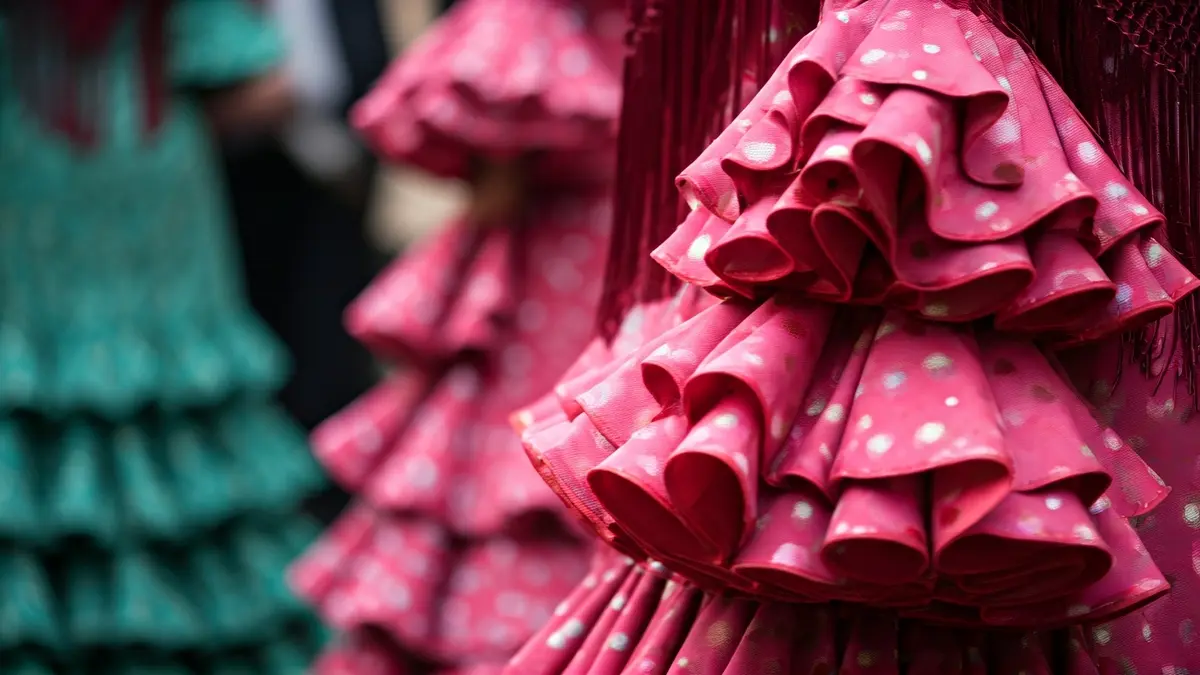
From Monday until the 10th, the Patio del General at the Virgen del Rocío University Hospital hosts the exhibition Sevilla y olé. Visita Sevilla en sus trajes típicos. This initiative, driven by the Marco Luna Association, aims to merge flamenco art with awareness about oncohematological diseases.
The display features eight flamenco dress designs created by Eva Luna, who founded the organization in 2016 in memory of her son Marco. Each piece is a tribute to Sevillian identity, with references to monuments such as the Giralda, the Torre del Oro, and the Puente de Triana, which even traveled across the Atlantic after a fashion show.
The collection has expanded to include diverse elements like horses, lanterns, and the bullfighting world, along with nods to the monumental Plaza de España and the industrial sector represented by Airbus. A prominent design celebrates the city's two major festivities: the Feria de Abril and Semana Santa, incorporating details such as the Macarena's mantle and the traditional peineta.
The Marco Luna Association focuses its work on supporting patients and families affected by oncohematological diseases, as well as promoting research and public awareness.
Beyond its artistic value, the exhibition has a strong social component. The Marco Luna Association is dedicated to supporting patients and families with oncohematological diseases, promoting research and awareness. Their actions seek to improve the quality of life for those affected and encourage donations and knowledge about these pathologies.
This activity is part of the hospital's cultural program, which aims to humanize healthcare spaces and create meeting points between patients, professionals, and the community.