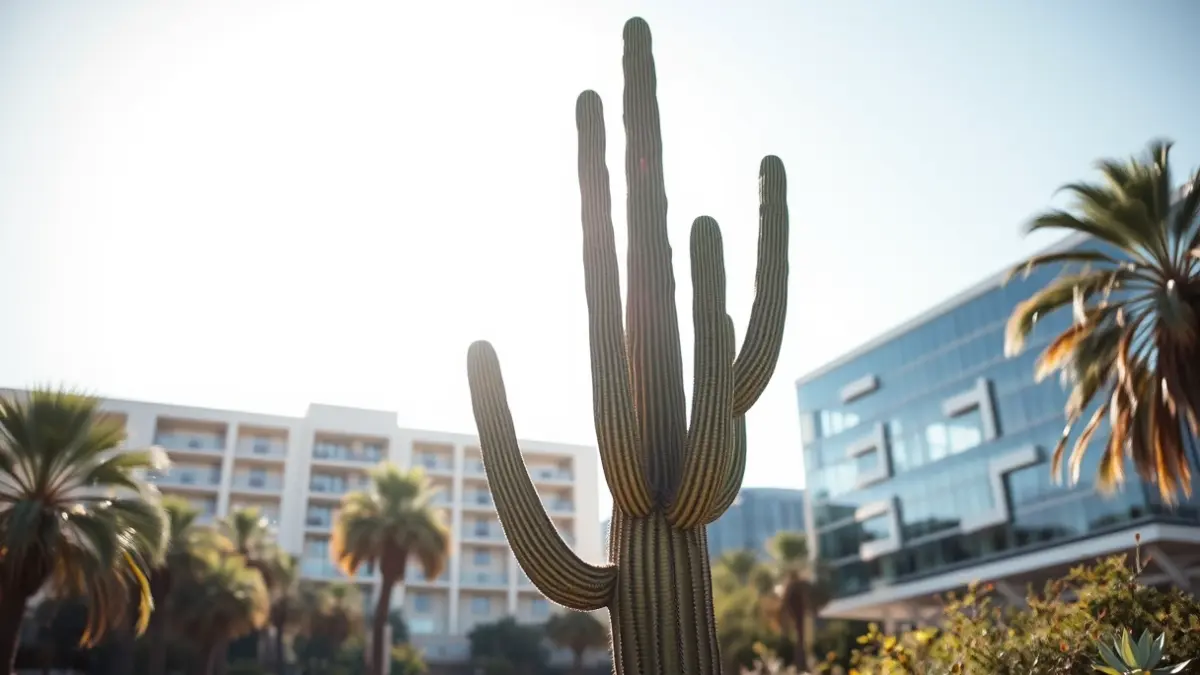
Few are aware of the existence of this majestic cardón or saguaro specimen, estimated to be hundreds of years old, possibly up to 1,500. It was located next to the Mexican pavilion, designed by Juan Siles Aguilera, and its transfer from Mexicali was a true odyssey.
The selection of the cactus, from the Valley of the Giants in New California, took place in 1975. Although initially considered for the Mexicali City Council, its final destination was Seville. Work on its transport began on December 14, 1991, generating great anticipation and also controversy among local residents.
“"Sahuaro, San Felipe, B.C. Native Town, wishes you a happy journey to Spain."
The controversy reached such a point that the Mexican congress declared the area a Sanctuary of the Cardones, temporarily suspending work on January 23, 1992. Finally, on March 17, with the help of three cranes, the cactus was extracted and prepared for a journey full of obstacles, including environmentalist sabotage and logistical problems with air transport.
After a complex journey that included a last-minute agreement with a Russian plane, the cactus arrived at Seville airport on the morning of March 23, 1992. However, challenges continued in the city, where unloading and transfer to the Isla de la Cartuja required special cranes and detours due to the impossibility of crossing the Alamillo Bridge. That same afternoon, the specimen was finally installed in its definitive location.
During the six months of the Universal Exposition, the giant cardón was an attraction, but after its closure on October 12, a slow process of neglect began. Thirty-four years after its planting, the ADEPA association denounces the sad situation of the cactus, which has suffered root asphyxiation, vandalism, and injuries, and calls for urgent measures for its conservation.