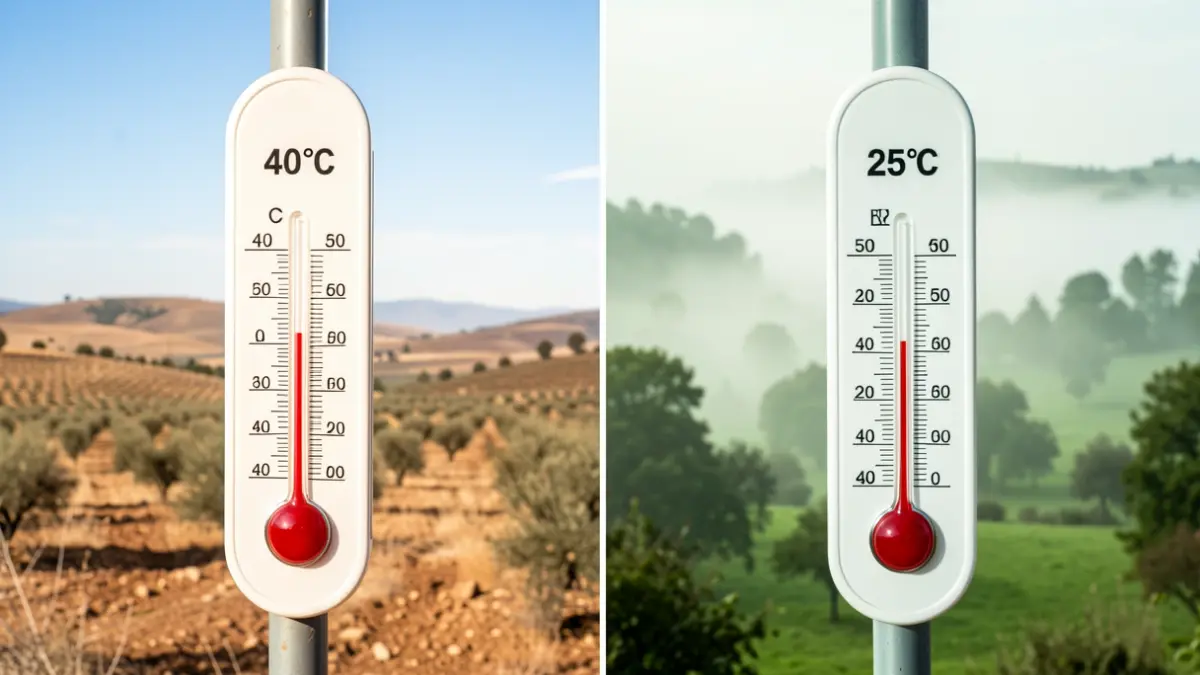
The difference in heat tolerance across various Spanish regions is notable, according to the new health impact thresholds established by the Ministry of Health. While heat is considered dangerous from around 25-26 degrees Celsius in parts of the Asturian coast, in the Sevillian countryside, this "trigger threshold" rises to 42 degrees Celsius, a difference of over 15 degrees.
This climatic adaptation is based on analyzing the relationship between temperature and mortality, identifying at what point negative health effects begin to increase in each territory. Meteosalud maps place Andalusia, particularly areas of Seville, Córdoba, and Jaén in the Guadalquivir valley, among the regions with the highest heat tolerance thresholds.
In contrast, Andalusian coastal provinces like Málaga, Cádiz, or Granada, where maritime influence moderates summer temperatures, show lower figures, with thresholds around 27 degrees Celsius in the Strait of Gibraltar or 30.6 in Sol y Guadalhorce.
Experts warn that these thresholds do not imply that lower temperatures are harmless, but rather mark the point of significant increase in heat-associated mortality. Factors such as age, chronic illnesses, outdoor work, or lack of air conditioning can increase risk even before these values are reached.
The Cardiology Service at Vithas Seville points out that high temperatures pose a "real and underestimated risk" to cardiovascular health. Heat forces the body to make an extra effort to regulate temperature, increasing heart rate and altering the balance of essential electrolytes, which can lead to arrhythmias or drops in blood pressure.
Special attention is recommended for symptoms such as palpitations, dizziness, or chest pain, especially in individuals over 65, children, and those with pre-existing conditions. Cardiologists emphasize the importance of staying hydrated, avoiding sun exposure during the central hours of the day, and not altering medical treatments without supervision.