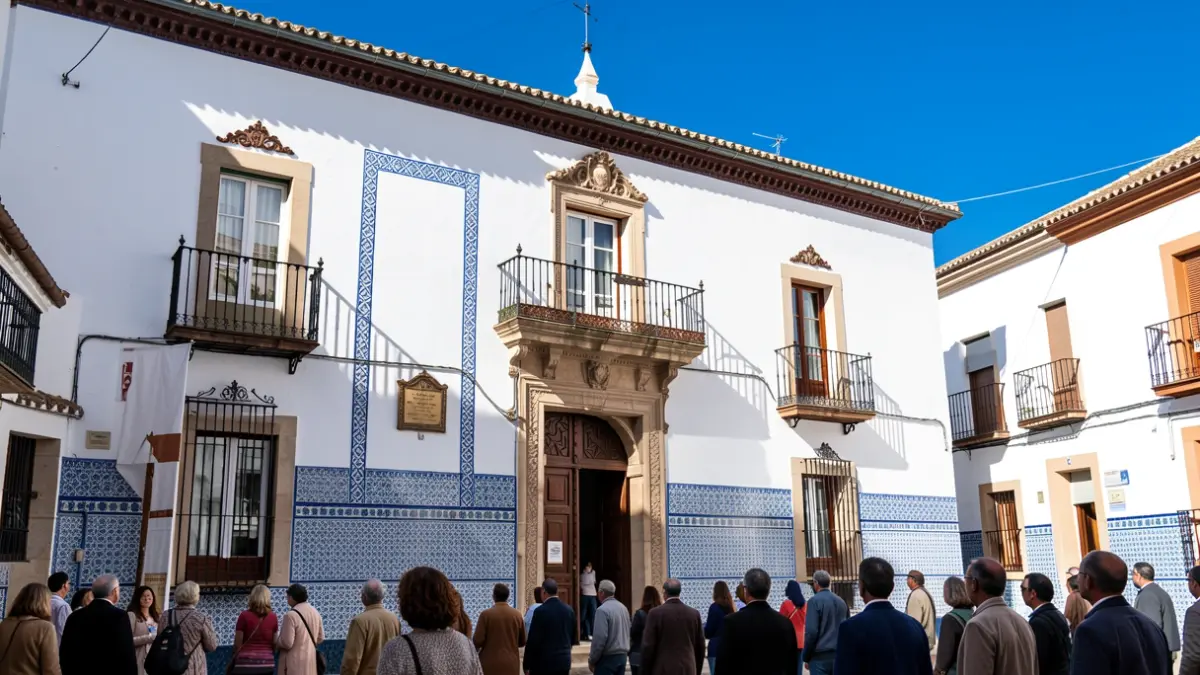
The mayor of Roquetas de Mar, Gabriel Amat, and the Director General of the National Police, Francisco Pardo, signed a protocol this Friday that expedites the arrival of a police force that will enhance security in the town. This agreement, the result of nearly three years of work, lays the groundwork for the future presence of at least 210 officers, with the possibility of expanding the force according to municipal needs.
The document establishes a framework for institutional cooperation to coordinate the legal, technical, and material aspects necessary to establish a joint headquarters. Upcoming steps include the formalization of administrative instruments such as a property agreement to modify the ownership of a property and a collaboration agreement for adaptation works, allowing for a provisional service implementation.
“"Bringing the National Police closer to citizens and improving their well-being and security."
Pardo Piqueras framed this initiative within the Ministry of the Interior's strategy to enhance the proximity of public services. He highlighted the recent evolution of crime in the province of Almería, with a 11.74% decrease in criminal offenses year-to-date compared to 2025, affecting both serious and less serious crimes (-6.80%) and minor offenses (-17.78%).
Currently, Almería has 812 National Police officers distributed across the capital, El Ejido, Roquetas de Mar, and Huércal-Overa, representing an increase of 155 officers since 2018, close to 24%.
For his part, Mayor Amat emphasized the demographic and territorial pressure on Roquetas de Mar, with over 115,000 registered inhabitants, a figure that multiplies in summer to exceed 250,000. The more than 16 kilometers of coastline and a large agricultural and rural area justify the need for a security model adapted to these characteristics.
“"Today is an important day for the municipality's security. It has not been easy, it has been long and complicated, but we have worked together to provide the necessary security to the citizens."
The mayor also raised the convenience of maintaining a shared security structure between the Civil Guard and the National Police, arguing that the coexistence of both forces would allow for more effective attention to both urban areas and agricultural and rural environments.