AlmeríaCádizCórdobaGranadaHuelvaJaénMálagaSevillaAlpujarra AlmerienseLos VélezComarca Metropolitana de AlmeríaFilabres-TabernasLevante AlmeriensePoniente AlmerienseValle del AlmanzoraBahía de CádizCampiña de JerezCampo de GibraltarCosta NoroesteLa JandaSierra de CádizAlto GuadalquivirCampiña de BaenaCampiña Sur CordobesaLos PedrochesCórdoba (comarca)SubbéticaValle del GuadiatoValle Medio del GuadalquivirAlpujarra GranadinaComarca de AlhamaComarca de BazaComarca de GuadixComarca de HuéscarComarca de LojaCosta GranadinaLos MontesValle de LecrínVega de GranadaEl AndévaloEl Condado de HuelvaCosta OccidentalCuenca MineraComarca Metropolitana de HuelvaSierra de HuelvaÁrea Metropolitana de JaénCampiña de JaénEl Condado (Jaén)La LomaSierra de CazorlaSierra MáginaSierra MorenaSierra de SeguraSierra Sur de JaénLas VillasComarca de AntequeraLa AxarquíaGuadaltebaCosta del Sol OccidentalMálaga Costa del SolNorormaValle del GuadalhorceSerranía de RondaSierra de las NievesAljarafeBajo GuadalquivirCampiña de CarmonaCampiña de Morón y MarchenaComarca de ÉcijaComarca Metropolitana de SevillaSierra Norte de SevillaSierra Sur de SevillaVega del GuadalquivirAlmeríaCádizCórdobaGranadaHuelvaJaénMálagaSevillaAlpujarra AlmerienseLos VélezComarca Metropolitana de AlmeríaFilabres-TabernasLevante AlmeriensePoniente AlmerienseValle del AlmanzoraBahía de CádizCampiña de JerezCampo de GibraltarCosta NoroesteLa JandaSierra de CádizAlto GuadalquivirCampiña de BaenaCampiña Sur CordobesaLos PedrochesCórdoba (comarca)SubbéticaValle del GuadiatoValle Medio del GuadalquivirAlpujarra GranadinaComarca de AlhamaComarca de BazaComarca de GuadixComarca de HuéscarComarca de LojaCosta GranadinaLos MontesValle de LecrínVega de GranadaEl AndévaloEl Condado de HuelvaCosta OccidentalCuenca MineraComarca Metropolitana de HuelvaSierra de HuelvaÁrea Metropolitana de JaénCampiña de JaénEl Condado (Jaén)La LomaSierra de CazorlaSierra MáginaSierra MorenaSierra de SeguraSierra Sur de JaénLas VillasComarca de AntequeraLa AxarquíaGuadaltebaCosta del Sol OccidentalMálaga Costa del SolNorormaValle del GuadalhorceSerranía de RondaSierra de las NievesAljarafeBajo GuadalquivirCampiña de CarmonaCampiña de Morón y MarchenaComarca de ÉcijaComarca Metropolitana de SevillaSierra Norte de SevillaSierra Sur de SevillaVega del Guadalquivir

Los Alcornocales: A Natural Laboratory Against Climate Change

This Andalusian park, key to biodiversity, promotes European forest management and economic development initiatives to face global change.

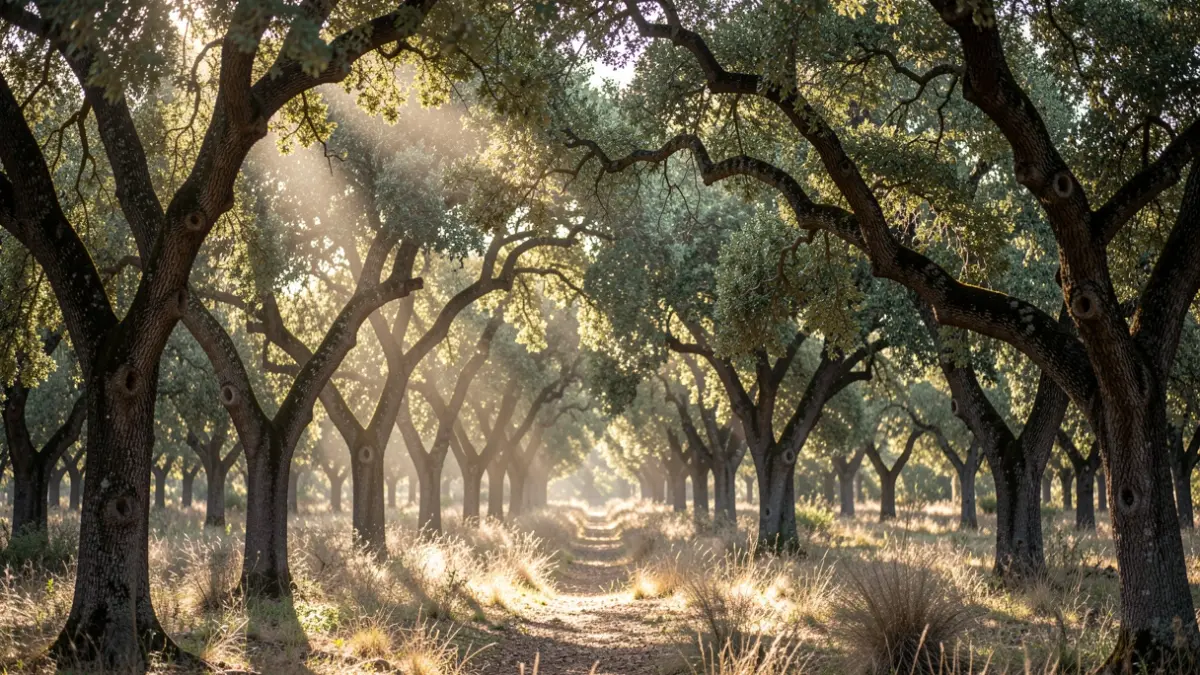
Dense cork oak and gall oak forest in Los Alcornocales Natural Park, Andalusia, with sunlight filtering through the branches.
IA

Dense cork oak and gall oak forest in Los Alcornocales Natural Park, Andalusia, with sunlight filtering through the branches.

Los Alcornocales Natural Park, one of the Mediterranean's great biodiversity hotspots, has established itself as a natural laboratory for developing and implementing innovative solutions to climate change.

This extensive protected area, covering nearly 170,000 hectares across the provinces of Cádiz and Málaga, is renowned for its dense cork oak and gall oak forests, earning it the nickname "Europe's last jungle." It has recently become the primary setting for various European-level scientific and forestry initiatives.
The Regional Ministry of Sustainability and Environment of the Junta de Andalucía, in collaboration with research centers, universities, and European entities, is leading projects aimed at strengthening the park's role in conservation, socioeconomic development, and scientific experimentation in the face of global change challenges. Its strategic location near the Strait of Gibraltar makes it a global biodiversity hotspot, with a significant human presence since prehistoric times.
One of the notable initiatives is the LIFE CO2RK project, focused on CO₂ emission compensation through the Andalusian Emissions Compensation System (SACE). This project seeks to attract private investment for the conservation of the cork oak forest through carbon forestry actions, offering companies a way to offset part of their emissions.
To ensure the sustainability of the cork oak forest, the 'cork harvester school' was established years ago, a training initiative that has facilitated the entry of over 120 new professionals into this traditional activity.
Another line of work focuses on recovering the economic value of the gall oak (Quercus canariensis), known as the Andalusian oak. Historically prized for shipbuilding, its use has been relegated to firewood. The Pablo de Olavide University and a sawmill in Navarra are investigating the suitability of this wood for making barrels and structural elements. The French region of Alsace has shown interest in this species as an alternative to oak in areas affected by climate change, and acorns have been collected for cultivation in French nurseries.
The park also serves as an ideal setting for analyzing the effectiveness of forest fire prevention and management techniques within the REFLORESTA project. Historically, Los Alcornocales has experienced recurrent but low-intensity fires, allowing for the study of the interaction between forest management, research, and traditional uses.
Thanks to this interaction, Los Alcornocales Natural Park has been nominated as one of the five European Living Labs within the FARCLIMATE project, promoted by the International Union for Conservation of Nature (IUCN). This designation recognizes the park as a reference space for scientific research and coordinated territorial management, serving as an example of good practices for climate change adaptation in Europe.