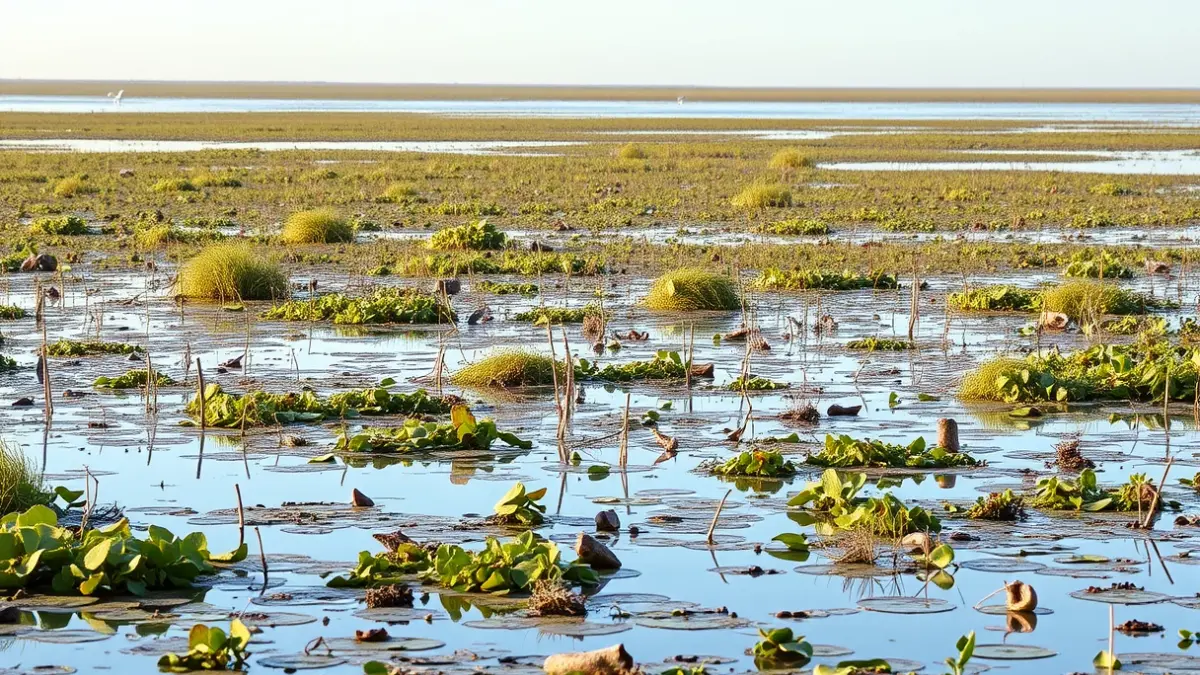
This area, declared a reserve in 1991, was transformed from a gravel pit into a wetland by two biologists who dedicated their lives to conservation. Now, as they approach retirement age, the owners express concern for the future of this enclave, which functions as a hospital, restaurant, and refuge for birds from Doñana and its surroundings.
Since its creation, the reserve has been fundamental for the recovery of endangered species. For example, the marbled teal, classified as vulnerable, has seen the release of over 3,000 specimens by 2025. Similarly, the ferruginous duck and the red-knobbed coot, both at risk of extinction, have been part of breeding and release programs, with over 500 and 1,900 specimens respectively.
La Cañada de los Pájaros, which receives over 100,000 annual visits and has trained thousands of interns and volunteers, is home to nearly 200 bird species, 180 of which are native. Despite its ecological and educational importance, the reserve struggles to cover its annual expenses of 120,000 euros, relying mainly on entrance fees and restaurant rental income.
The reserve's history dates back to 1987, when the founders acquired 7.5 hectares of land, a former gravel pit in terrible condition. After an ecological catastrophe in Doñana in 1986, which caused the death of thousands of birds, the biologists set out to create a refuge. In 1988, the gravel pit was cleaned and transformed into a wetland, with the reserve's house inaugurated on New Year's Eve 1989.
Given this situation, an appeal is being made to institutions such as the La Puebla City Council, the Seville Provincial Council, the Junta de Andalucía, and the Spanish Government, as well as to conservation organizations and private capital, to ensure the continuity of this valuable natural space and the legacy of its founders.