AlmeríaCádizCórdobaGranadaHuelvaJaénMálagaSevillaAlpujarra AlmerienseLos VélezComarca Metropolitana de AlmeríaFilabres-TabernasLevante AlmeriensePoniente AlmerienseValle del AlmanzoraBahía de CádizCampiña de JerezCampo de GibraltarCosta NoroesteLa JandaSierra de CádizAlto GuadalquivirCampiña de BaenaCampiña Sur CordobesaLos PedrochesCórdoba (comarca)SubbéticaValle del GuadiatoValle Medio del GuadalquivirAlpujarra GranadinaComarca de AlhamaComarca de BazaComarca de GuadixComarca de HuéscarComarca de LojaCosta GranadinaLos MontesValle de LecrínVega de GranadaEl AndévaloEl Condado de HuelvaCosta OccidentalCuenca MineraComarca Metropolitana de HuelvaSierra de HuelvaÁrea Metropolitana de JaénCampiña de JaénEl Condado (Jaén)La LomaSierra de CazorlaSierra MáginaSierra MorenaSierra de SeguraSierra Sur de JaénLas VillasComarca de AntequeraLa AxarquíaGuadaltebaCosta del Sol OccidentalMálaga Costa del SolNorormaValle del GuadalhorceSerranía de RondaSierra de las NievesAljarafeBajo GuadalquivirCampiña de CarmonaCampiña de Morón y MarchenaComarca de ÉcijaComarca Metropolitana de SevillaSierra Norte de SevillaSierra Sur de SevillaVega del GuadalquivirAlmeríaCádizCórdobaGranadaHuelvaJaénMálagaSevillaAlpujarra AlmerienseLos VélezComarca Metropolitana de AlmeríaFilabres-TabernasLevante AlmeriensePoniente AlmerienseValle del AlmanzoraBahía de CádizCampiña de JerezCampo de GibraltarCosta NoroesteLa JandaSierra de CádizAlto GuadalquivirCampiña de BaenaCampiña Sur CordobesaLos PedrochesCórdoba (comarca)SubbéticaValle del GuadiatoValle Medio del GuadalquivirAlpujarra GranadinaComarca de AlhamaComarca de BazaComarca de GuadixComarca de HuéscarComarca de LojaCosta GranadinaLos MontesValle de LecrínVega de GranadaEl AndévaloEl Condado de HuelvaCosta OccidentalCuenca MineraComarca Metropolitana de HuelvaSierra de HuelvaÁrea Metropolitana de JaénCampiña de JaénEl Condado (Jaén)La LomaSierra de CazorlaSierra MáginaSierra MorenaSierra de SeguraSierra Sur de JaénLas VillasComarca de AntequeraLa AxarquíaGuadaltebaCosta del Sol OccidentalMálaga Costa del SolNorormaValle del GuadalhorceSerranía de RondaSierra de las NievesAljarafeBajo GuadalquivirCampiña de CarmonaCampiña de Morón y MarchenaComarca de ÉcijaComarca Metropolitana de SevillaSierra Norte de SevillaSierra Sur de SevillaVega del Guadalquivir

Electricity Extracts Fatty Acids from Alperujo for New Material Production

Researchers from Granada and Seville successfully separate high-value molecules from olive waste using electrodialysis, opening avenues for bioplastics and cosmetics.

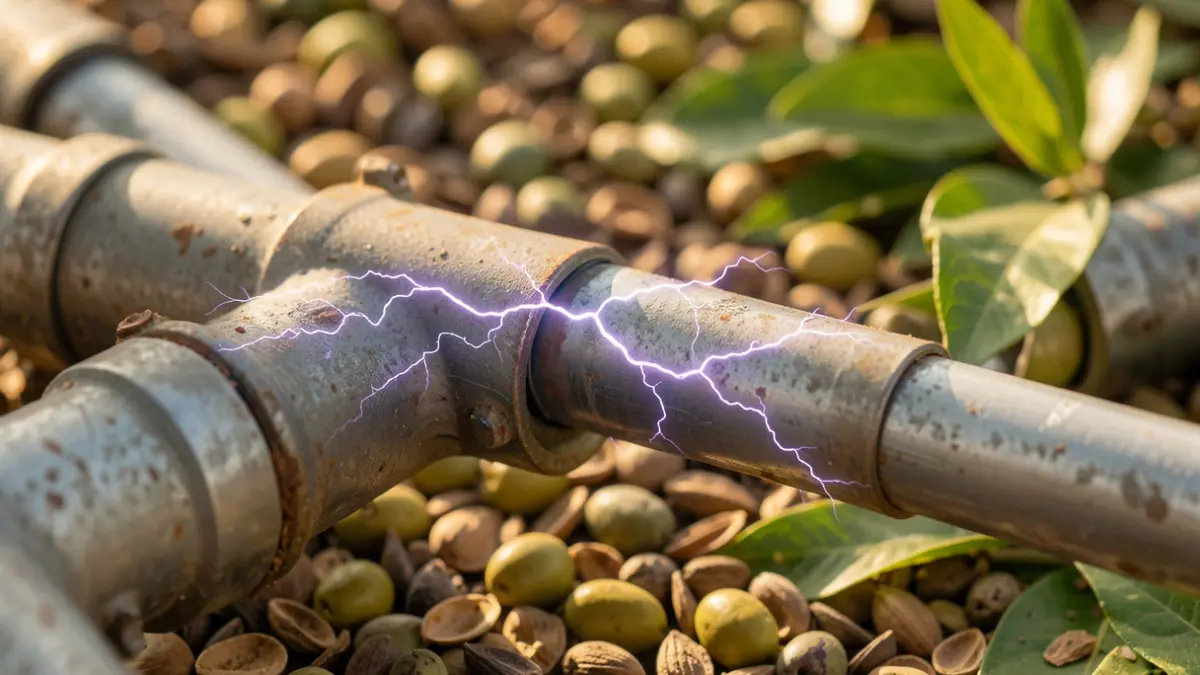
Electrical process to extract fatty acids from alperujo, an olive byproduct, for industrial use.
AI

Electrical process to extract fatty acids from alperujo, an olive byproduct, for industrial use.

A research team from the University of Granada and the Institute of Fat (CSIC) has developed an electrodialysis system to extract fatty acids from alperujo, a residue from olive oil production. This technology recovers high-value raw materials for industries such as chemical, cosmetic, and pharmaceutical, as well as for bioplastics manufacturing.

The University of Granada (UGR) and the Institute of Fat of Seville (IG-CSIC) have validated a system based on electric current to utilize alperujo, the main residue generated after olive oil production. The developed technology separates and concentrates molecules of interest present in this byproduct, facilitating the recovery of waste from which millions of tons are generated annually.
This advancement, published in the journal ACS Sustainable Chemistry & Engineering, is part of circular economy strategies. Alperujo, in addition to its traditional use for producing pomace oil or biogas, has a high organic matter content that allows for the extraction of volatile fatty acids. These small molecules, formed during fermentation, can be reused in various industrial applications.
The main novelty of the research, conducted in collaboration with the IMDEA Institute in Alcalá de Henares, is the first demonstration that electrodialysis functions directly on a real alperujo fermentate. This technique, typically used for water desalination or compound purification, acts as a selective filter driven by electric current.
Unlike previous methods that used simpler laboratory solutions, this system has proven effective even with the complexity of the real residue. Scientists compared the system's performance using a real fermentate and a synthetic solution, obtaining a cleaner and more concentrated fraction of compounds from the residue, recovering 55% of the present fatty acids.
The process offers significant advantages over traditional methods, such as notable energy savings, achieving an electrical efficiency of 86%. Electrodialysis uses electric current to move ions through selective membranes, simplifying the process and reducing energy consumption compared to distillation or resin capture.
The recovered raw materials, such as acetic acid, could be used to manufacture biodegradable plastics, as well as products for the cosmetic, hygiene, or pharmaceutical industries, in addition to industrial applications like food preservation or cleaning products.
Experts propose integrating electrodialysis continuously into the fermentation process. This would allow compounds to be removed as they are generated, preventing accumulation and slowing microbial activity, thereby increasing productivity and reducing costs. This model would transform olive mills into small biorefineries, providing additional economic benefit and making the olive sector more sustainable.
The work was funded by the Consejería de Universidad, Industria, Energía e Innovación of the Junta de Andalucía, through the EMERGIA research talent acquisition projects.

Based on information from the official source: Fundación Descubre (divulgación científica, Junta de Andalucía) (10/10/2026)