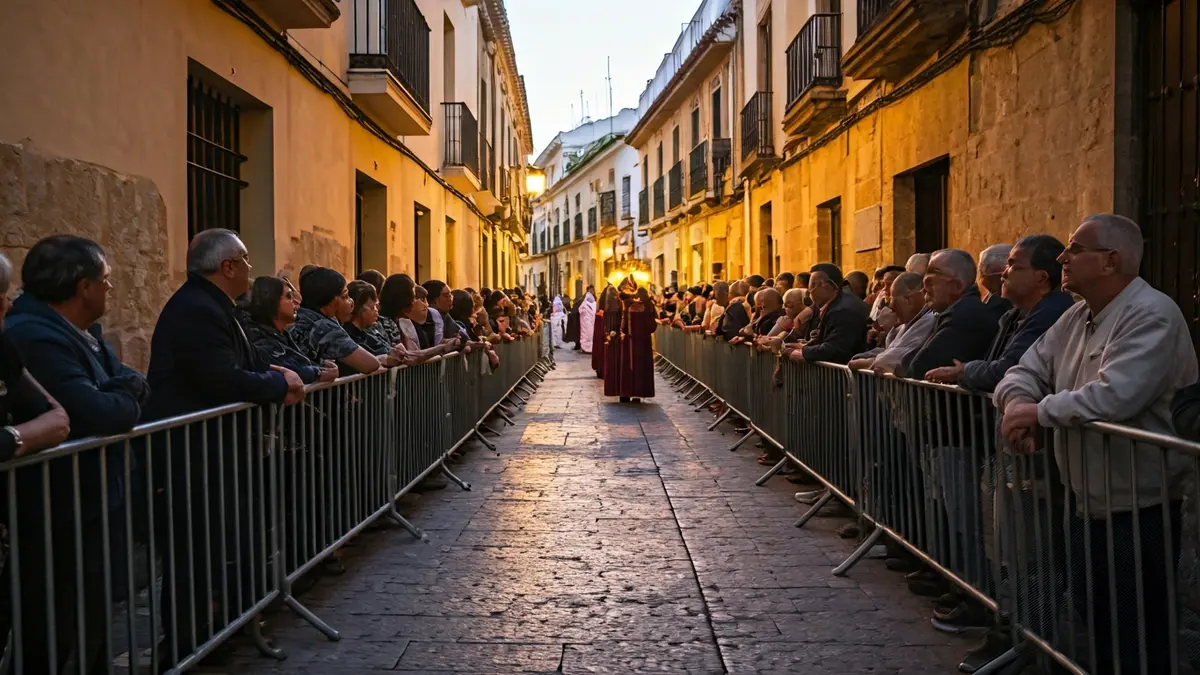
An event described as a “miracle” by the publication's director, where the image of the Esperanza Macarena freely approached devotees in Calle Alcázares, has sharply contrasted with the usual organizational rigidity of Seville's Holy Week. This incident has reignited the debate surrounding event management and public perception.
The public's reaction to this spontaneous gesture underscores a widespread feeling of exhaustion among Sevillians. Many express frustration over the proliferation of barriers, chairs, and stands that, in their view, restrict the traditional experience of the festivity and alienate citizens from its essence.
The Sevillian is already fed up with so many prohibitions, so many barriers, so many chairs, and so many stands. They need to get it into their heads that Holy Week is by and for the people.
The criticism is directed squarely at those responsible for organizing Holy Week, urging them to reconsider their approach. The main demand is for the celebration to reclaim its popular and accessible character, prioritizing public participation over imposed restrictions.