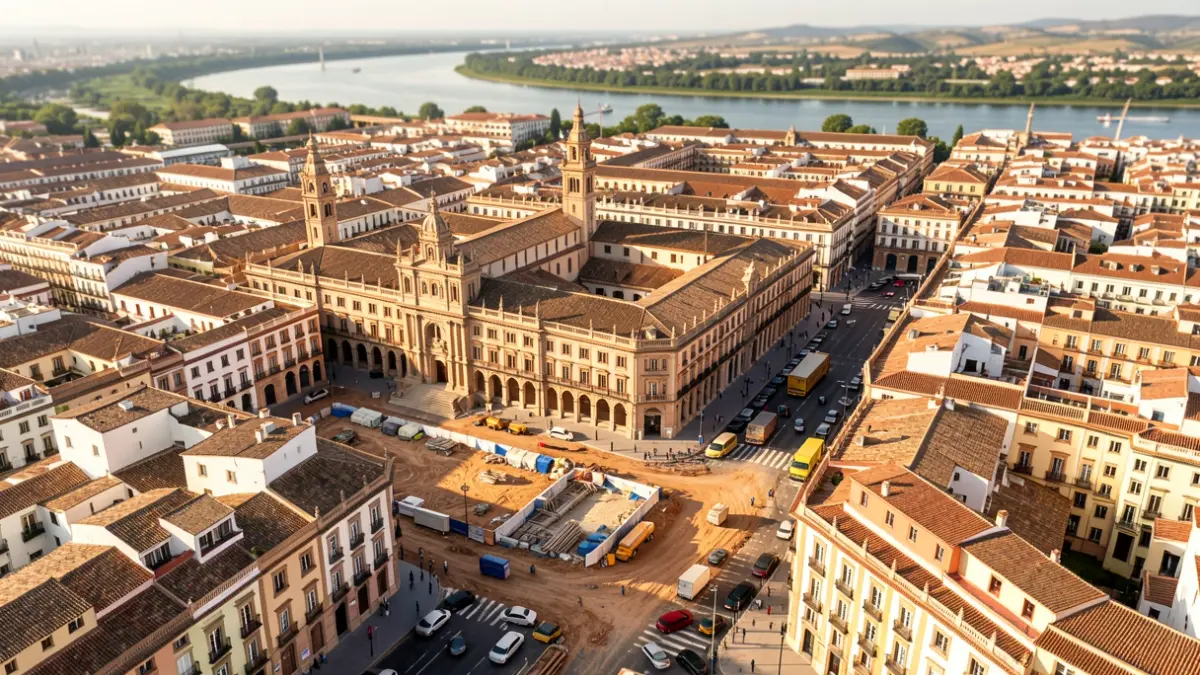
The northern access (Trajano street) and eastern access (Escuelas Pías) to the center of the Andalusian capital are cut off by various works. Added to this is the inability for the tram to operate in the south due to work on the Avenida, and from the west, the connection from Triana is limited to the Plaza de la Magdalena.
In light of this situation, the Provincial Confederation of Commerce, Services, and Self-Employed of Seville (Aprocom) has urged the City Council to guarantee "maximum access" for public transport to the commercial areas. The association points out that these simultaneous actions are having a "consequent repercussion on mobility and access to commercial areas."
Aprocom emphasizes the need for "maximum accessibility and penetration of public transport," arguing that many shoppers return "laden with bags." The efficiency of the public transport network is considered "fundamental," especially for the elderly or those with reduced mobility, who face "greater difficulties" due to traffic closures and the suspension of stops.
Although access to downtown parking lots has been enabled during the complete closure of Escuelas Pías, Aprocom believes these measures "do not compensate for the difficulties" caused by the coincidence of multiple projects. Therefore, the organization deems a "more adequate" planning of the works "essential," avoiding the simultaneity of so many projects on the main access routes.
The commerce sector estimates that these works are causing "significant economic damage" to the "already diminished economy" of small businesses. Furthermore, they request communication "several months in advance" so that merchants and citizens can "reorganize" their shopping and travel. Finally, Aprocom calls for the "establishment of alternative public transport routes" that ensure "comfortable and effective" access to commercial areas while the work lasts.