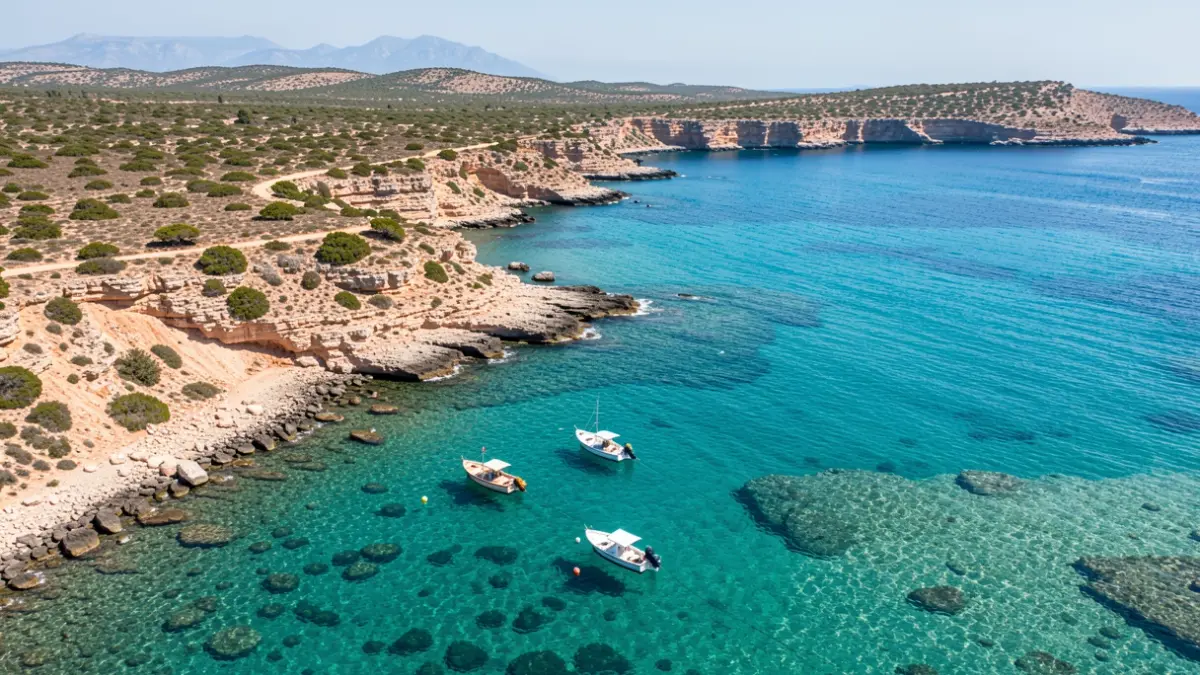
The protected marine strip of the Cabo de Gata-Níjar Natural Park will feature a reinforced signaling system with 103 buoys this summer. This initiative, led by the Ministry of Sustainability and Environment of the Regional Government of Andalusia, primarily aims to conserve coastal habitats and regulate recreational activities along the shoreline.
The territorial delegate for Sustainability and Environment in Almería, Manuel de la Torre, explained that the objective is to "conserve coastal habitats, regulate public use activities, and prevent risk situations for the safety and well-being of beach users." Navigation and the use of motor or sailing vessels are prohibited in the marked zones.
The 103 buoys will be distributed across 12 key areas of the Natural Park, including Corralete, Medialuna-Barronal-Mónsul, Morrón de los Genoveses Marine Reserve, Genoveses Beach, Playazo de Rodalquilar, Cala San Pedro, Cala El Plomo, Cala de Enmedio, Playa de los Muertos, the rocky outcrops of Isleta del Moro, and the Arrecife de las Sirenas Marine Reserve.
The Park's conservation director, Salvador Parra, recalled that, in addition to not navigating or anchoring in marked areas, it is prohibited to do so over rocky seabeds, Posidonia meadows, or in marine reserves, where the maximum permitted speed is 10 knots.
This buoy marking measure aligns with the objectives of the Natural Resources Management Plan, promoting ecological and habitat conservation while fostering respectful and sustainable socioeconomic and tourism development, thereby disseminating the natural and cultural values of the park.
Coordination among administrations was strengthened in a recent meeting that included representatives from the Territorial Delegation of Sustainability and Environment, the Local Police of the Almería City Council, the Maritime Captaincy of Almería, the Nature Protection Service and Maritime Service of the Civil Guard, the Provincial Service of Coasts, the Police Unit Adscribed to the Autonomous Community of Andalusia, and technicians from AMAYA, Environmental Agents, and the Park Directorate.
The meeting was described as "very positive and fruitful" by Park Director Salvador Parra, who highlighted the improved efficiency through coordinated efforts. Topics addressed included the prohibition of jet skis, information on authorized active tourism companies, maritime activity infringements, improvements in signaling and infrastructure, and vehicle access limitations in certain beach areas.
Manuel de la Torre expressed gratitude for the collaboration between the central, regional, and local administrations, emphasizing their "loyalty and enthusiasm" in protecting the values of the Cabo de Gata-Níjar Natural Park and the safety of its visitors.