AlmeríaCádizCórdobaGranadaHuelvaJaénMálagaSevillaAlpujarra AlmerienseLos VélezComarca Metropolitana de AlmeríaFilabres-TabernasLevante AlmeriensePoniente AlmerienseValle del AlmanzoraBahía de CádizCampiña de JerezCampo de GibraltarCosta NoroesteLa JandaSierra de CádizAlto GuadalquivirCampiña de BaenaCampiña Sur CordobesaLos PedrochesCórdoba (comarca)SubbéticaValle del GuadiatoValle Medio del GuadalquivirAlpujarra GranadinaComarca de AlhamaComarca de BazaComarca de GuadixComarca de HuéscarComarca de LojaCosta GranadinaLos MontesValle de LecrínVega de GranadaEl AndévaloEl Condado de HuelvaCosta OccidentalCuenca MineraComarca Metropolitana de HuelvaSierra de HuelvaÁrea Metropolitana de JaénCampiña de JaénEl Condado (Jaén)La LomaSierra de CazorlaSierra MáginaSierra MorenaSierra de SeguraSierra Sur de JaénLas VillasComarca de AntequeraLa AxarquíaGuadaltebaCosta del Sol OccidentalMálaga Costa del SolNorormaValle del GuadalhorceSerranía de RondaSierra de las NievesAljarafeBajo GuadalquivirCampiña de CarmonaCampiña de Morón y MarchenaComarca de ÉcijaComarca Metropolitana de SevillaSierra Norte de SevillaSierra Sur de SevillaVega del GuadalquivirAlmeríaCádizCórdobaGranadaHuelvaJaénMálagaSevillaAlpujarra AlmerienseLos VélezComarca Metropolitana de AlmeríaFilabres-TabernasLevante AlmeriensePoniente AlmerienseValle del AlmanzoraBahía de CádizCampiña de JerezCampo de GibraltarCosta NoroesteLa JandaSierra de CádizAlto GuadalquivirCampiña de BaenaCampiña Sur CordobesaLos PedrochesCórdoba (comarca)SubbéticaValle del GuadiatoValle Medio del GuadalquivirAlpujarra GranadinaComarca de AlhamaComarca de BazaComarca de GuadixComarca de HuéscarComarca de LojaCosta GranadinaLos MontesValle de LecrínVega de GranadaEl AndévaloEl Condado de HuelvaCosta OccidentalCuenca MineraComarca Metropolitana de HuelvaSierra de HuelvaÁrea Metropolitana de JaénCampiña de JaénEl Condado (Jaén)La LomaSierra de CazorlaSierra MáginaSierra MorenaSierra de SeguraSierra Sur de JaénLas VillasComarca de AntequeraLa AxarquíaGuadaltebaCosta del Sol OccidentalMálaga Costa del SolNorormaValle del GuadalhorceSerranía de RondaSierra de las NievesAljarafeBajo GuadalquivirCampiña de CarmonaCampiña de Morón y MarchenaComarca de ÉcijaComarca Metropolitana de SevillaSierra Norte de SevillaSierra Sur de SevillaVega del Guadalquivir

Brainless Marine Organism Detects Touch and Flees in Seconds

Researchers discover Trichoplax adhaerens reorients its cilia via a mechanical, calcium-dependent response to escape.

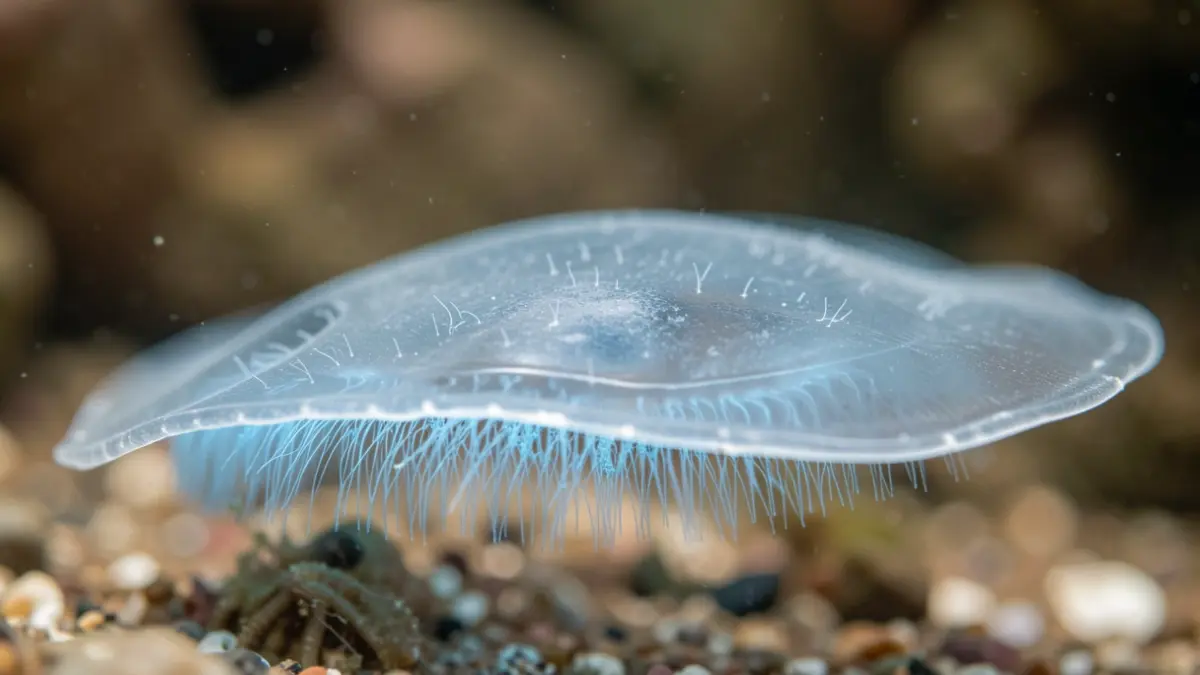
Marine organism Trichoplax adhaerens reacting to a mechanical stimulus.
IA

Marine organism Trichoplax adhaerens reacting to a mechanical stimulus.

A marine creature measuring just millimeters, named Trichoplax adhaerens, has demonstrated a surprising ability to detect touch and flee from danger within seconds, despite lacking a brain, nerves, or muscles.

This organism, appearing as a translucent blob at first glance, is one of the simplest known animals. However, upon receiving a mechanical stimulus, it reacts instantly and moves away from contact with unexpected agility, according to research published in Current Biology.
The escape behavior does not rely on neurons or muscles but on the coordinated organization of its cilia. The animal, measuring only a few millimeters wide and about 20 microns thick, moves by the coordinated beating of tens of thousands of these structures on its underside.
Researchers from the University of Aix-Marseille in France observed that after a gentle touch or even experimental bisection, the organism almost instantly alters the orientation of its cilia and changes its direction of movement. This response, termed mechanosensitivity, occurs within seconds.
The key lies in the basal bodies of the cilia, which reorient in a coordinated manner when the animal experiences a physical disturbance. This reorganization alters the direction of ciliary beating, leading to an organized escape, as if the entire body reacted in unison to contact.

"The response depends on calcium. When they blocked certain ion channels or altered the availability of this element, the animal stopped executing the escape turn."

the study's authors
The authors also noted that the response is calcium-dependent. The mechanical signal triggers a calcium "cascade" that propagates across the lower layer of the body, activating the rapid reorientation of the basal bodies. This indicates that touch is translated into movement without a centralized nervous system.
This discovery suggests that Trichoplax belongs to a very ancient evolutionary lineage, offering insights into how early animals might have coordinated before the existence of specialized brains and neurons. It also provides a valuable clue for soft robotics and active materials—systems capable of responding to stimuli and reorganizing their movement without a central controller.