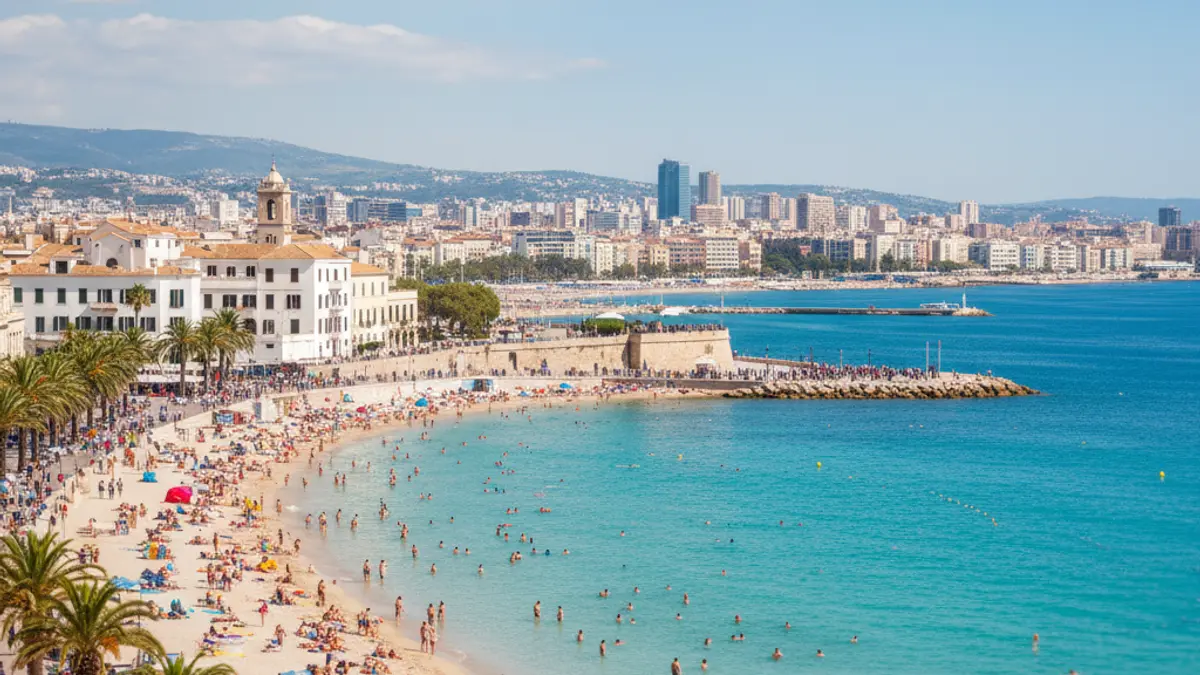
According to data from the Andalusian Institute of Statistics and Cartography (IECA), Málaga accounted for 28.5% of the 6.74 million tourists who visited the region, experiencing a 4.3% increase in tourist flow compared to the same period last year. Following Málaga, the provinces with the highest number of visitors were Seville (21% with 1.41 million), Granada (17.5% with 1.18 million), and Cádiz (12.4% with 837,000).
Regarding the average length of stay, tourists remained in Andalusia for an average of 6.2 days. However, Málaga stood out with an average stay of 8.6 days, surpassing the 7.9 days of the previous year and positioning itself as the Andalusian province with the longest visit duration. It was followed by Almería (5.6 days) and Cádiz (4.2 days).
Despite its leadership in tourist arrivals and length of stay, the average daily expenditure per tourist in Málaga was 76.3 euros, a 4.3% increase from the previous year, but significantly lower than the Andalusian average of 84.6 euros. This figure places Málaga as the second-to-last province in average spending, only ahead of Huelva (59.6 euros), and well below Granada (103.2 euros) and Jaén (95.7 euros).
The main motivations for traveling to Andalusia were holidays and leisure (83.4%), followed by visits to family and friends (10.2%) and business trips (2.8%). In Málaga, holidays accounted for 76.9% of the reasons. Most travelers stayed in hotel establishments (52.8%) or rental apartments (26.4%). The overall rating of the stay in Andalusia was 9.2 out of 10, with Jaén (9.6) and Seville (9.5) leading in satisfaction.