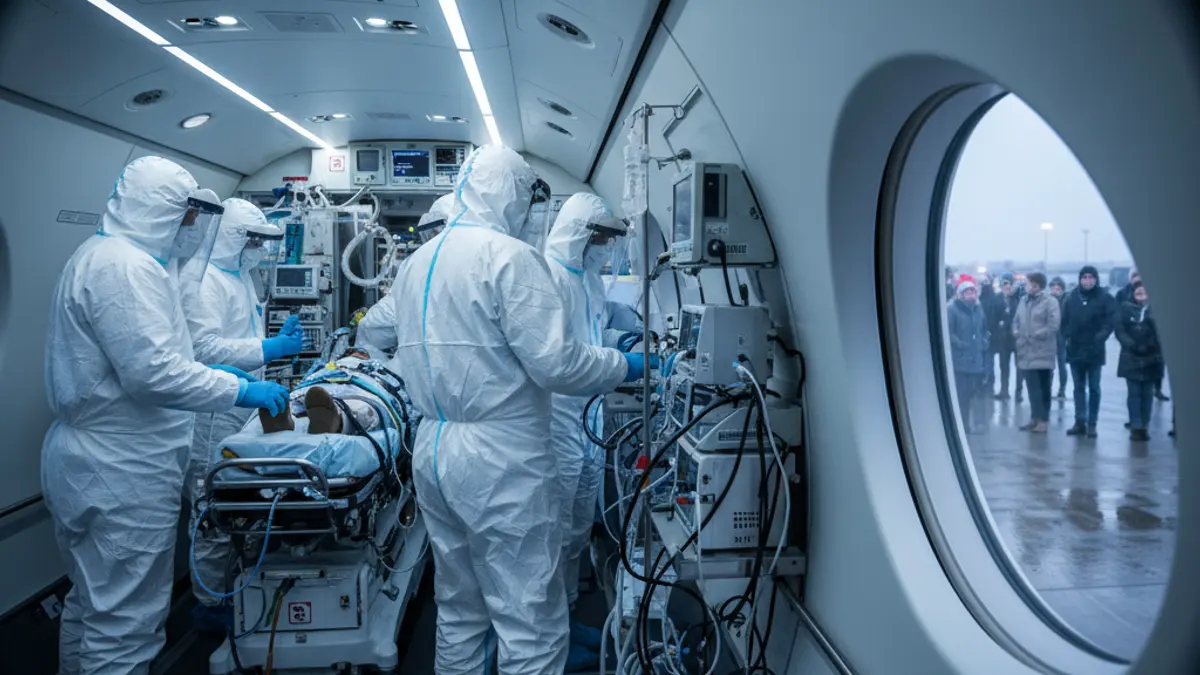
These teams, experienced in highly complex missions, include aerial transfers of Ebola-affected patients, conducted under strict isolation and health safety protocols. The current hantavirus crisis has been a central topic at the Conferences on Security, Emergencies, and Catastrophes, organized by the University of Málaga (UMA), where response protocols have been analyzed.
“"We must continue researching and training, not only healthcare professionals but also the entire population."
A spokesperson for the medical aerovacuation unit of the Air and Space Army detailed that aircraft are equipped with specific sanitary configurations and isolation equipment adapted for the safe transfer of critical patients. They also emphasized the importance of medical personnel's anticipation to foresee complications during flight and ensure a continuous care chain until hospital arrival.
The unit has prior experience in international operations related to highly dangerous infectious diseases, such as the Ebola crisis, in addition to humanitarian interventions after earthquakes, hurricanes, and other catastrophes. A military spokesperson assured that Spain possesses sufficient experience to respond to such emergencies, confirming that military teams are already working on various preparation and health response scenarios.
“"We are already working on this health crisis to apply emergency protocols."
Specialists agreed on the fundamental need for coordination among universities, health services, emergency bodies, and the Armed Forces to address potential epidemic outbreaks. The conferences, celebrating two decades of activity, have brought together emergency professionals, security forces, and military personnel from various parts of Spain and countries like Peru, Paraguay, and Italy, conducting practical exercises that simulate disaster scenarios.