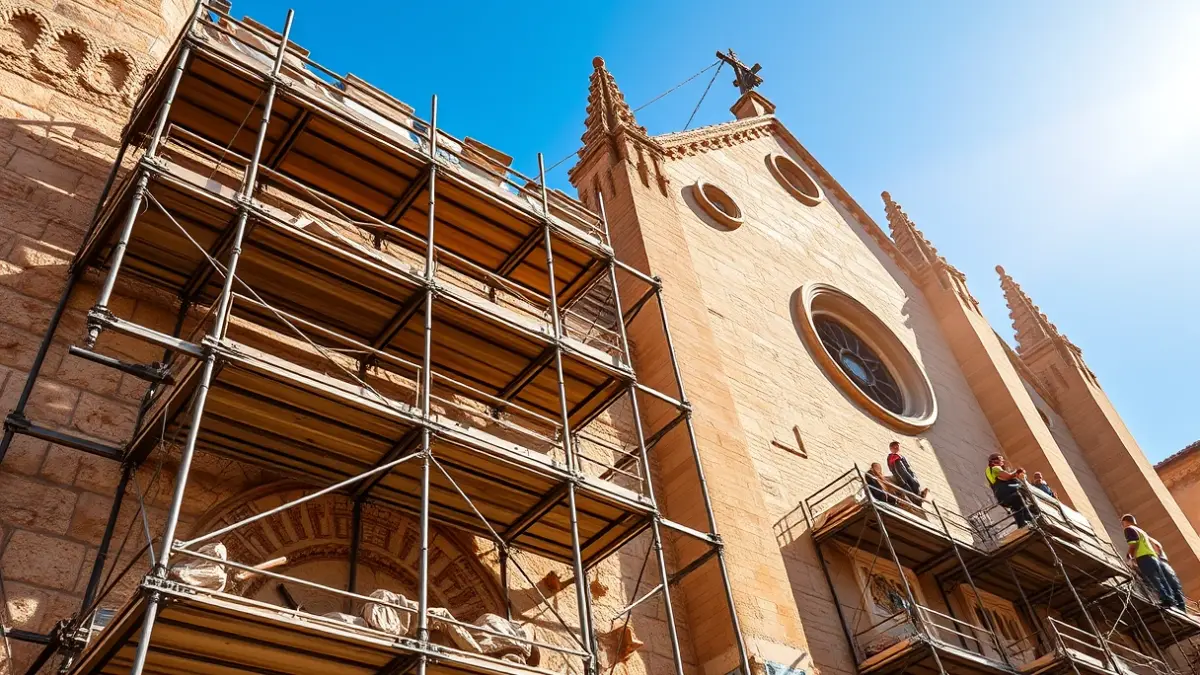
Since Tuesday, April 28, workers have been active around the Patio de los Naranjos to erect the necessary structure for the future sacristy roof. This intervention is part of a broader project to cover the temple, incorporating original design solutions from the 18th century.
The new roof will feature a wooden structure and a hip roof, consistent with solutions adopted in other parts of the building. Prior to its execution, the work includes the demolition and comprehensive restoration of the affected area, as well as protection with waterproof tarpaulins to prevent rain damage. These efforts are progressing in parallel with the construction of the temple's upper roof, designed by Ventura Rodríguez, which aims to improve waterproofing and rainwater drainage.
High-quality materials from various parts of Spain are being used for these works. The radiata pine wood for the trusses is manufactured in the Basque Country by the company Egoin Wood, Bateig stone is extracted in Alicante, white marble comes from Almería, and the ceramic tiles were designed in Catalonia by Cumella, a firm also responsible for elements of Barcelona's Sagrada Familia. In addition to its structural function, the new roof will allow for a visitable route on the upper part of the temple, offering a new perspective of the vault's extrados and enhancing the cultural and heritage experience of the Cathedral.
Additionally, complementary actions are being carried out, such as the renovation of the water evacuation system with new pre-oxidized copper downspouts that will run along the facade. To facilitate the work, part of Postigo de los Abades street has been temporarily occupied. Furthermore, protective fences have been installed around the columns in the Patio de los Naranjos due to slight displacements detected, aiming to prevent their deterioration from improper use by visitors.
The works are being executed by the UTE formed by Hermanos Campano and Grupo ORP. With this new phase, Málaga Cathedral takes another step in resolving a historical challenge, combining heritage recovery, functional improvement, and respect for the original design of this emblematic monument.