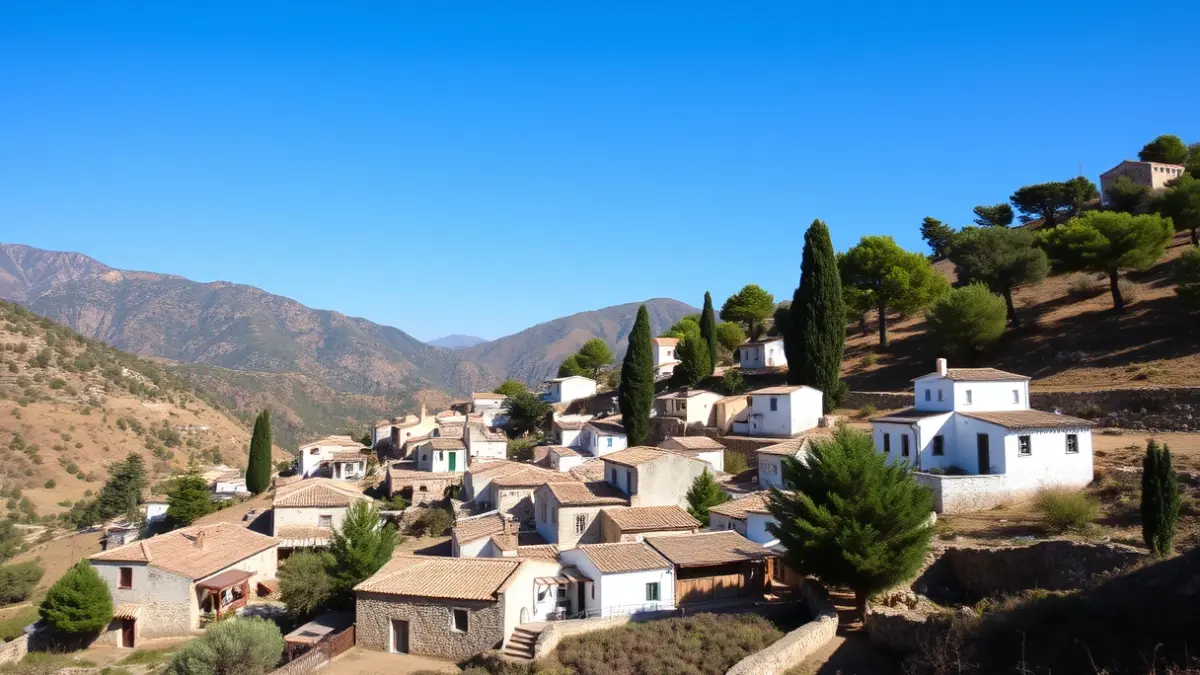
Located in the Sierras de Tejeda, Almijara y Alhama Natural Park, a few kilometers from Frigiliana, El Acebuchal appears as an enclave of whitewashed houses emerging among pine trees and mountains. This village, which remained forgotten for almost half a century, is now an example of historical and cultural recovery, attracting travelers seeking tranquility and authenticity.
The history of El Acebuchal, of Moorish origin and belonging to the municipality of Cómpeta, was cut short in 1949. After the Civil War, the Civil Guard ordered its abandonment due to the help its inhabitants provided to the maquis rebels. The last resident left that year, leaving the village plunged into deep silence and deterioration for almost five decades.
“"El Acebuchal fell silent. For almost five decades, its houses deteriorated, its streets became overgrown with vegetation, and those who had once lived there only returned to salvage materials and build new homes elsewhere."
The reconstruction began in 1998, 49 years after its abandonment, when descendants of the former inhabitants decided to return. With great effort and without basic services like electricity or running water, they managed to faithfully restore the original appearance of the hamlet, maintaining its traditional architecture and cobbled streets. Today, it boasts 33 homes that preserve a unique visual and environmental coherence.
The natural environment of El Acebuchal is an additional attraction. The Sierras de Tejeda, Almijara y Alhama Natural Park offers rich biodiversity of flora and fauna, with species such as eagles, foxes, and mountain goats. The hamlet is also a key stop on the GR-249, the Great Malaga Path, becoming a resting point for hikers.
Local gastronomy, focused on game meat and traditional recipes, is another pillar of its appeal. The Bar Restaurante El Acebuchal, managed by the children of the recovery's founders, has been recognized by the Repsol Guide for its consistency with the product and environment. Additionally, the village offers accommodation in three rural houses with private pools and views of the natural park, combining modern comfort with the historical atmosphere of the recovered village, attracting tourists from all over Europe seeking disconnection.