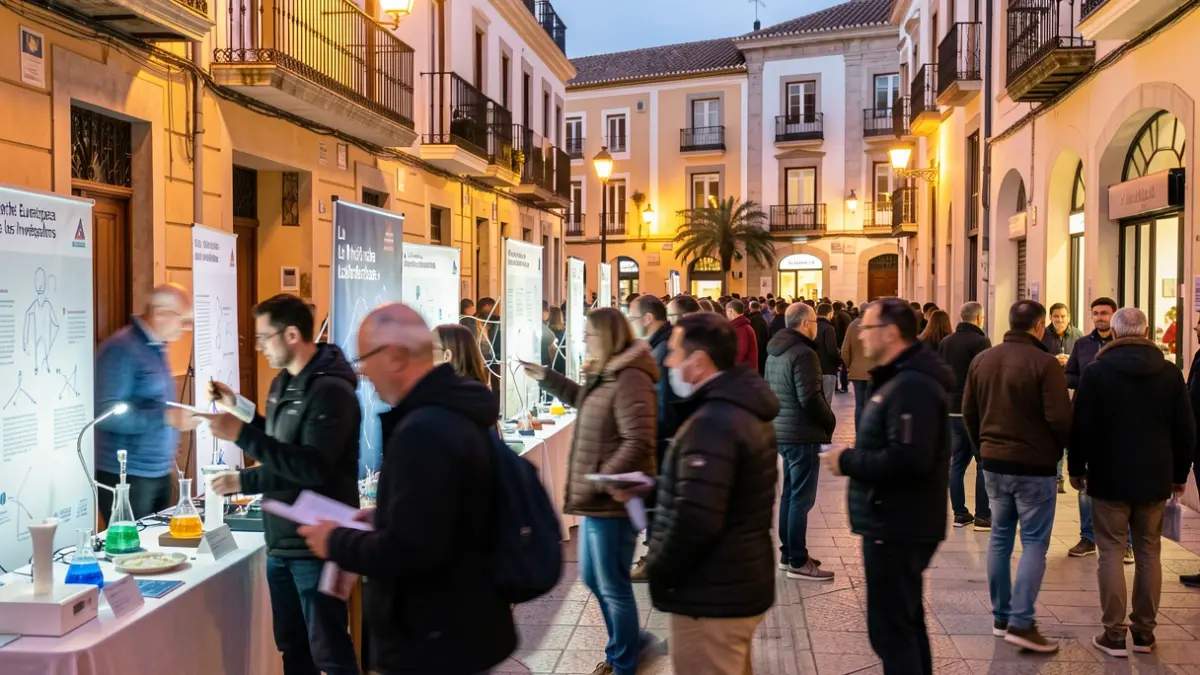
For more than five hours, the latest edition of the event unfolded a broad program involving over 350 scientists from various fields. Research took center stage in emblematic locations such as the Paseo del Parque, the Rectorate, the Eduardo Ocón Auditorium, and the Malagueña Academy, in addition to the streets of the historic center. A new addition this year was a venue in the province: the Andalusian Museum of Education in Alhaurín de la Torre.
Organized by the UMA's Service of Publications and Scientific Dissemination and sponsored by Fundación Unicaja, the initiative combined traditional formats like micro-talks, conferences, and debate panels with new experiences such as workshops, visits, scavenger hunts, and scientific routes, catering to all audiences.
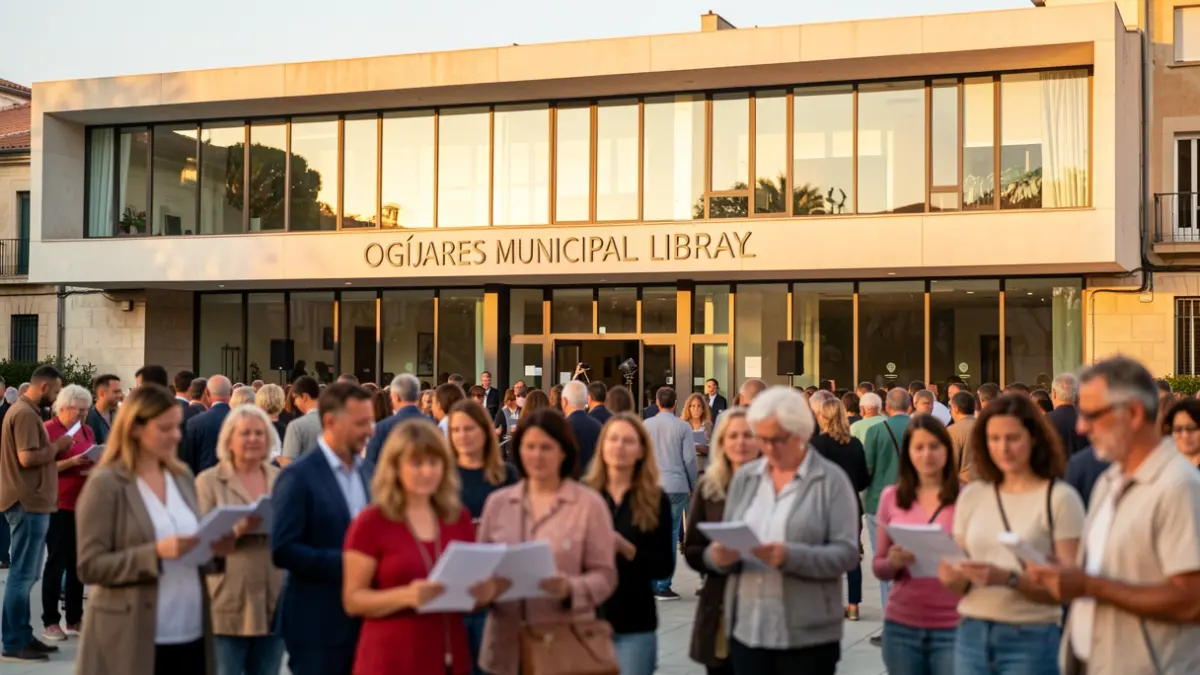
The inauguration, held at the University Rectorate, was attended by the rector of the UMA, Teodomiro López Navarrete. Enrique Gómez-Puig, Head of Education at Fundación Unicaja, highlighted the entity's support for this outreach event, emphasizing the importance of education, knowledge, and innovation. Meanwhile, the mayor of Málaga, Francisco de la Torre, thanked the UMA for its fifteen years dedicated to science and stressed the need to continue promoting research.
Rector Teodomiro López Navarrete underscored the role of the University of Málaga in generating knowledge and highlighted its research potential, including in humanities, social sciences, and art. He expressed gratitude for the support from the Málaga City Council and Fundación Unicaja, deeming it fundamental for the event's continued success.
The Paseo del Parque served as a key meeting point, offering 25 workshops and scientific experiences in areas such as science, health, economics, engineering, and humanities. The 'History Laboratory - Philologists to the Rescue' workshop, led by Belén Molina Huete, showcased the work of historians and philologists in valuing documentary and bibliographic heritage.
At the University Rectorate, over thirty micro-talks from 'Science in Small Doses' addressed topics including the environment, education, energy transition, mental health, and the housing crisis. The 'Divulgatón' delved into taxation and the development of microelectronics in Málaga, covering issues like chips and artificial intelligence.
The 'Science is Understood by Talking' debate panels at the Eduardo Ocón brought together experts to discuss contemporary challenges such as artificial intelligence, holistic health, water resources, and space exploration. The Malagueña Academy of Sciences also contributed with micro-talks and debates on water as an environmental challenge.
The city streets hosted five scientific walks exploring Málaga's history, from pioneering women to the heritage of palace-houses, constitutional history, and socio-economic issues. The expansion into the province included a guided tour of the Science Room at the Andalusian Museum of Education in Alhaurín de la Torre.
The European Researchers' Night, a European project promoted by the European Commission since 2005, marks its fifteenth edition in Málaga. Coordinated by the Fundación Descubre and promoted by the Regional Ministry of University, Research and Innovation, it brings together the nine public universities of Andalusia.
This edition was made possible by the sponsorship of Fundación Unicaja and the collaboration of entities such as IBIMA BIONAND Platform, the IHSM La Mayora Subtropical and Mediterranean Horticulture Research Station, IFAPA (Agricultural and Fisheries Research and Training Institute), the La Concepción Botanical-Historical Garden, the Málaga City Council, the Spanish Foundation for Science and Technology, the Spanish Association Against Cancer, OPEN House Málaga, and the Andalusian Museum of Education.