The project, coordinated by the University of Córdoba and the Research and Agri-food Quality Center Foundation of the Valle de los Pedroches (CICAP), with funding from the Spanish Foundation for Science and Technology (FECYT), aims to provide an initial diagnosis of the impact on the Cordoban dehesa and develop a participatory monitoring system for its sustainability.
According to Pablo González, a researcher from the ERSAF group at the UCO and project leader, 313 trees have been under permanent monitoring. The goal is to expand participation with a mobile application allowing owners and managers to record data on tree health and climatic conditions. This information, combined with remote sensing and other databases, enables continuous surveillance for informed management decisions.
The results presentation took place in Pozoblanco, where researchers, managers, and owners discussed their experiences, system improvements, and interest in continuing citizen monitoring. Discussions also covered engagement with the Administration to design support policies for the dehesa.
The collected information feeds into a farm monitoring system that, complemented by remote sensing data and other databases, allows owners and managers to maintain constant vigilance over their dehesa to make management decisions regarding the trees.
The event also introduced the DRYAD project, led by researcher Ana Andreu and funded by Horizon Europe. This project focuses on nature-based solutions (NBS) to enhance the resilience of Mediterranean agro-silvo-pastoral ecosystems in Spain (Andalusia and Extremadura), Portugal, Italy, and Greece.
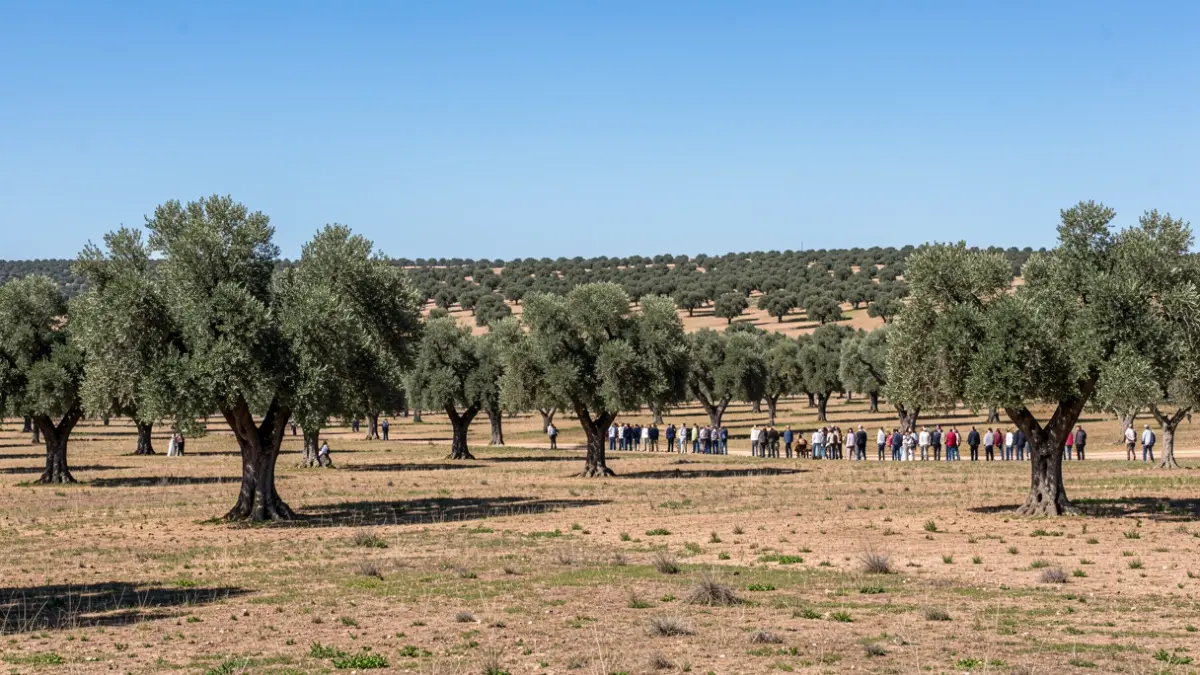
As a concluding participation event, El Pedroche hosted the first DehesaBlitz, organized by DehesAlert and LIFE Fagesos. This initiative combined science and citizen participation to assess dehesa ecosystems. During the event, 71 participants gathered information on the health of 940 holm oaks, raising awareness about dehesa issues and generating valuable data on citizen involvement in forestry research.