The municipalities identified with the highest concern are the capital of Almería, Benahadux, Carboneras, Mojácar, Pulpí, and Zurgena. This classification is based on documentation released by the General Directorate of Public Health and Pharmaceutical Regulation. Despite this situation, Almería ranks as the second Andalusian province with the lowest incidence of WNV spread compared to Granada, which has only four high-risk localities.
Regarding medium risk, health authorities have included another six municipalities in Almería. These are Cuevas del Almanzora, Garrucha, Los Gallardos, and Vera, located in the Levante Region, along with La Mojonera and Roquetas de Mar, in the Poniente area. The vast majority of the province's localities, 90% or 91 municipalities, are at a low-risk level, according to the same report from the Junta de Andalucía.
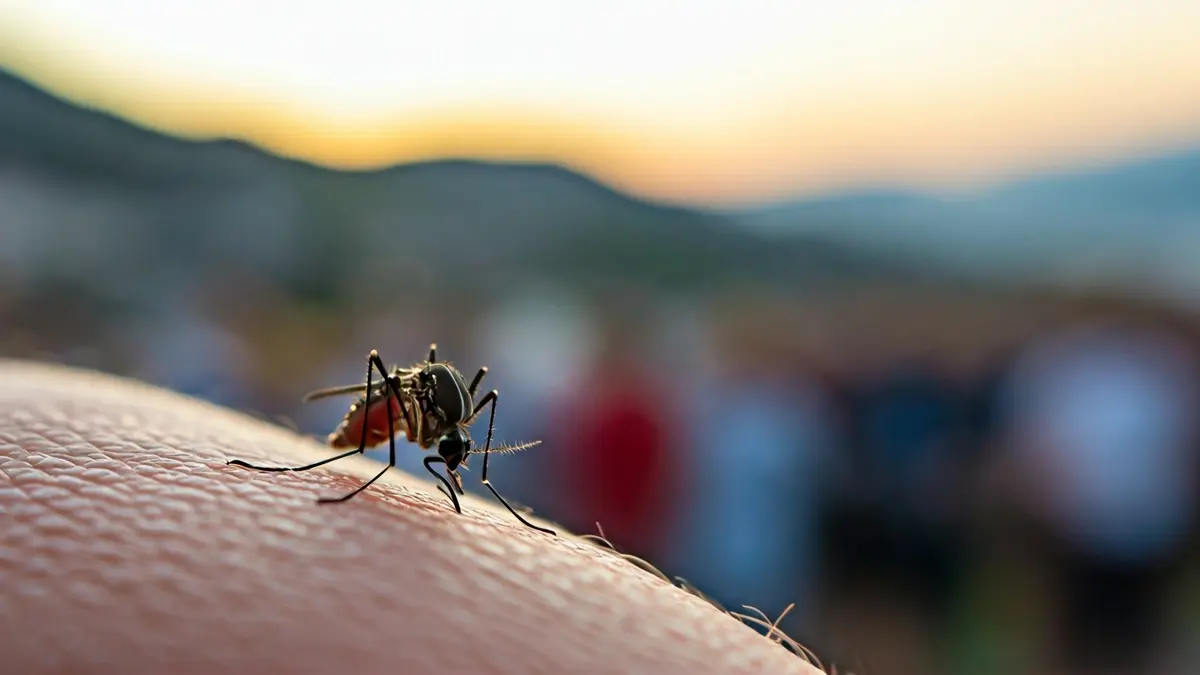
These data confirm that Almería and Granada generally maintain a low risk within the trapping plan for mosquito detection, an initiative promoted by the Ministry of Health, Presidency, and Emergencies. The department, led by Antonio Sanz, has prepared an additional study on the behavior of female mosquito populations, both transmitting and non-transmitting species, from winter until March 2026.
In Almería, the activity of transmitting species during winter was intermittent and showed low peaks, with 76 specimens captured in mid-March. Despite entomological activity across the autonomous community, all virological analyses for the West Nile Virus have tested negative to date. The report, signed by Francisco José Marchena Fernández, head of the Junta's Environmental Health Service, highlights that, although there is an increase in mosquito population density in specific areas of the Guadalquivir basin and the Mediterranean coast, the epidemiological situation remains stable, with a slight early awakening of activity in Huelva and Sevilla at the beginning of spring 2026.
At the autonomous level, the Ministry of Health has reported that the 44 traps installed in the eight Andalusian provinces for monitoring WNV vector mosquitoes during the winter months detected minimal activity of culex mosquitoes, with isolated exceptions in Málaga, Huelva, and Sevilla, all with low mosquito density. In contrast, during the previous summer and autumn, records occasionally exceeded 1,000 specimens per trap, reaching peaks of over 10,000 in some specific cases, densities significantly higher than those found in winter.