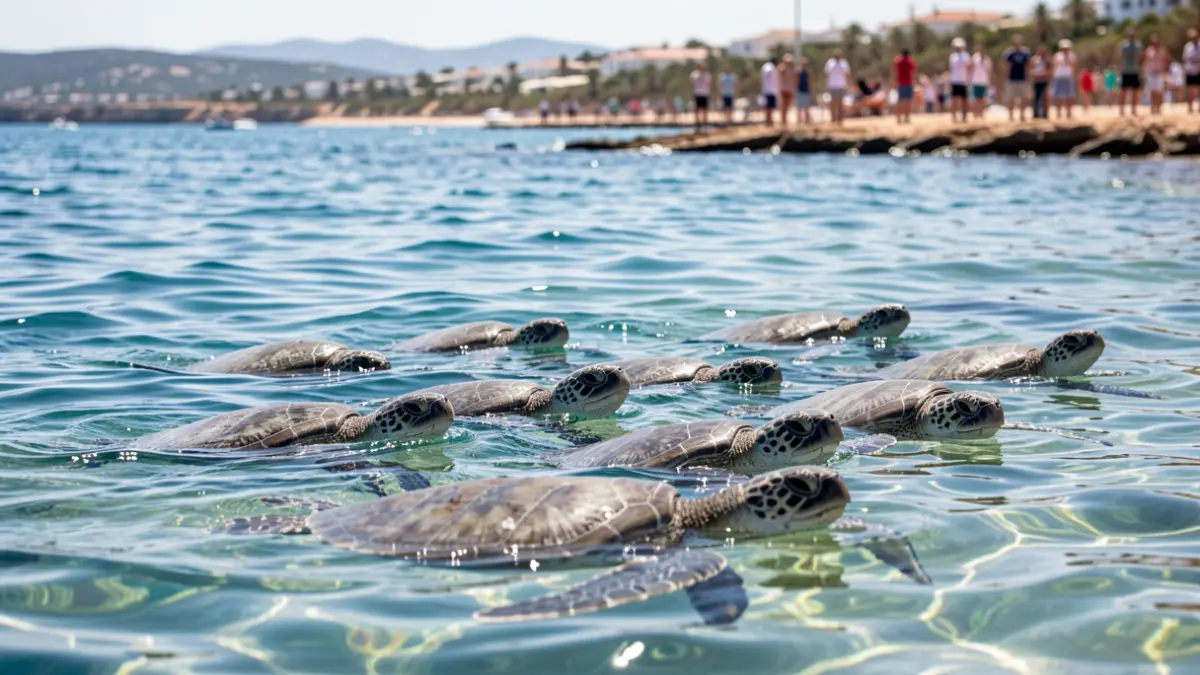
After a year of care and health monitoring, 27 loggerhead turtle specimens have been released today into the sea off Mojácar. These animals originate from the nesting of a female on Playa de la Piedra Villazar in June 2025, an event that marked the fifth nesting recorded on the Almería coast since 2001.
The specimens, which currently weigh over 1.2 kilos and are in optimal physical and health condition, are part of the 99 eggs found in the original incubation chamber. The acting Minister of Sustainability and Environment, Catalina García, highlighted that this release represents a "new chapter in Andalucía's success story in protecting this endangered species and, in general, in protecting biodiversity."
The rescue and care process began after the Mojácar municipal services alerted the 112 emergency number about a turtle attempting to nest. The protocol for nesting events was activated, which included marking, surveillance, and subsequent relocation of the nest to a safer location. Of the 99 eggs, 20 were transferred to the facilities of Oasys Minihollywood in Tabernas for controlled incubation, while the remaining 79 were placed on Playa de Río Abajo.
The hatching of the hatchlings occurred between August 11 and 16, 2025, with 37 specimens emerging from the eggs on the beach and 13 from the incubator. Subsequently, 6 more hatchlings were recovered, bringing the total to 56 turtles born from this nest. The surviving specimens were transferred to the Andalusian Center for Management of the Marine Environment (CEGMA) for maintenance and rearing.
During the captivity period, four specimens initially died, and in January 2026, an infectious outbreak caused the death of 25 turtles. Rapid veterinary intervention and health control measures allowed for the rescue of the 27 specimens being released today. The monitoring program included weekly weigh-ins, veterinary check-ups, and monthly biometric measurements, with the collaboration of the Aquarium of Roquetas de Mar and Selwo Marina.
The loggerhead turtle is an endangered species that inhabits warm seas and undertakes long migrations. Its life cycle, which includes terrestrial nesting on beaches during June and July, requires cooperation between the Junta de Andalucía, the Ministry for Ecological Transition, local administrations, volunteer associations, and citizens for its conservation.