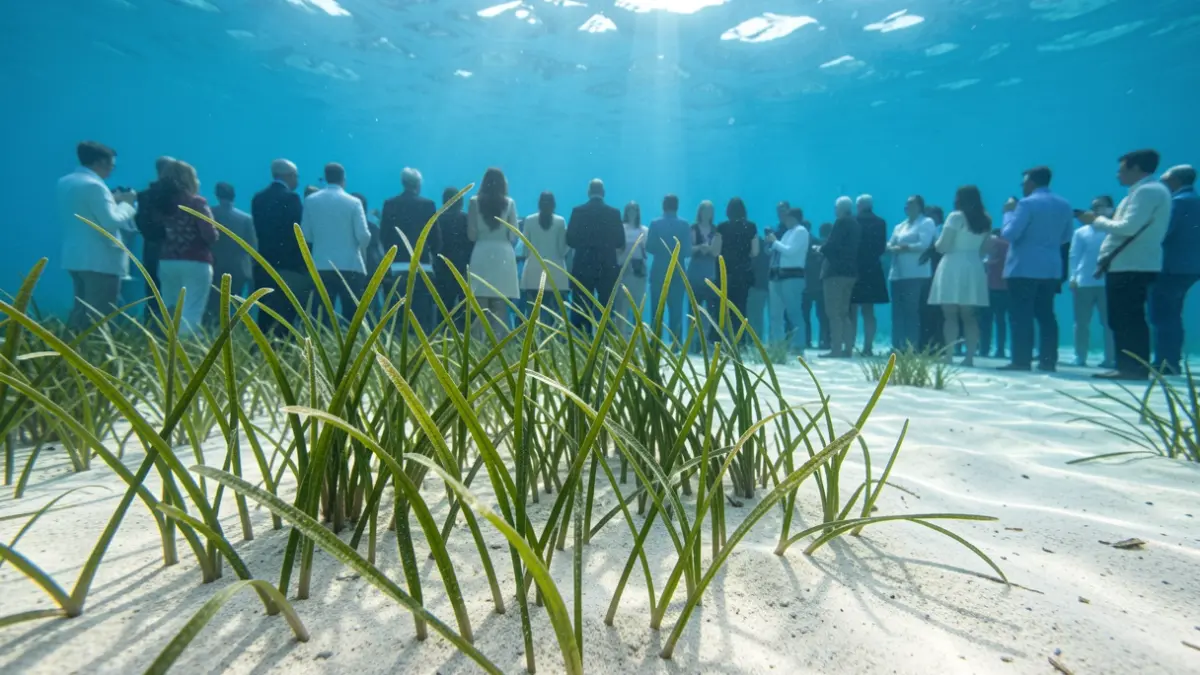
This agreement represents a crucial step in the project initiated in 2024 to enhance the value of local marine ecosystems, seeking to restore marine vegetation that plays a vital role in biodiversity and coastal protection.
The collaboration, formalized last Friday, unites the council, Hidralia Gestión Integral de Aguas de Andalucía S. A., and the University of Málaga through the Litoral Sciences Chair Costa del Sol. The initiative builds upon a previous phase that established an ex situ cultivation system for the species' propagation, with permits valid until July 31, 2027.
The new agreement details three key phases: selecting the most suitable location for transplanting, executing the reintroduction, and conducting thorough monitoring to assess the viability and success of the transplanted plants.
“"We have been working for years and now we face a key phase for the recovery of our seabed. Never before has there been such an environmental commitment as in these years, and I hope that in a few years we will see the fruits of this project."
Representatives from the three entities highlighted the importance of institutional cooperation. The UMA's Vice-Rector for Research, Pedro Jesús Maireles, described the agreement as "an example of institutional cooperation with a direct impact on environmental protection," reinforcing the role of the Litoral Sciences Chair. For his part, the CEO of Hidralia, Marcos Martín, emphasized public-private collaboration as a generator of real solutions for ecosystem protection, underscoring the role of marine meadows in improving biodiversity and climate change adaptation.
The Councilor for Beaches, Sergio Díaz, reaffirmed the City Council's commitment to environmental policies, stating that the town "lives facing the sea, cares for it, and protects it." The project's lead researcher, Elena Bañares, and the Chair's director, Francisco Ignacio Franco, were also present at the signing.
The first stage of the project already achieved significant milestones, including the design of an innovative system to condition specimens of marine phanerogams collected from meadows affected by human and industrial activity. This system has proven successful, not only recovering Cymodocea nodosa shoots but also increasing their number in the municipal nursery, an unprecedented achievement.
The post-signing work plan includes identifying suitable areas with the help of local diving clubs, analyzing key environmental variables. Subsequently, the cultivated shoots will be transplanted using autonomous diving and adapted methodologies. If necessary, new shoots will be collected.
Monitoring of the transplanted plants will extend for at least four years, with particular intensity during the first year. Controls will be conducted at 60, 180, 270, and 365 days, including a specific fertilization at 60 days. Analysis of variables such as survival rate and shoot density will evaluate the restoration's success.