AlmeríaCádizCórdobaGranadaHuelvaJaénMálagaSevillaAlpujarra AlmerienseLos VélezComarca Metropolitana de AlmeríaFilabres-TabernasLevante AlmeriensePoniente AlmerienseValle del AlmanzoraBahía de CádizCampiña de JerezCampo de GibraltarCosta NoroesteLa JandaSierra de CádizAlto GuadalquivirCampiña de BaenaCampiña Sur CordobesaLos PedrochesCórdoba (comarca)SubbéticaValle del GuadiatoValle Medio del GuadalquivirAlpujarra GranadinaComarca de AlhamaComarca de BazaComarca de GuadixComarca de HuéscarComarca de LojaCosta GranadinaLos MontesValle de LecrínVega de GranadaEl AndévaloEl Condado de HuelvaCosta OccidentalCuenca MineraComarca Metropolitana de HuelvaSierra de HuelvaÁrea Metropolitana de JaénCampiña de JaénEl Condado (Jaén)La LomaSierra de CazorlaSierra MáginaSierra MorenaSierra de SeguraSierra Sur de JaénLas VillasComarca de AntequeraLa AxarquíaGuadaltebaCosta del Sol OccidentalMálaga Costa del SolNorormaValle del GuadalhorceSerranía de RondaSierra de las NievesAljarafeBajo GuadalquivirCampiña de CarmonaCampiña de Morón y MarchenaComarca de ÉcijaComarca Metropolitana de SevillaSierra Norte de SevillaSierra Sur de SevillaVega del GuadalquivirAlmeríaCádizCórdobaGranadaHuelvaJaénMálagaSevillaAlpujarra AlmerienseLos VélezComarca Metropolitana de AlmeríaFilabres-TabernasLevante AlmeriensePoniente AlmerienseValle del AlmanzoraBahía de CádizCampiña de JerezCampo de GibraltarCosta NoroesteLa JandaSierra de CádizAlto GuadalquivirCampiña de BaenaCampiña Sur CordobesaLos PedrochesCórdoba (comarca)SubbéticaValle del GuadiatoValle Medio del GuadalquivirAlpujarra GranadinaComarca de AlhamaComarca de BazaComarca de GuadixComarca de HuéscarComarca de LojaCosta GranadinaLos MontesValle de LecrínVega de GranadaEl AndévaloEl Condado de HuelvaCosta OccidentalCuenca MineraComarca Metropolitana de HuelvaSierra de HuelvaÁrea Metropolitana de JaénCampiña de JaénEl Condado (Jaén)La LomaSierra de CazorlaSierra MáginaSierra MorenaSierra de SeguraSierra Sur de JaénLas VillasComarca de AntequeraLa AxarquíaGuadaltebaCosta del Sol OccidentalMálaga Costa del SolNorormaValle del GuadalhorceSerranía de RondaSierra de las NievesAljarafeBajo GuadalquivirCampiña de CarmonaCampiña de Morón y MarchenaComarca de ÉcijaComarca Metropolitana de SevillaSierra Norte de SevillaSierra Sur de SevillaVega del Guadalquivir

UJA Uncovers Andalusian Life Through Islamic Necropolises in Jaén

A pioneering project by the University of Jaén studies thousands of skeletal remains to reconstruct the society of Madinat Yayyan.

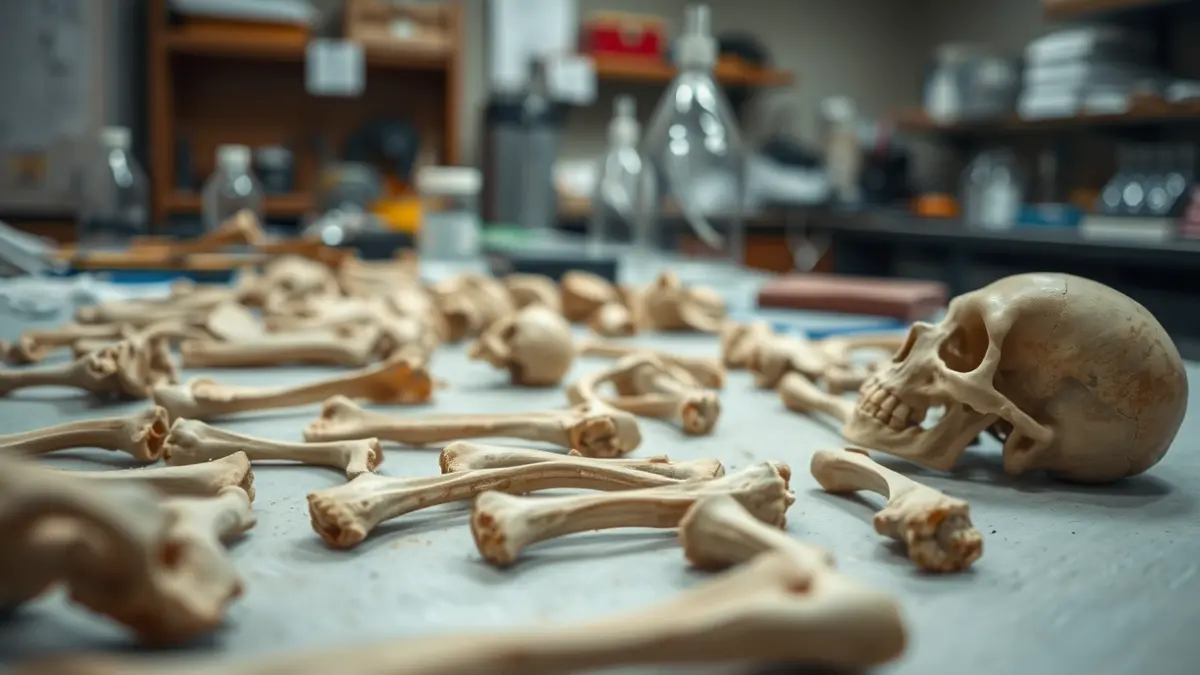
Image of ancient bone remains in an archaeological laboratory.
IA

Image of ancient bone remains in an archaeological laboratory.

The University of Jaén has launched an ambitious anthropological research project in the Islamic necropolises of Marroquíes Bajos, in the city of Jaén, to reconstruct the lives of its ancient inhabitants.

The Department of Historical Heritage at the UJA, through its Medieval History Area, has initiated this project aimed at giving a "voice" to the skeletal remains of the population that inhabited the city during the Islamic period. This study, considered pioneering due to its scale and multidisciplinary approach, promises to shed light on a crucial period in the history of Jaén.
The archaeological zone of Marroquíes Bajos, known for its Chalcolithic macro-village, houses a complex of seven Islamic necropolises (maqabir) that form one of the most extensive and important burial areas on the Iberian Peninsula. Early studies conducted between 2000 and 2018 already highlighted the relevance of these findings.
To date, emergency archaeological interventions, driven by urban growth, had unearthed thousands of tombs. However, a comprehensive osteoarchaeological study was lacking to cross-reference data and obtain a real picture of the Andalusian society that resided in the area.

"The bones speak to us; for this reason, through this Osteoarchaeological study, we are identifying specific demographic profiles, including determining life expectancy, infant mortality rates, or sex ratios."

a project researcher
The work, led by specialists in physical and forensic anthropology, and medieval history, is based on a laboratory analysis carried out through bioarchaeology. This study not only catalogs burial typologies, which predominantly follow the Islamic rite of inhumation in a right lateral decubitus position, but also delves into the identity of each buried individual.
Analyses of bone pathologies and occupational stress markers are making it possible to understand the diseases, working conditions, and levels of violence or nutritional deficiencies endured by the inhabitants of the time. One of the most significant milestones of this research is that it will provide key information to understand the demographic composition of the era.
The results will allow specialists to differentiate between the indigenous Hispano-Visigothic population that progressively converted to Islam (the so-called Muladíes) and the new Muslim groups of Arab or Berber origin who arrived and settled on the peninsula. This finding will be essential for understanding how the processes of Islamization, coexistence, and miscegenation developed in the territory. In later phases, advanced analytical techniques, such as stable isotope studies and dental microstratigraphy analysis, will be incorporated to complement osteological information and more precisely determine aspects related to the population's diet and mobility patterns during the Middle Ages.