AlmeríaCádizCórdobaGranadaHuelvaJaénMálagaSevillaAlpujarra AlmerienseLos VélezComarca Metropolitana de AlmeríaFilabres-TabernasLevante AlmeriensePoniente AlmerienseValle del AlmanzoraBahía de CádizCampiña de JerezCampo de GibraltarCosta NoroesteLa JandaSierra de CádizAlto GuadalquivirCampiña de BaenaCampiña Sur CordobesaLos PedrochesCórdoba (comarca)SubbéticaValle del GuadiatoValle Medio del GuadalquivirAlpujarra GranadinaComarca de AlhamaComarca de BazaComarca de GuadixComarca de HuéscarComarca de LojaCosta GranadinaLos MontesValle de LecrínVega de GranadaEl AndévaloEl Condado de HuelvaCosta OccidentalCuenca MineraComarca Metropolitana de HuelvaSierra de HuelvaÁrea Metropolitana de JaénCampiña de JaénEl Condado (Jaén)La LomaSierra de CazorlaSierra MáginaSierra MorenaSierra de SeguraSierra Sur de JaénLas VillasComarca de AntequeraLa AxarquíaGuadaltebaCosta del Sol OccidentalMálaga Costa del SolNorormaValle del GuadalhorceSerranía de RondaSierra de las NievesAljarafeBajo GuadalquivirCampiña de CarmonaCampiña de Morón y MarchenaComarca de ÉcijaComarca Metropolitana de SevillaSierra Norte de SevillaSierra Sur de SevillaVega del GuadalquivirAlmeríaCádizCórdobaGranadaHuelvaJaénMálagaSevillaAlpujarra AlmerienseLos VélezComarca Metropolitana de AlmeríaFilabres-TabernasLevante AlmeriensePoniente AlmerienseValle del AlmanzoraBahía de CádizCampiña de JerezCampo de GibraltarCosta NoroesteLa JandaSierra de CádizAlto GuadalquivirCampiña de BaenaCampiña Sur CordobesaLos PedrochesCórdoba (comarca)SubbéticaValle del GuadiatoValle Medio del GuadalquivirAlpujarra GranadinaComarca de AlhamaComarca de BazaComarca de GuadixComarca de HuéscarComarca de LojaCosta GranadinaLos MontesValle de LecrínVega de GranadaEl AndévaloEl Condado de HuelvaCosta OccidentalCuenca MineraComarca Metropolitana de HuelvaSierra de HuelvaÁrea Metropolitana de JaénCampiña de JaénEl Condado (Jaén)La LomaSierra de CazorlaSierra MáginaSierra MorenaSierra de SeguraSierra Sur de JaénLas VillasComarca de AntequeraLa AxarquíaGuadaltebaCosta del Sol OccidentalMálaga Costa del SolNorormaValle del GuadalhorceSerranía de RondaSierra de las NievesAljarafeBajo GuadalquivirCampiña de CarmonaCampiña de Morón y MarchenaComarca de ÉcijaComarca Metropolitana de SevillaSierra Norte de SevillaSierra Sur de SevillaVega del Guadalquivir

Largest Roman Olive Oil Mill in Hispania Discovered in Jaén

Restoration efforts reveal a 1st-century olive oil production complex that supplied Rome, alongside an adjacent villa from the Flavian period.

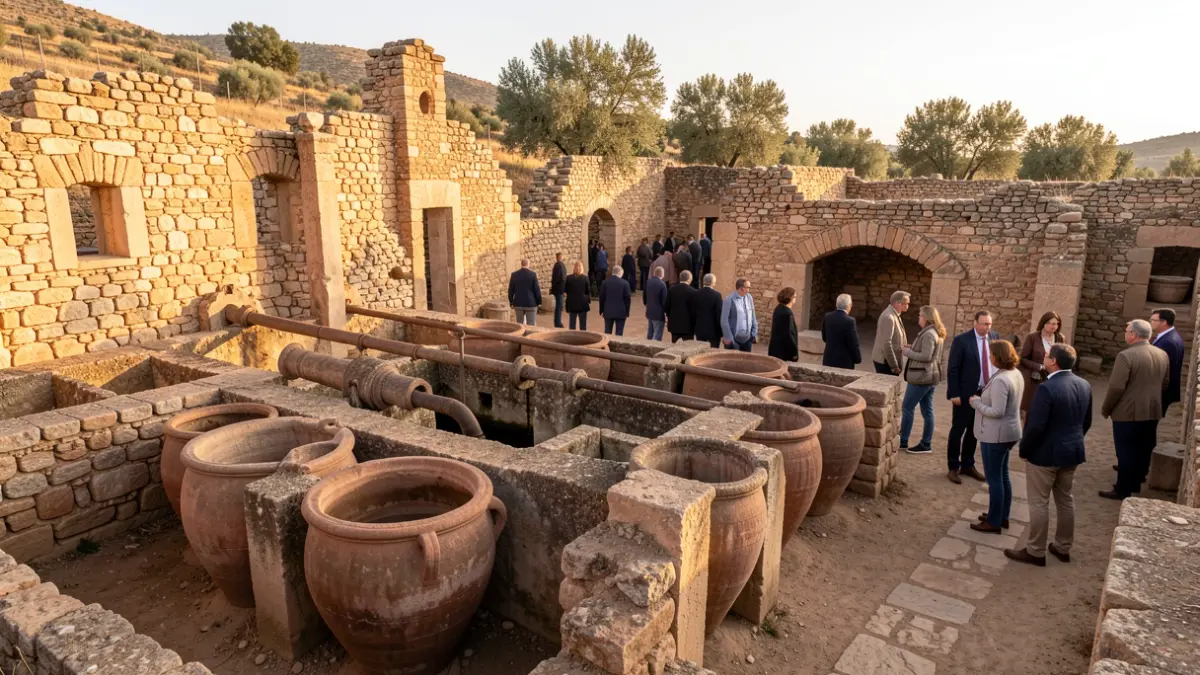
Ruins of an ancient Roman olive oil press in Jaén, with stone walls and interconnected vessels under sunlight.
IA

Ruins of an ancient Roman olive oil press in Jaén, with stone walls and interconnected vessels under sunlight.

The largest Roman olive oil mill in Hispania, located in Jaén, is undergoing restoration. This 1st-century complex, which produced olive oil for Rome, is complemented by an adjacent villa from the Flavian period.

Archaeological work in Jaén is progressing to restore and conserve what is considered the most important Roman olive oil mill in the Iberian Peninsula, alongside an adjacent villa from the Flavian period. This olive oil production center, dating back to the late 1st century AD, operated at full capacity until the 3rd century, with additional structures from the 4th century.
According to municipal archaeologist Juan Luis Martínez, the mill is notable for its large size, featuring six interconnected vats or presses for processing olive oil. Currently, efforts are focused on stabilizing the millennia-old stone walls to allow for public visitation once the work is completed.
Around the mill, storage areas and other facilities related to olive oil production have been identified, as well as structures connected to the villa, whose exact functions are still under investigation. It is confirmed that this center was one of the most significant in Hispania 2,000 years ago, with a high probability that its oil reached Rome.
Adjacent to the mill lies a Roman villa, comparable to a modern farmhouse, where archaeologists have recently discovered a new section of mosaics. These mosaics, located in the peristyle, display geometric patterns in white, black, and red tones, and are being restored by a specialized team.
In addition to the mosaics, the base of a column and a carved stone capital have been found, offering clues about the villa's construction. The impluvium, the central hydraulic structure, is in excellent condition, demonstrating Roman construction efficiency even after recent winter rains.
The recreational area of the villa, dated as a prime example of the Flavian period, retains its original bricks. Much of the villa remains unexcavated, promising further revelations about the richness of this archaeological site.
The conservation and restoration work on the mill and villa, resumed after initial interventions in 2005, will be complemented by the Olive Grove Landscape Innovation Center. This space will be accessible via walkways and will serve to explain olive grove culture, as well as host tastings and activities related to olive oil, heritage, and sustainable tourism.