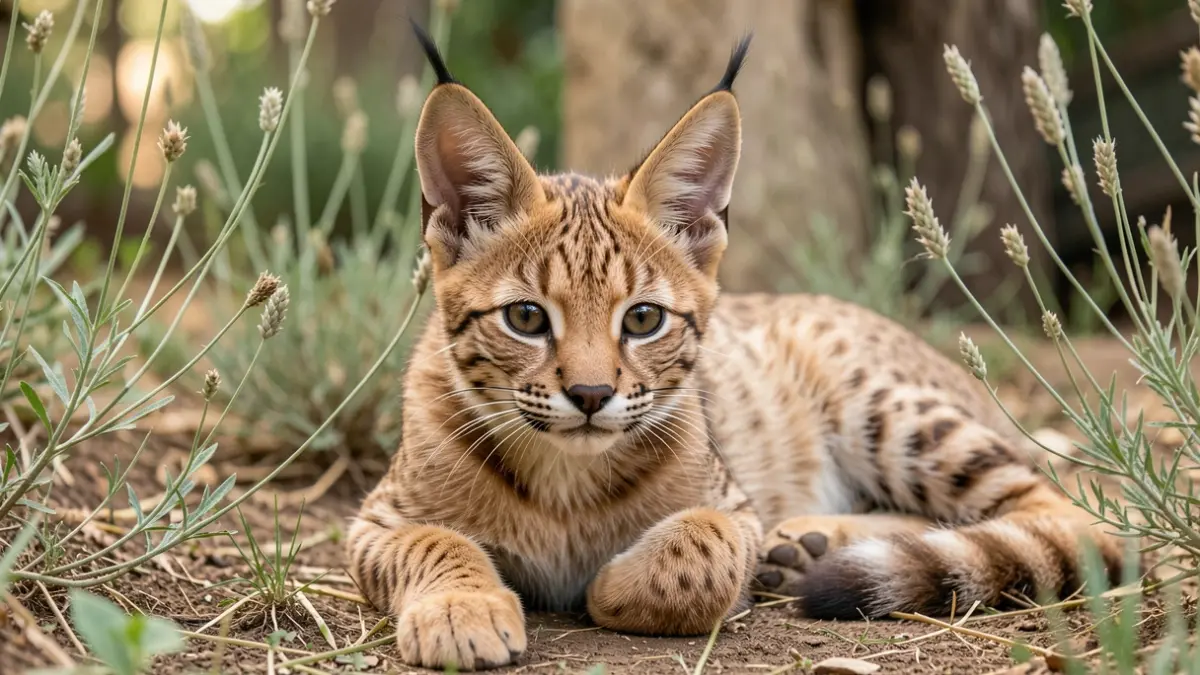
This year's breeding campaign at the Jaén center has ended with a total of eleven births, although eight cubs are currently surviving. The season, which involved eight breeding pairs, concluded on March 30th with the birth of the last remaining female. Of the five females that became pregnant, all successfully carried to term.
Out of the eleven cubs born, ten managed to survive their first month. However, two of them died during the seventh week due to fights among the young, attributed to poor maternal management. Among the notable births is that of Tena, a first-time mother who gave birth to two cubs on March 25th, although one did not survive the peripartum period. Another female, Guara, tested positive for pregnancy but ultimately did not give birth, with no evidence of a miscarriage found. The monitoring of Mina, whose pregnancy test was negative, will continue after she was observed mating.
The La Olivilla Center, operational since January 2007, features 23 enclosures of approximately 1,250 square meters equipped with native vegetation, as well as facilities for a clinic, laboratory, artificial rearing, quarantine, and staff accommodation. Its first litter was born in March 2009.
The positive evolution of the species reflects the success of the joint Spanish-Portuguese conservation program, supported by autonomous communities and EU LIFE projects. The Iberian Peninsula currently hosts 2,401 censused lynxes, of which 836 are in Andalusia, according to 2024 data. This progress has allowed the IUCN to reclassify the Iberian lynx from 'Endangered' to 'Vulnerable'.