This discovery, detailed in a book of statutes covering the years 1514 to 1618, redefines the understanding of brotherhoods from that era. Unlike modern confraternities, these groups, referred to as pious or profit-making, were obligated to assist the wounded, protect inhabitants, and bury the dead, particularly in a context of constant threats from the Nasrid kingdom of Granada.
According to sources from the Historical Archive, these brotherhoods originated in the Middle Ages, following the conquest of Jaén by Fernando III. Their primary mission was to safeguard the city's inhabitants, not only during direct attacks on the city but also when peasants had to venture outside the protective walls for their agricultural work.
Both ecclesiastical and civil authorities attempted to exert control over these organizations. A notable instance occurred in 1631, when a bishopric visitor tried to inspect the brotherhoods' books to audit their economic activities. In response, the priostes sought the defense of the Council, arguing that they were lay brotherhoods founded for the defense of the kingdom of Jaén and faithfully adhered to their statutes.
The Council of Jaén, as per a capitular agreement on June 18, 1631, decided to protect these brotherhoods, acknowledging that they fulfilled their religious objectives, such as masses and anniversaries. The ecclesiastical visitor was permitted to review parish account books but without directly interfering with the brotherhoods' internal documentation.
However, the independence of these brotherhoods was compromised in 1782, when the Council of Jaén requested that their assets be incorporated into the city's public funds to pay an extraordinary contribution. A royal order, issued in Madrid on December 6, 1782, stipulated that, once the obligations for masses and anniversaries were met, any surplus money would be applied to this contribution.
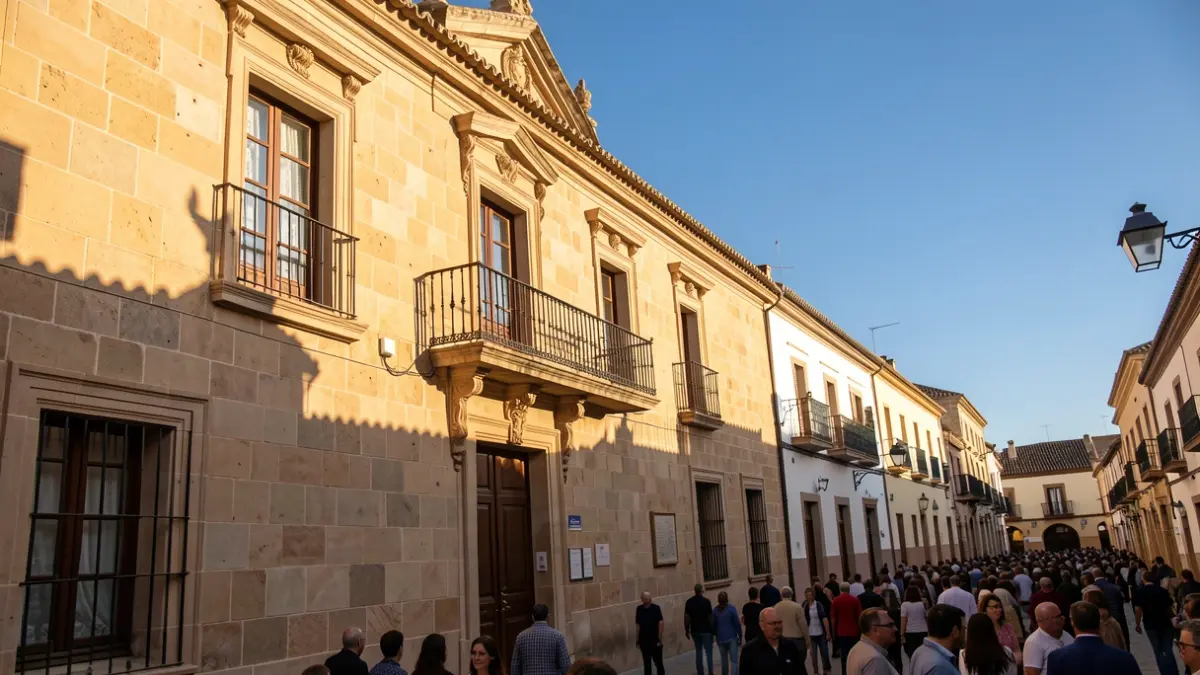
A subsequent report details how properties such as 75 houses, 147 plots of land, 53 orchards, and 35 olive groves, among other assets, were added to the municipal patrimony, generating an annual production of 32,443 reales and 26 maravedíes. Despite protests, from 1783 onwards, the assets of these lay brotherhoods became part of the city of Jaén's own property, including their documentation, which today enriches the Municipal Archive, such as the book of statutes exhibited during the month of April at the Banco de España building.