The Duna de Bolonia, in Cádiz, is part of the Parque Natural del Estrecho. Its dunes, shaped by winds from the Strait of Gibraltar, reach up to 30 meters high and host a unique ecosystem with junipers, sea lilies, and lotuses. This underdeveloped area attracts surfers and sunbathers with its strong waves and golden sands. Nearby, visitors can find the Baelo Claudia Archaeological Site, an ancient Roman settlement. The adjacent Piscinas Naturales are known for their 'therapeutic waters' and natural clay baths. The dune makes for a great day trip from Cádiz.
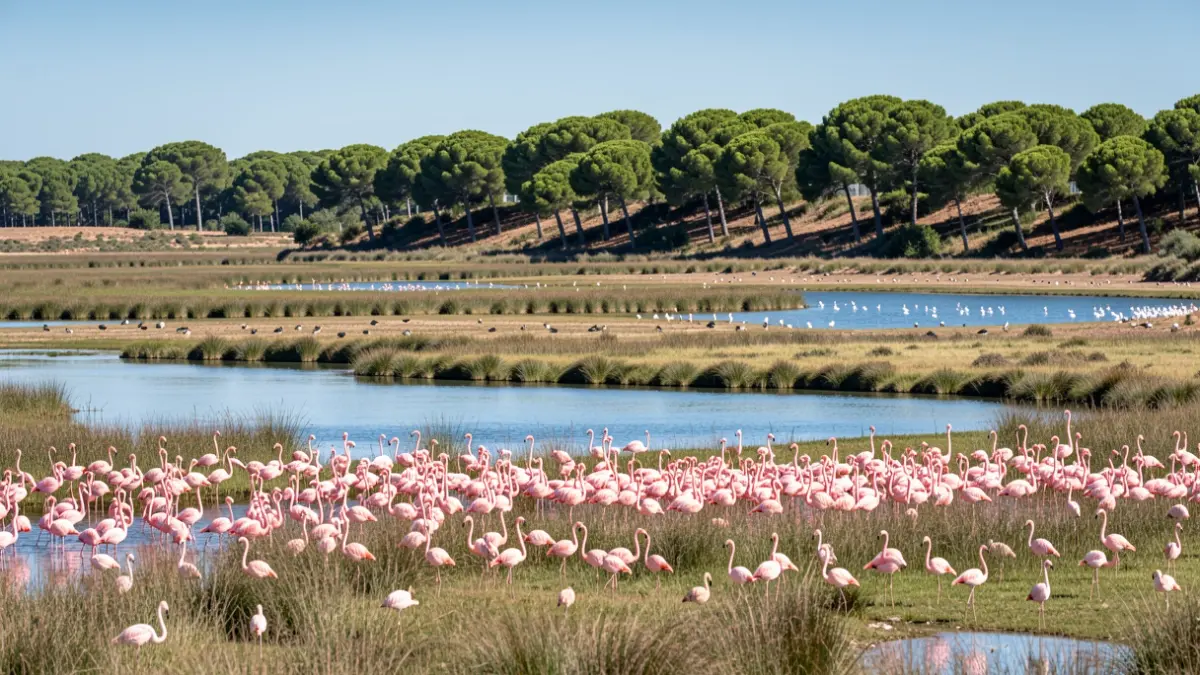
Doñana National Park, in Huelva, is a wetland recognized by UNESCO as a World Heritage site. Its extensive ecosystems are home to thousands of birds, with over 230 species recorded, including a large flamingo population creating a spectacular 'pink carpet'. It also serves as a crucial habitat for deer, the Iberian lynx, and Spanish Imperial Eagles. The park offers a diversity of landscapes including marshes, lagoons, pine groves, dunes, cliffs, and 30 kilometers of unspoiled beaches. The nearby white village of El Rocio invites visitors to taste local delicacies like Iberian ham and white prawns. Visitors can enjoy cruises on the Guadalquivir River, wildlife spotting, and trails for walking, horseback riding, or cycling.
Finally, El Torcal de Antequera, in Málaga, is famed for its rare rock formations over 200 million years old, sculpted by wind erosion, making it one of Europe's best examples. Its labyrinthine passages, caves, and chasms have featured in various film productions. El Torcal Natural Park offers hiking trails with stunning views over Antequera, including formations like 'el Tornillo', declared a national monument. Prehistoric footprints have been found in its caves. The area is home to rich flora and fauna, with species such as griffon vultures, kestrels, and eagle owls.